We are off to cycle around Lake Constance (The Bodensee). It seemed a good idea when we booked it, back in June. 150 miles in 5 days around a pretty lake, how hard can it be?
We are starting with a couple of nights in Strasbourg before making our way across to Constance. Assuming we survive the cycling, we have a short stop along the Mosel Valley before heading up to Holland to visit The Floriade Exposition. There’s a lot of driving involved, to offset any impact from cycling, but the Floriade is every 10 years and we had a ‘now or never’ moment!
If you remember, it wasn’t that long ago that John refused to do another holiday with Jacky because she writes on maps which upsets his OCD. Well, we are meeting Jacky and Ken at Constance and, although she doesn’t yet know it, Jacky will be in charge of maps and official team leader. John could be trusted but doesn’t really want the responsibility. As to Kim and Ken… not to be trusted with directions and a bike.
Anyway, we were up at 3am for an 8am sailing from Dover having been deeply scarred from our previous trip. The bonus being we were all allocated earlier ferries, just not the same one!
We had a long, expensive drive to Strasbourg. 550 miles together with peage fees which may have cost even more than the fuel!
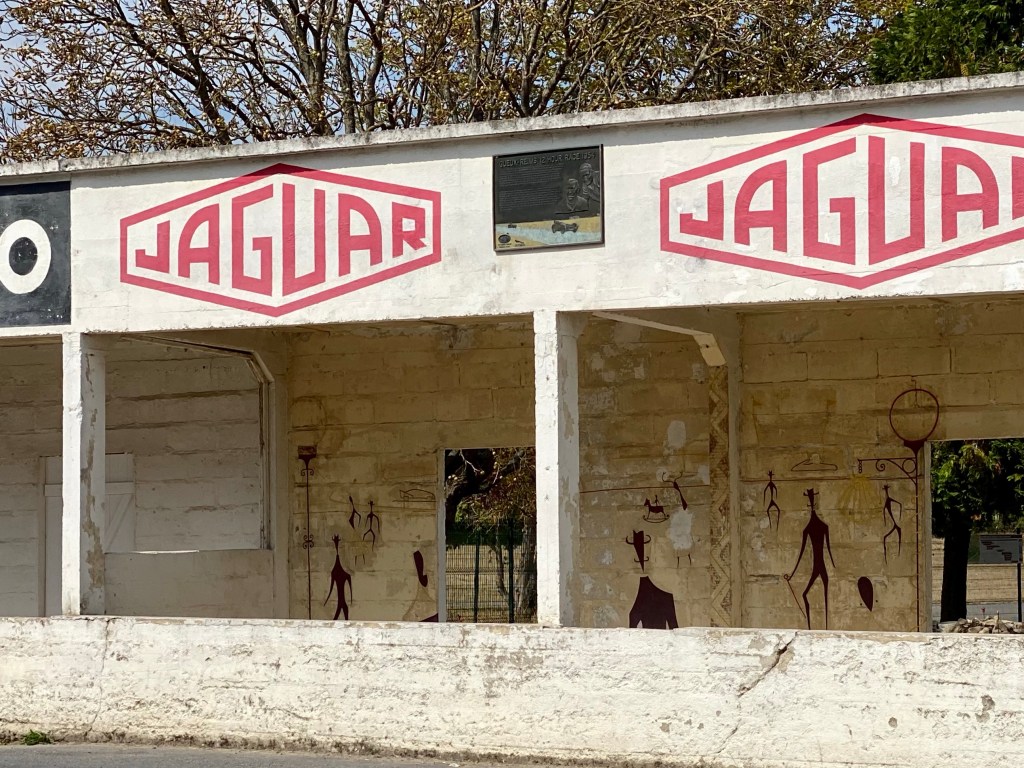
There was a slight detour at Reims for an obligatory visit to a defunct racing circuit. Luckily John didn’t suggest we needed to cycle the 10km course, he was happy just to take a photo against a classic backdrop.
We arrived at our hotel just before 6pm and it was a welcome sight. The car is securely parked along with the bikes and we have collapsed with a beer and planned tomorrow’s walking/cycling adventure in the home of the EU Administrative Centre.
Our final thought for the day is ‘how do you judge a winning team?’
Is it the team that:
A) arrived first at Dover
B) landed first in France
C) was the first to relax with a cold beer? Answers on a postcard….
We arrived home late last night after an 8 hour crossing, spent mainly in our cabin. Since last week, Brittany Ferries has re-introduced mask wearing in public spaces. So much for COVID being done and dusted.
We hadn’t noticed much difference in times to get through customs, as a result of Brexit, until this trip. Getting in and out of France via Portsmouth and St Malo was very slow. It’s good to see more thorough checks being made of vehicles but….. bloody Brexit. It also can’t be much fun for Border Control to be spending a significant part of their day stamping passports in and out.
Talking of Brexit which, a bit like COVID, is allegedly done and dusted. If we’d have known being in France would trigger Boris resigning (sort of), we’d have been there sooner. We also have our fingers crossed against this being a ‘be careful what you wish for’ moment.
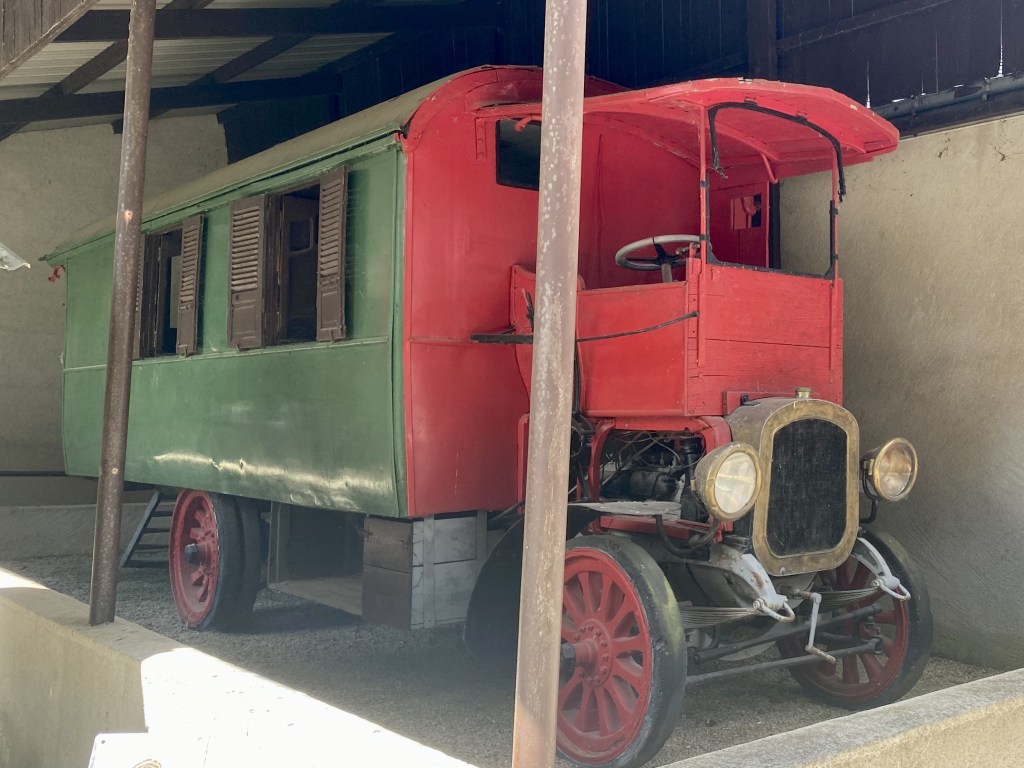
That’s enough of politics, now onto our best bits. Kim’s best moment? Sitting on a bench, overlooking a roundabout in an unprepossing French town eating a duck and goats cheese quiche. It was her best meal of the holiday. Kim’s best photo? Well, it had to involve a motorhome. This one is believed to be the only surviving example of travelling dentists van. The dentist, and his family, would move from town to town, living in the van. Probably the first example of a campervan!
Mobile Dentist van from 1910.
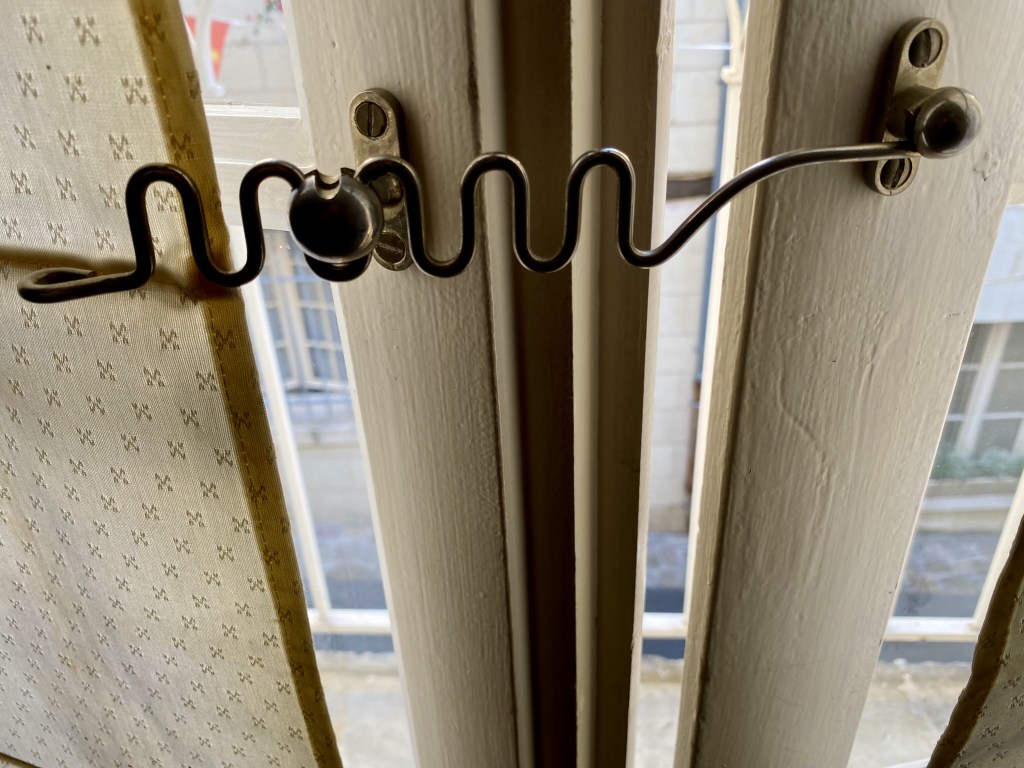
John’s best bits were more technical than food related. First was a very simple device fitted to windows and french doors in the apartment.
Simple but clever ventilation adjustment for windows and french doors
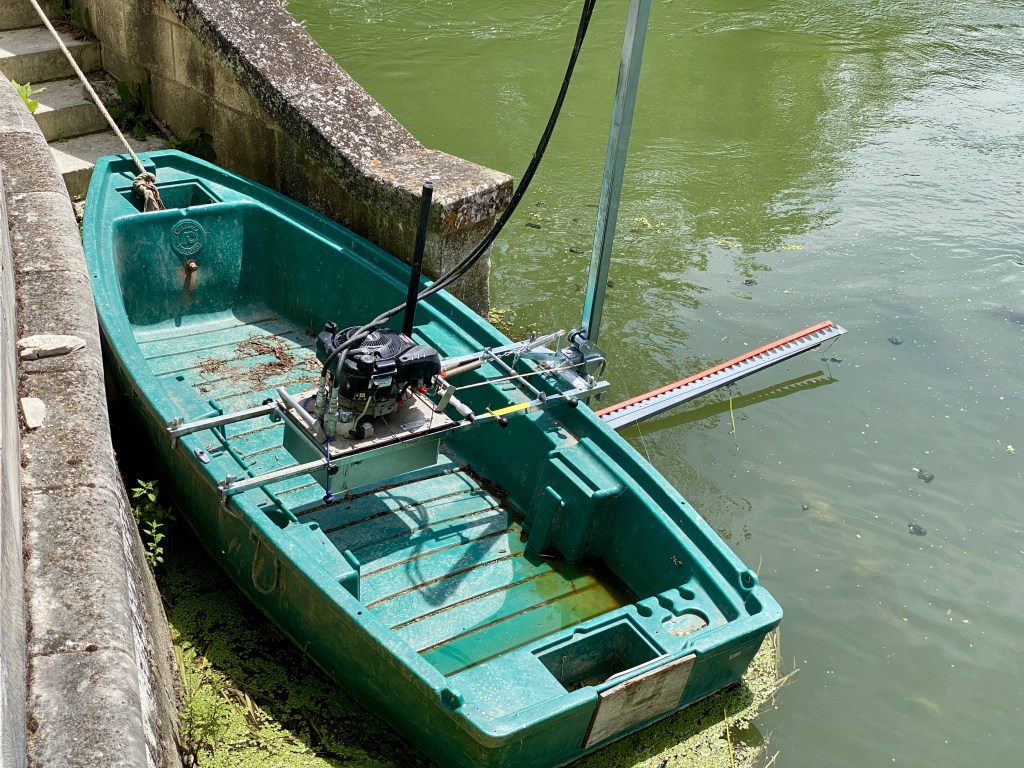
Next on the list is a boat discretely moored at one of the many Chateaus. It’s been adapted to cut river and pond weed, and we definitely need one.
Boat fitted with powered cutter for removing underwater weed
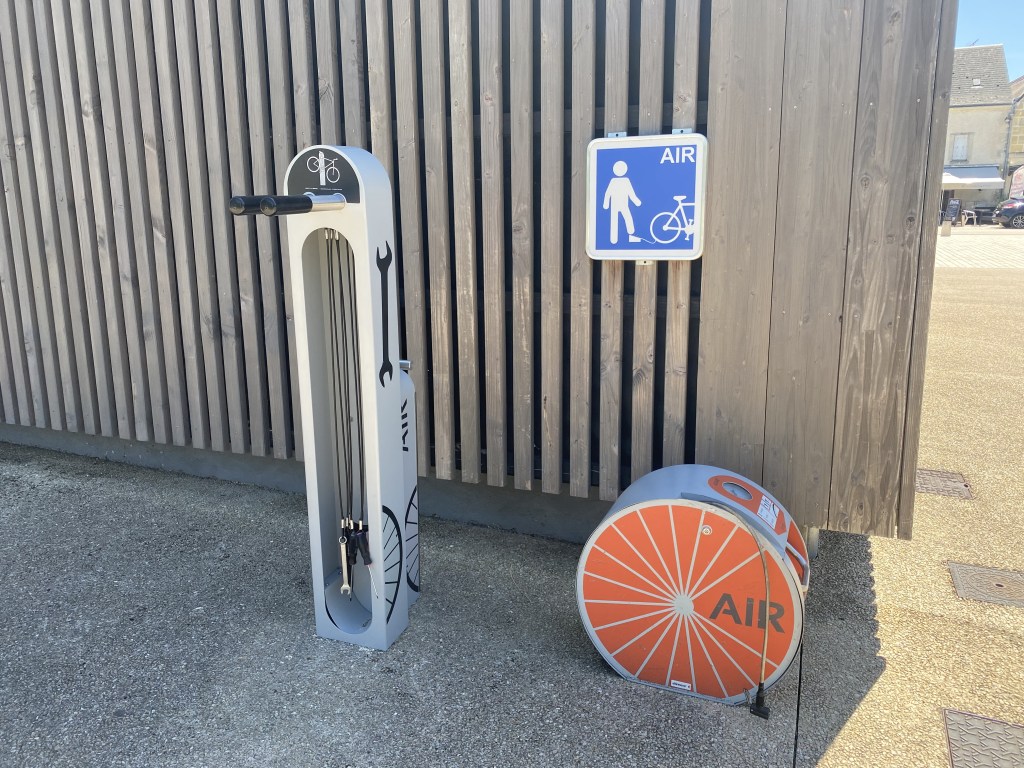
I need to stop soon, but did rather like this bike repair station on one of the cycle routes. It has a stand to suspend the bike on, together with a selection of tools and an airline, all free to use.
Cycle maintenance station
Finally, we lost our oldest and one of our longest serving readers a couple of weeks ago. Stan, John’s dad, passed away peacefully at the age of 97. Thursday was a bittersweet visit to Maurice Dufresne’s museum. Stan would have absolutely loved it, possibly known something about everything there and enjoyed discussing technical details and the finer points of the more innovative machines.
Thursday is market day here in Chinon and it has been causing us some angst. The car has been in a garage right in the middle of the market area. In a panic, yesterday, it was was retrieved and parked alongside the river, just to make sure it wasn’t held captive today. We needn’t have worried the stall holders had left an escape route, although we were relieved we didn’t have to inch the car past market stalls and through crowds of shoppers.
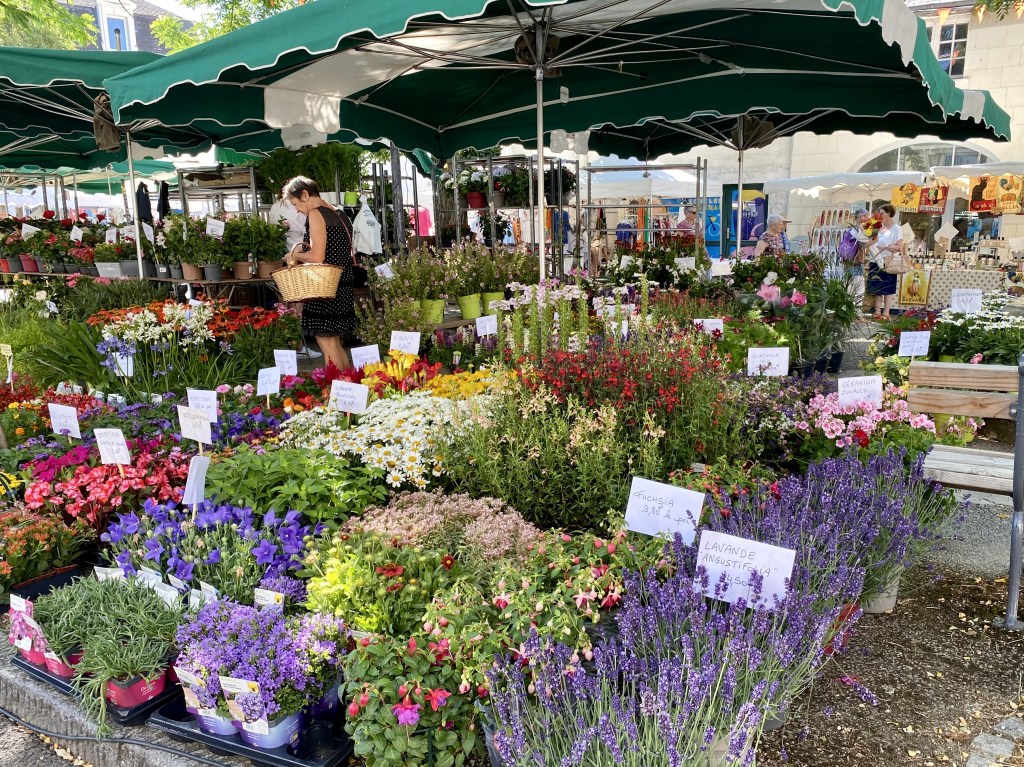
Chinon is home to a large and busy market, selling everything from truffles to mattresses. We succumbed to the charms of an artisan cheese producer, neither of us thought to check the price of an eye-wateringly expensive lump of fermented milk. To be fair, we did taste it and it is very nice.
We said goodbye to the apartment, and Benoit, the owner before starting on our final adventure of the break – a visit to the Musee du Maurice Dufresne at Moulin de Marnay on the outskirts of Azay le Rideau.
Maurice was a character, from a young age he kept things that were made redundant by more modern offerings. He created a very successful scrap metal and demolition business and, today, the company has one of the largest reclamation sites in France.
His dream was to open a museum to house all his ‘treasures’ – junk to most people. He achieved this by buying and renovating an abandoned paper mill. Today it houses over 3000 exhibits ranging from vintage tools and weapons to various vehicles and even an original prototype bi-plane similar to the one Bleriot used to cross the Atlantic. It is an amazing and unassuming collection. It is also truly startling what you can achieve from nothing if you never throw anything away. He restored the original water driven turbine that drove the paper mill machinery and it’s a working centre piece to the museum.
Early (USA 1927) cement mixer used in construction of the Maginot Line
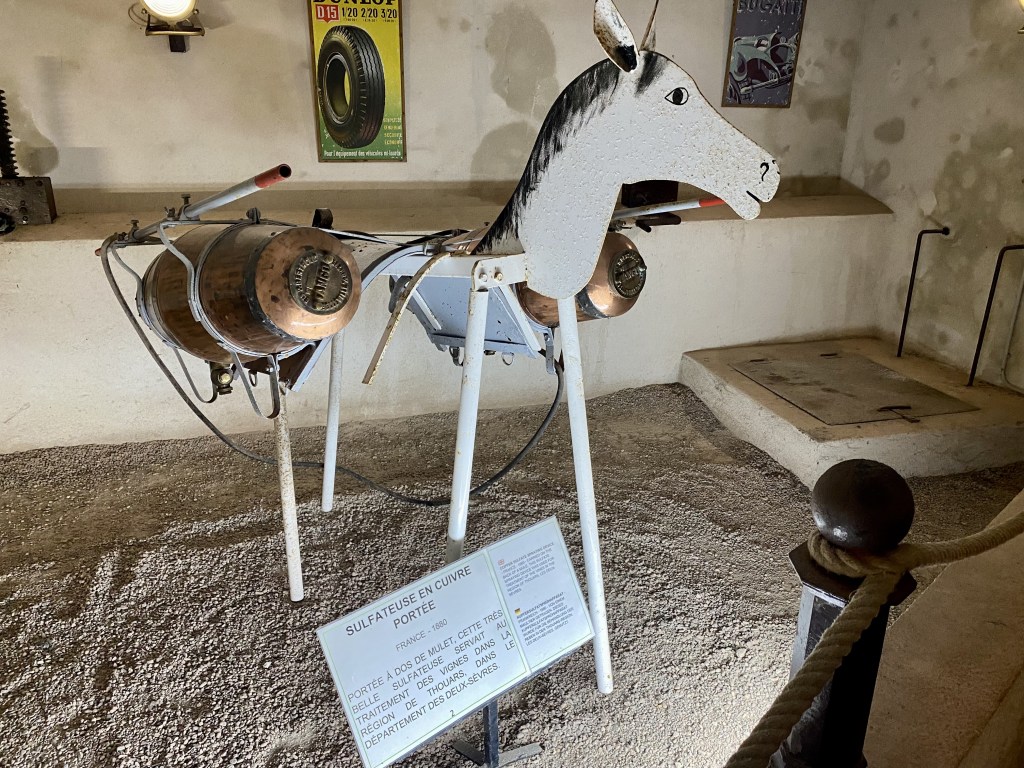
Copper Sulphate and lime (known as Bordeaux mixture) sprayer mounted on a mule, used to spray vines to control downey mildew
Maurice also, very cleverly, designed the interior of the mill to ensure you have to walk every metre of its 1km halls of exhibits! We think he taught IKEA their art of selling. It’s probably just as well he never met Joan of Arc, goodness knows what they’d have achieved together.
Our last night is in St Malo, before our ferry home tomorrow morning. We enjoyed a seaside walk along the Plage after dinner rather than the planned cycle ride, because John’s bike has a puncture and he can’t be bothered to fix it. And, no, the puncture has nothing to do with Kim! And, also no, we don’t want to live here.
Having decided against Diane’s recommendations to visit Tours and Blois, and Gillian’s for Chenonceaux, as ‘too far’ we drove 1.5 hours to the Matra Museum at Romorantin-Lanthenay. Interestingly, Google said it would take 7.5 hours to cycle 125km. Clearly Google still doesn’t understand how slowly Kim cycles.
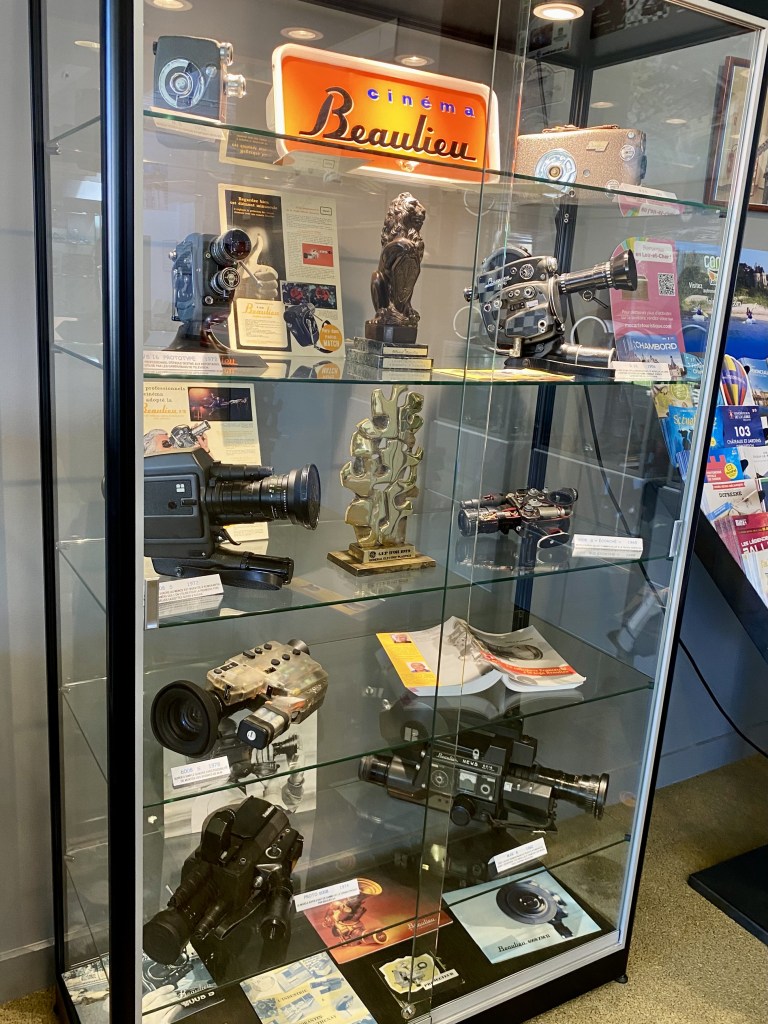
For those of you who know nothing about Matra, feel free to skip ahead and miss a whole paragraph about one of France’s most innovative car manufacturers. But before you do, the museum also hosts a small display of Beaulieu cine cameras. These cameras had a reputation for making very high quality cine films and were favoured by the rich and famous, including Grace Kelly. Like so many other manufacturers Beaulieu couldn’t compete with the digital revolution and ceased trading in 2002. However, should you be lucky enough to own one, you can still get it repaired and serviced at Beaulieu’s remaining site in Romorantin.
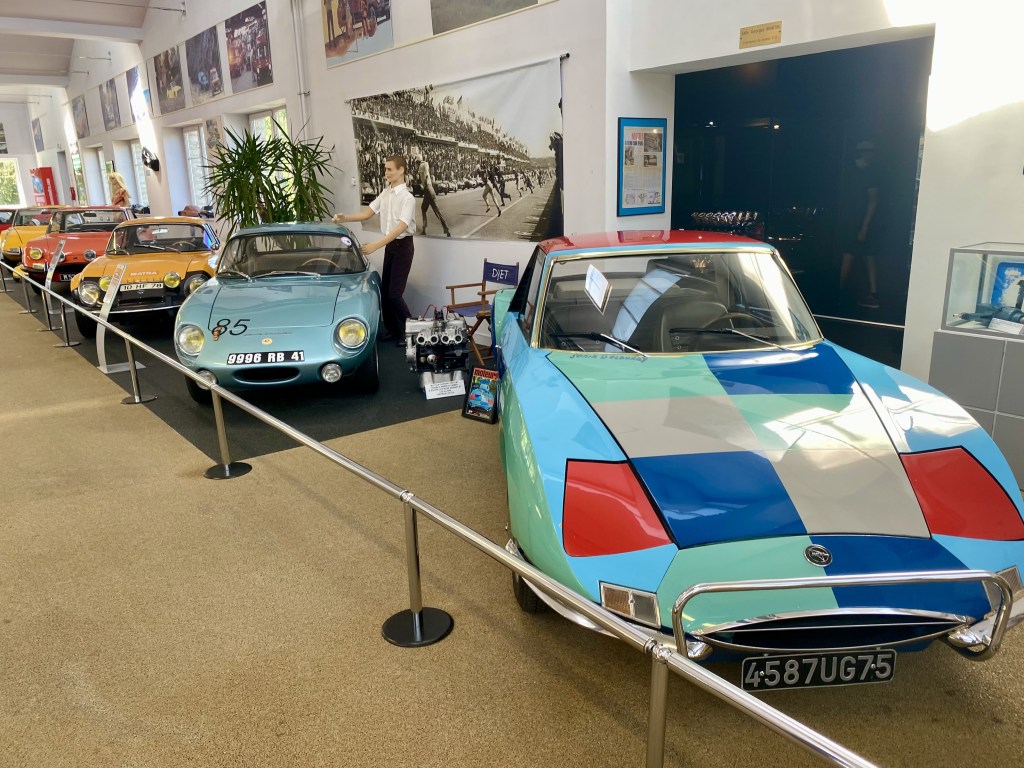
Kim was interested enough to choose her car of the day, one of five Matra 530s customised and sold at auction, in 1967, to raise funds for French medical research. This one was designed by Ukrainian-born French artist, Sonia Delaunay and Kim is thinking the Beetle would look good like this.
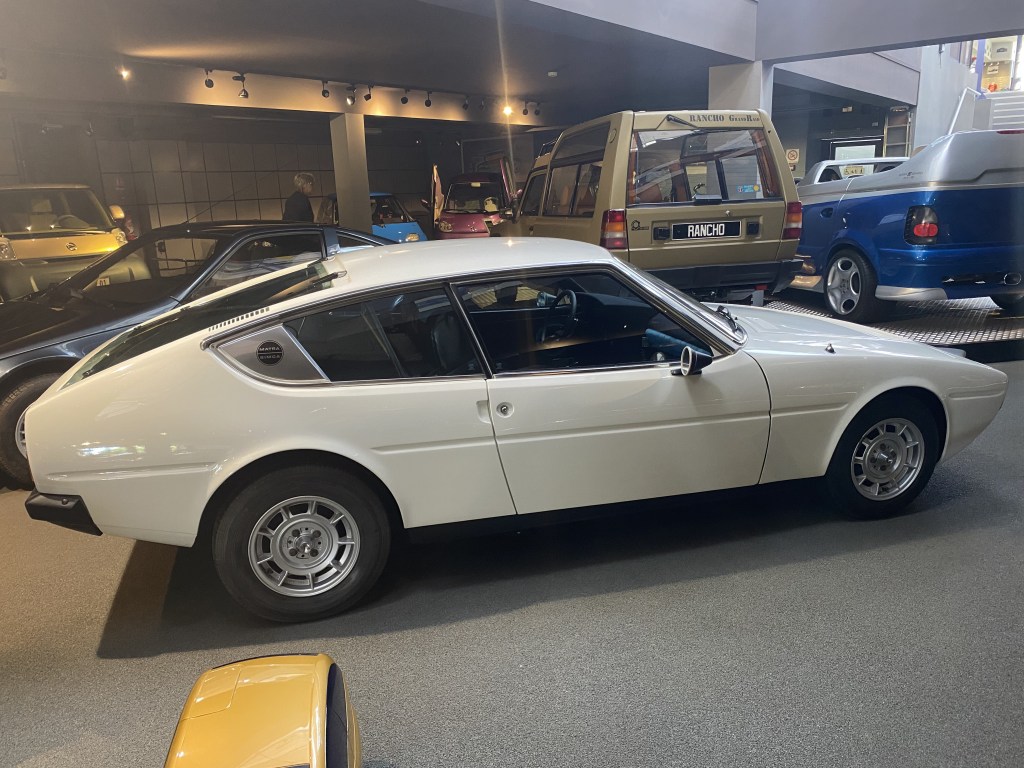
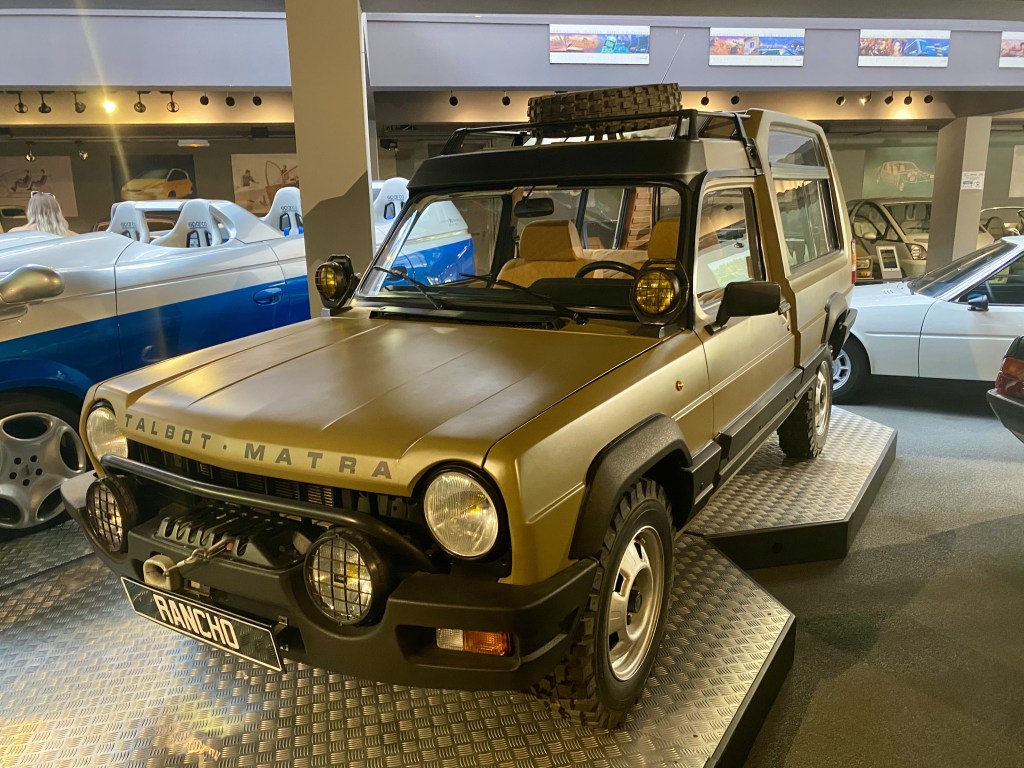
Matra is one of many French names known for its completion cars, as well as aerospace and missile defence and now forms part of the MBDA group based in Stevenage and Henlow. At one time Matra did produce road cars in association with other manufacturers such as Talbot and Simca including a range of quite pretty three seater sports cars. They also created the concept of the Sports Utility Vehicle (SUV) with the Rancho, its off-road look designed to build on a new trend created by the Range Rover and was eventually developed to become the Renault Espace.
We stopped briefly in a traditional French bar, the owner looked horrified when we asked for a menu! Our choices were very simple, coffee, cigarettes, wine or a Loto ticket. Lunch was therefore picked up in a nearby Patisserie, duck and goats cheese tart for Kim, not a combination you would expect, but it’s officially her favourite meal of the trip. We can’t the say the same for the snail petite bouchée which made it straight to the bin. We knew we were in trouble when the baker said it needed to be cooked and eaten hot. We didn’t think it would survive an afternoon left in a warm car.
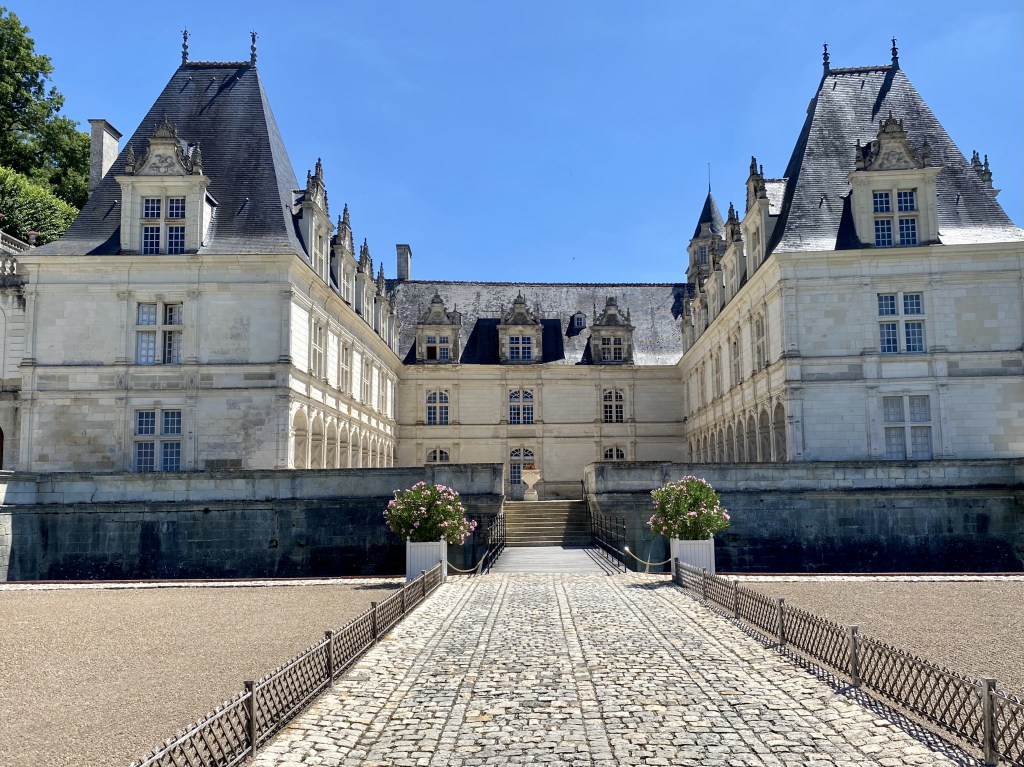
Next stop, Villandry, an hours drive back towards Chinon. Temperatures had risen to over 30 degrees as we walked 500m from the wrong car park, and before starting our tour of chateau and gardens refreshed ourselves with ice creams. John chose lime and tarragon sorbet while Kim settled for verbena, mint and nettle ice cream. Quite frankly, it’s worth the trip just for the ice cream.
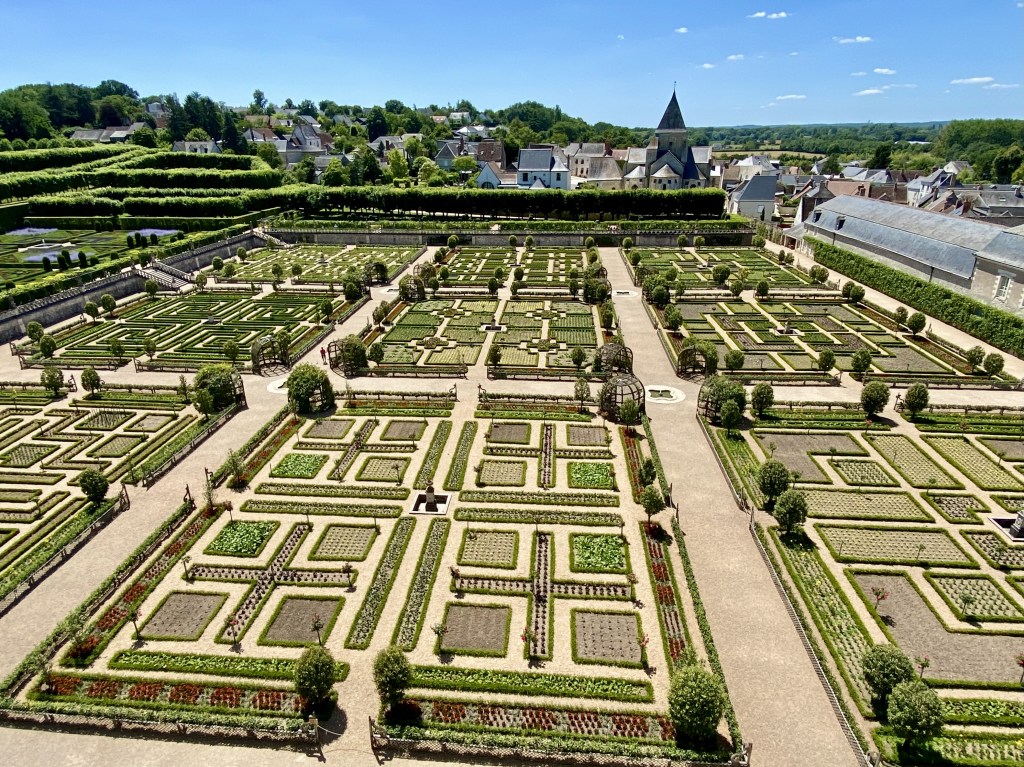
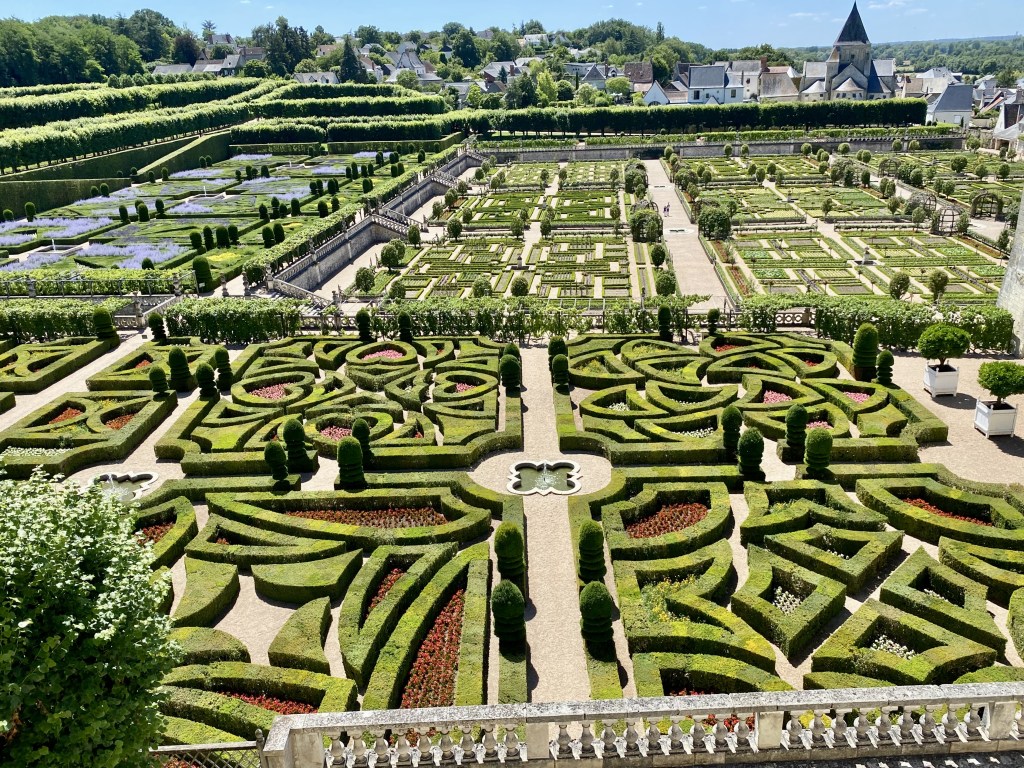
Well, the chateau and gardens are certainly impressive. The chateau is still owned by the Carvallo family, the current owner’s grandfather bought it in 1906 and set about renovating it using his wealthy wife’s money. It was clearly a labour of love and, despite its grand proportions and historic furnishing, you can also see how it could be a home.
Views over the gardens are truly stunning with everything tamed and manicured to within an inch of its life. Views across the knot gardens were at their best from the upper rooms of the chateau. Even John admitted the gardens were impressive.
We popped into the Office de Tourisme on our way back to the car and discovered Maurice Dufresne Museum of Technological History is at Azay le Rideau, far nearer than the Matra museum and would have entertained John just as well.
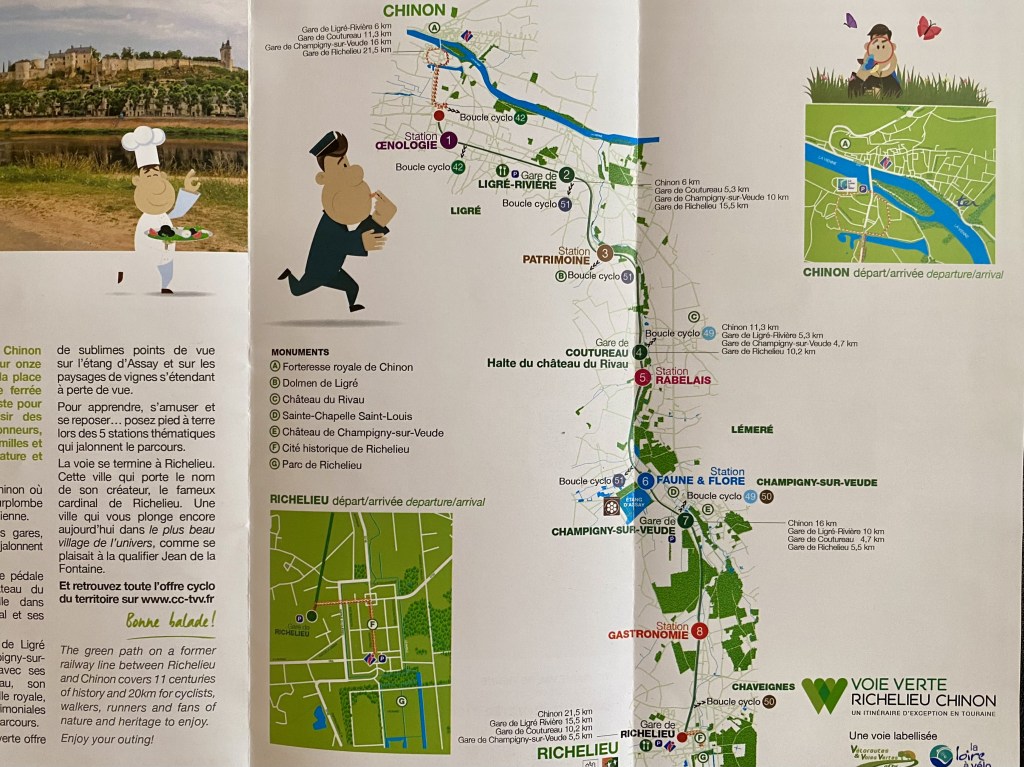
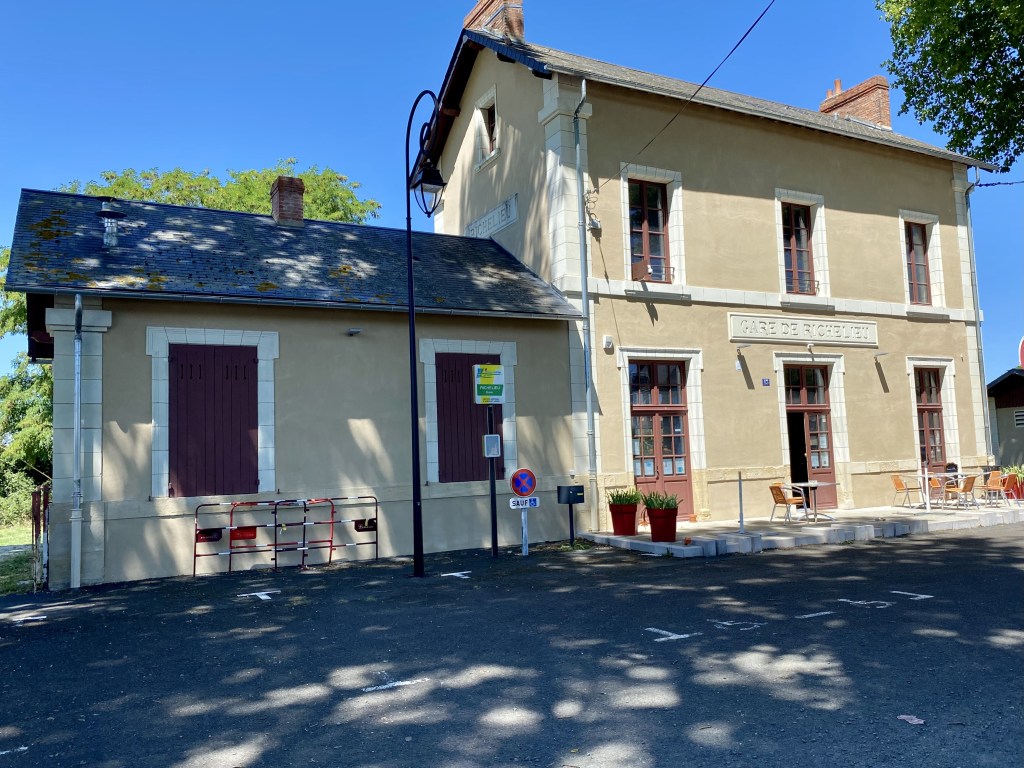
Like us, the Tour de France had a rest day yesterday, today they are cycling 172km from Dunkirk to Calais. To avoid confusion we cycled from Chinon to Richelieu on the voie verte, a 48km (30 miles in real distance) round trip along a disused railway line. It opened in 2017 and is punctuated with small stations and information Boards every 5km or so.
By our standards, we started early to try and beat the (30C) heat and headed out of town past vineyards, fields of sunflowers and nut trees, arriving in Richelieu, at the renovated station, just in time for a quick lunch.
The next stop was the Parc de Richelieu, a lovely quiet oasis behind a beautiful town square.
We took our time cycling back, mainly because of the head wind. In our experience, there is always a head wind on the journey home and never on the route out. Why is that? Is there a God of Cyclists that we should be praying to?
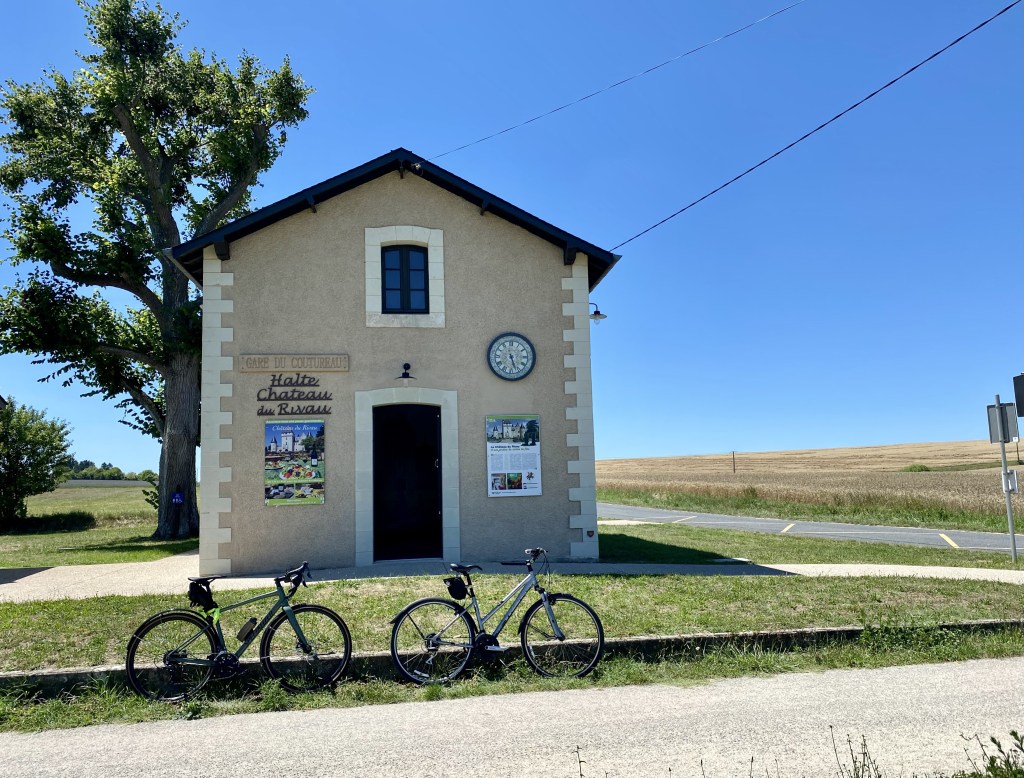
Halfway back we stopped to read about Chateau du Rivau, 1.5km off our route. It’s claim to fame is Joan of Arc stayed there while selecting war horses for her attack on Orleans. There was much eye-rolling from us and we chose not to visit the Chateau. Perhaps another time, the restoration of the organically managed gardens look interesting.
We returned home to see the last 60km of the Tour de France, which isn’t very interesting if you don’t know what’s going on because the commentary is in French and David Millar isn’t explaining precisely what’s happening.
As we write, two more ministers have quit the cabinet and yet again Boris is apologising with feigned sincerity, we know this as a couple on an adjacent dinner table have bet us, that Boris will be gone before breakfast! We think he’ll hang on longer although we are considering, on our way home, fishing Joan’s ashes out of the Seine. She’d soon have Boris sorted.
A difficult one. We are more likely to be interested in wine than improving our local knowledge but 10am does seem a little early to start drinking.
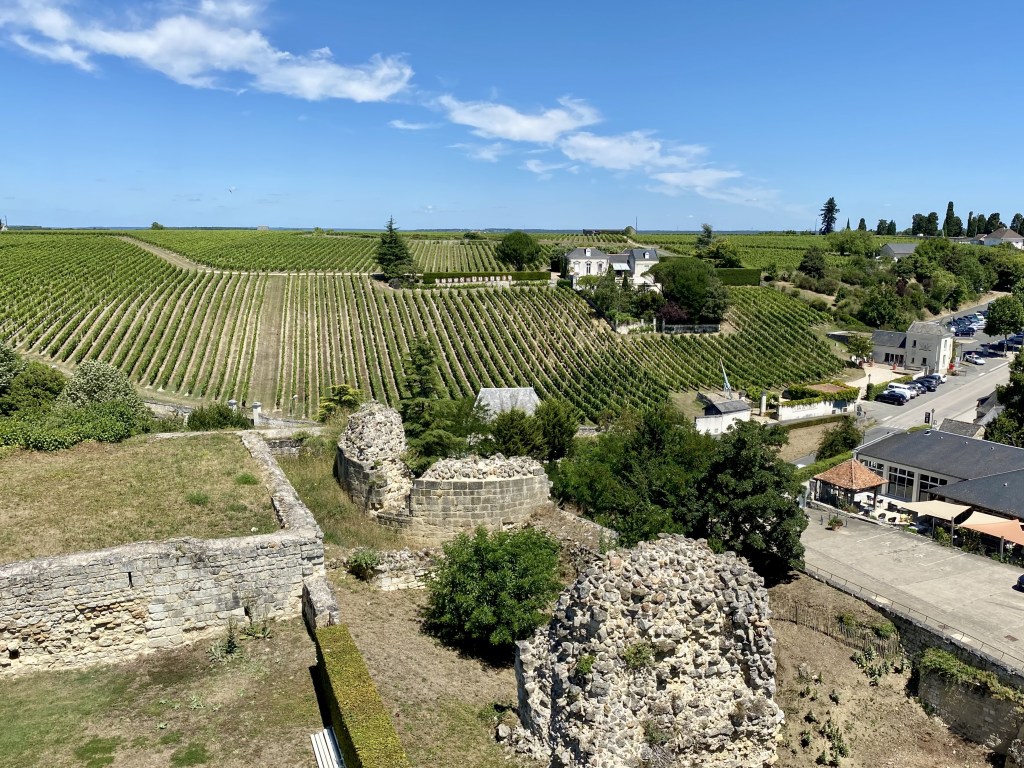
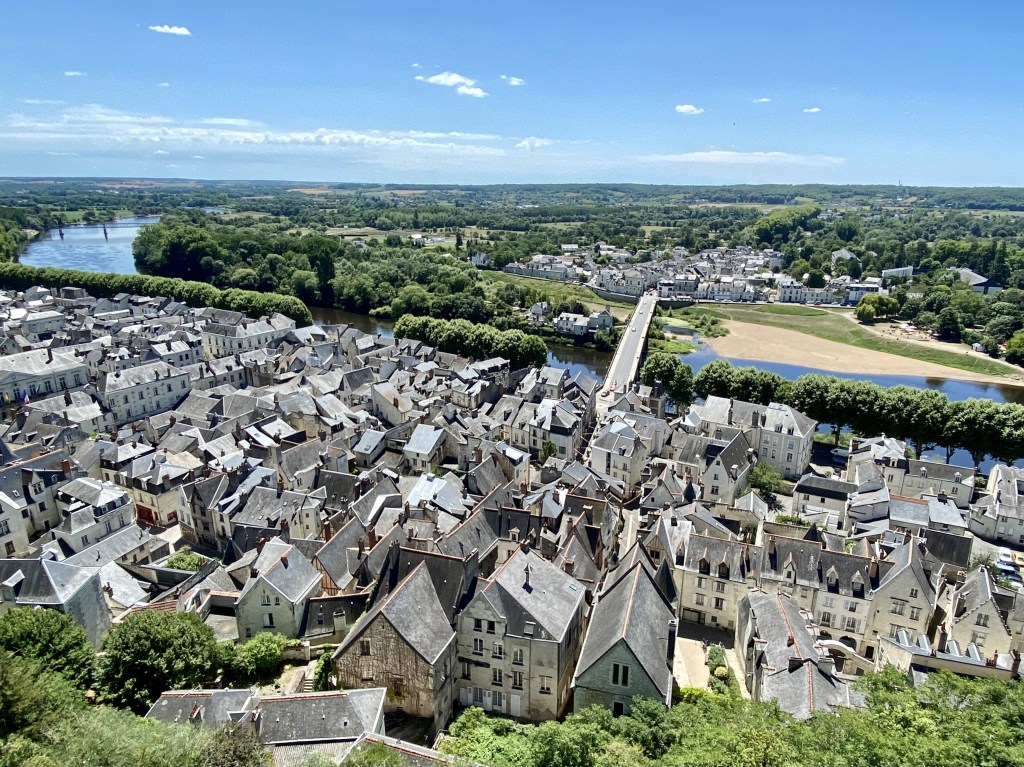
Our day began with the Forteresse Royale Du Chinon or, as John described it, another bloody castle. Anyway, it’s perched on the hill and towers over Chinon and Kim was really only interested in views across the Vienne River.
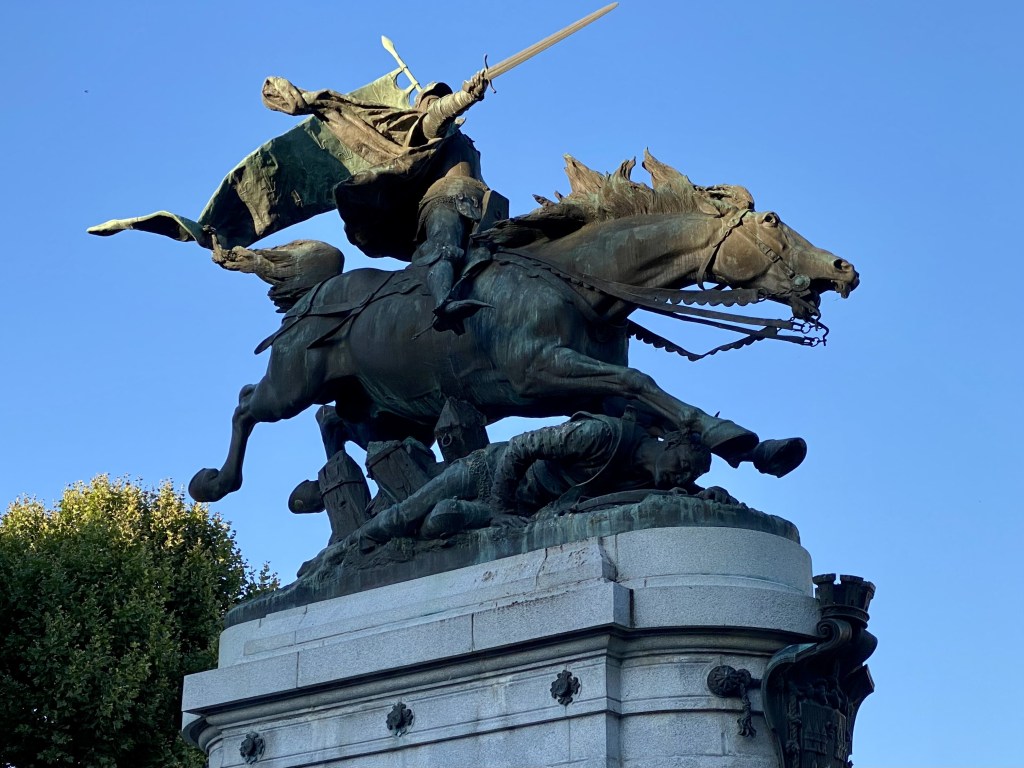
The Chateau dates back to the 10th Century and has an important place in the history of England and France. Henry II of England took ownership of the castle in 1156 and stayed there until he died. King Phillip of France won it back in 1205 and it has remained in French hands ever since. In 1429, 17 year old Joan of Arc met the future King Charles VII there and was instrumental in ending England’s ownership of France. A brief reminder that teenagers are an awesome force of nature, to be treated with caution.
By mid 19th Century the fort had fallen into decay and was later recognised as a historic monument. A programme of repair was started and it became, once again, an imposing structure.
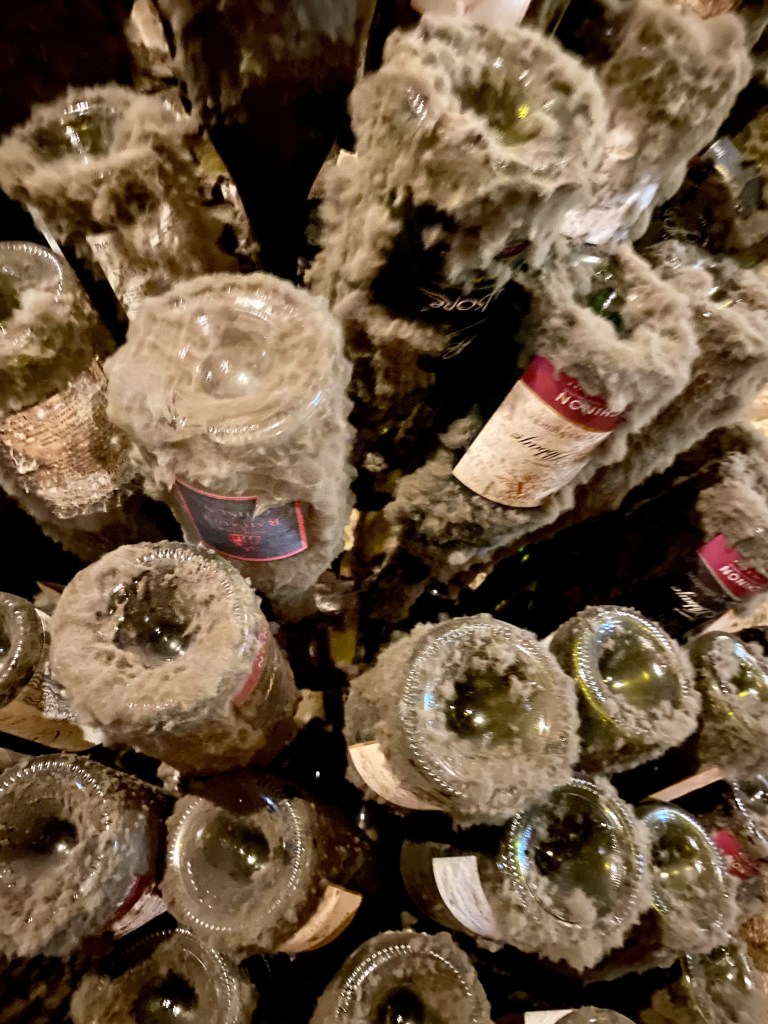
This afternoon was wine tasting, woohoo! A couple of Caves were recommended by a cafe owner, so we took a walk out to Cave Monplaisir. Consisting of many caverns carved out of the stone hillside, it sells wines produced by 3 local domaines, is full of barrels of drinkable wine with the oldest dating back 40 years. We were, however, concerned about the state of the empty bottles.
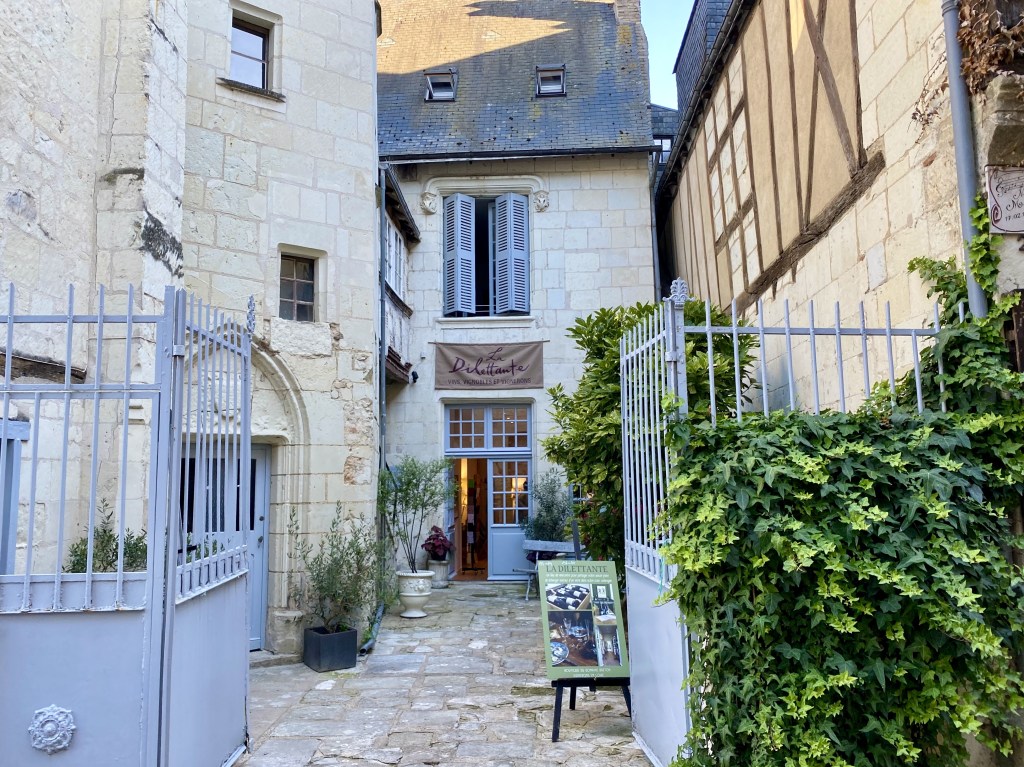
We followed this with a further tasting at La Dilettante Chinon before heading back to the apartment with a few of the best. We had limited the tasting and only have three bottles, the challenge is to decide which one we need to fill the car with.
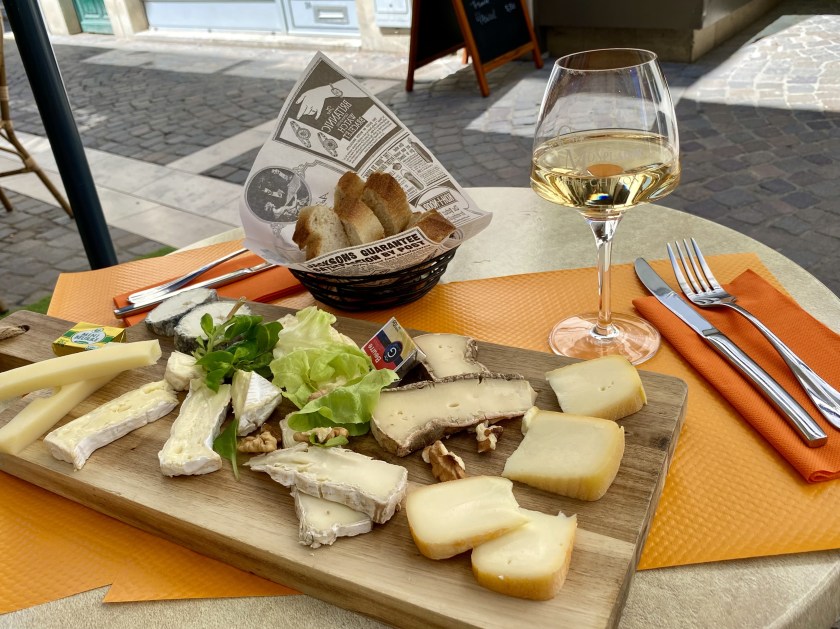
One advantage of wine tasting by bike, or on foot, is of course you don’t need to worry about driving. Another is that you have no easy means of transporting any wine home and can therefore keep drinking all day without paying for a single drop.
At some point during our wanderings, John picked up a leaflet for a town walk and after dinner we followed a route around many roads we’ve already visited. It’s amazing how much of the medieval history has survived and the buildings are beautiful. But…if we read another tribute to Joan of Arc meeting Charles II in 1429 much of the town may not last much longer.
Tomorrow, we cycle the voie verte to Richelieu. 20km along a relatively flat disused railway line. If we’re lucky it’s going to be easy cycling.
… we are in France with our bikes. We leave you to draw your own conclusions.
Yesterday, our trip started with an exciting drive to Portsmouth for the overnight crossing to St Malo. We hadn’t even reached the M25 when our bikes suddenly disappeared from the rear view mirror. Luckily, the bike rack had simply folded away from the car and the only damage seems to be to one of Kim’s handlebar grips, most of which has been deposited on the surface of the outside lane of the M1. There was a minor altercation with a coach driver in Watford, regarding what constitutes a highway, when we pulled off the road to double check the bike rack. No blows were exchanged but there was a lot of gesticulating on both sides. Kim is considering whether or not one damaged handlebar grip makes her bike unusable.
Enough whining! We arrived safely in Portsmouth and, now, we’re in France. As always, John is completely enamoured with French roads and the 3.5 hour journey to Chinon passed effortlessly. Sadly we have to admit that we broke our journey at McDonalds. Our defence? They do make a reasonable tea and coffee. To compensate we enjoyed a typical french lunch in Chinon, recommended by a couple we met outside a cafe.
We are renting a small apartment in the 15th Century Quarter of Chinon, a UNESCO World Heritage Site. It’s very old and quaint with a layout only the French could dream up and complete with a toilet in a cupboard. Saying that, we both love it and could live here. When have you not heard us say that?
The location is excellent, above a Creperie in a very narrow street with a bar at the junction. We are based in the rue du Carroi which was the original major crossroad in the town. Parking, as with any historic Town, is an issue. We think the bikes are in a cellar somewhere around the corner but not really sure, and the car is partly parked in a hotel garage at the other end of town. There is an old tyre holding the garage door closed as it’s only just big enough to hold a BMC Mini. We have assessed the risk and think the Mercedes will still be there when we need it.
Our plans include visiting Villandry, Saumur and the chateau at Azay-Le-Rideau, probably by bike which seemed a good idea a few weeks ago!
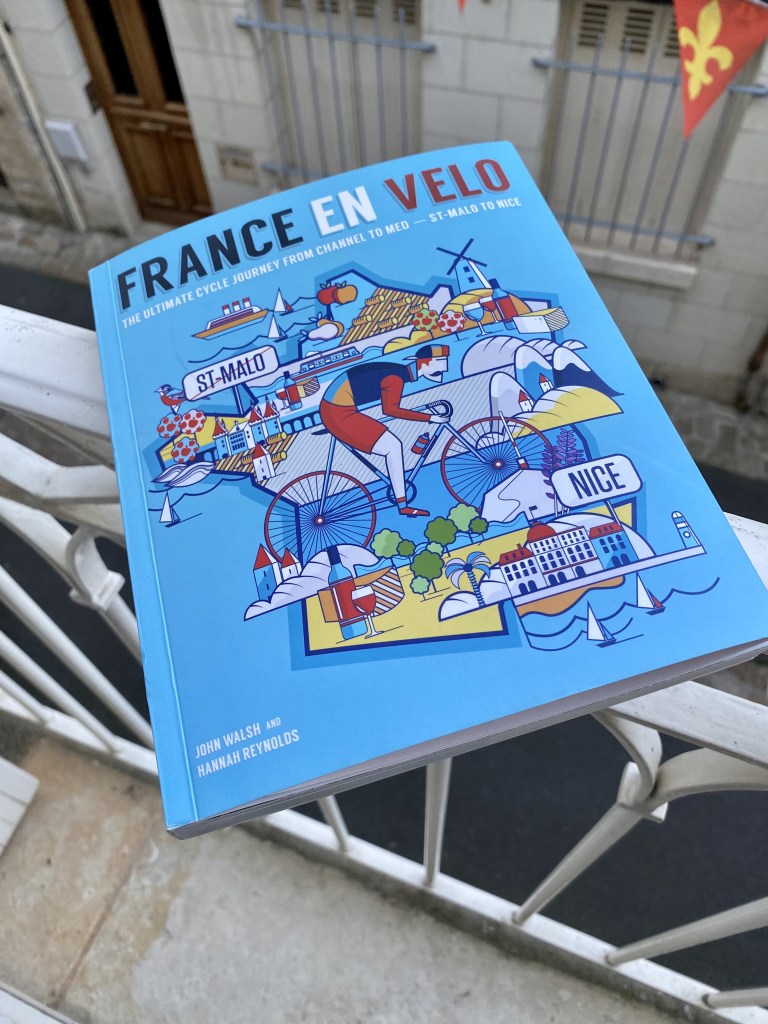
John is keen to cycle from St Malo to Nice and has brought his book in the hope we might be able to say we have made a start and completed one stage. Kim has looked at it very, very carefully and, at a push, might be persuaded to attempt half a stage and consider a round trip from Fontveraud to Saumur – watch this space. Kim has also considered losing this book in the recycling!
Jacky and Kim made the most of our final morning by visiting the Botanic Gardens. The Garden was founded in 1985 and is a centre for conservation, study and understanding of Mediterranean plants, specifically those of the Balearic Islands. The living plant collections are laid out according to ecological groups and simulate their natural habitats. We saw the biggest bee in the world, perhaps a slight exaggeration but Xylocopa violacea, the violet carpenter bee, is one of the largest in Europe. Kim has horrified John with ideas for growing her Aeoniums in the sandstone wall we have just had repaired.
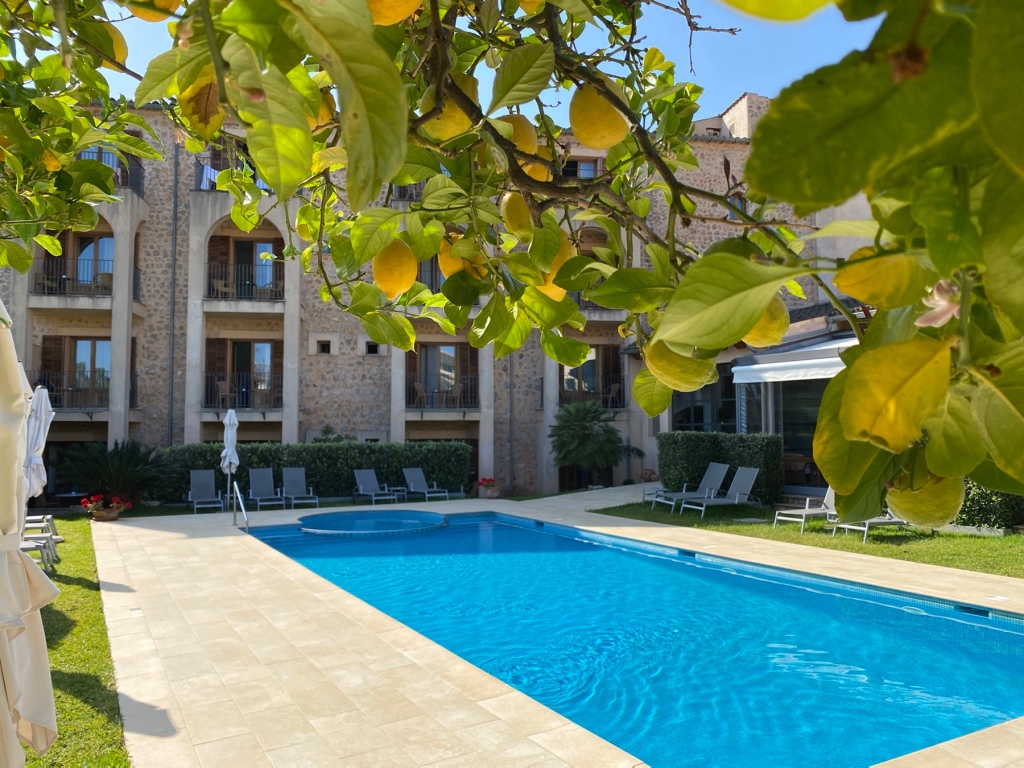
Eventually the time came for us to leave our lovely hotel.
As a result of the Es Firo festival, Soller was starting to get very busy and a number of roads were being closed. Antonio our taxi driver was aware of the problems and arrived in plenty of time for a smooth and effortless drive to the airport. As we were leaving Soller we noticed long traffic queues on the outskirts of Palma – luckily on the other carriageway, caused by people visiting the Hippodrome to watch the horse trotting races. It really brought home that we had been living in a bubble for the last few days.
COVID-19 remains a risk in the Belearic Islands and the government has recruited 120 Special Agents to support local police. Candidates for this role are drawn from those who applied but failed to obtain a post in the police force in the last 5 years.
Luckily, Ken was able to escape Mallorca in disguise, otherwise Agent COVID may have arrested him….. he tested positive this morning. So far, the rest of us have escaped.
Today’s walk was a mere 11km with a total ascent/descent of 550m, one of the most challenging of the holiday. Yesterday’s ascent and descent figures were less than 400m and that had been difficult enough. Kim had checked the map carefully and identified a number of shortcuts if it all proved too much. The ankle has gone from blue and purple to shades of green and purple so obviously on the mend. We hope you’re suitably grateful that we haven’t shared a picture of said ankle?
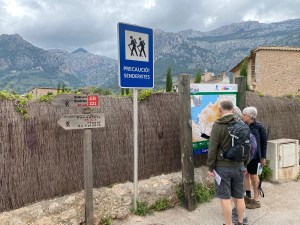
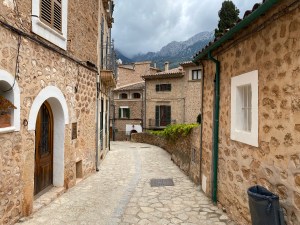
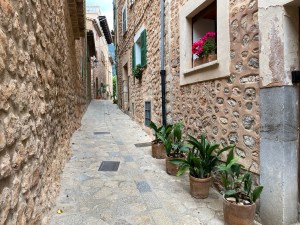
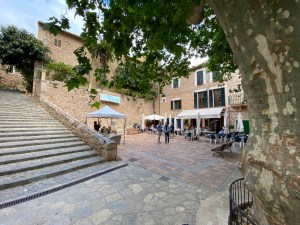
We left Soller, heading north, on quiet tarmac roads. They didn’t last long and, within a couple of kilometres we were back on narrow loose cobbled paths. You read all about those yesterday and these were much the same. The route took us through the hamlet of Binibassi before arriving at the village of Fornalutx, also known as the ‘village of a thousand years’ and said to one of the prettiest in Mallorca. We couldn’t argue with that description. It was beautiful stone buildings on narrow cobbled streets.We stopped for refreshments outside a little cafe on the main square before moving on. We’d been walking for almost two hours and had only managed 3.5km.
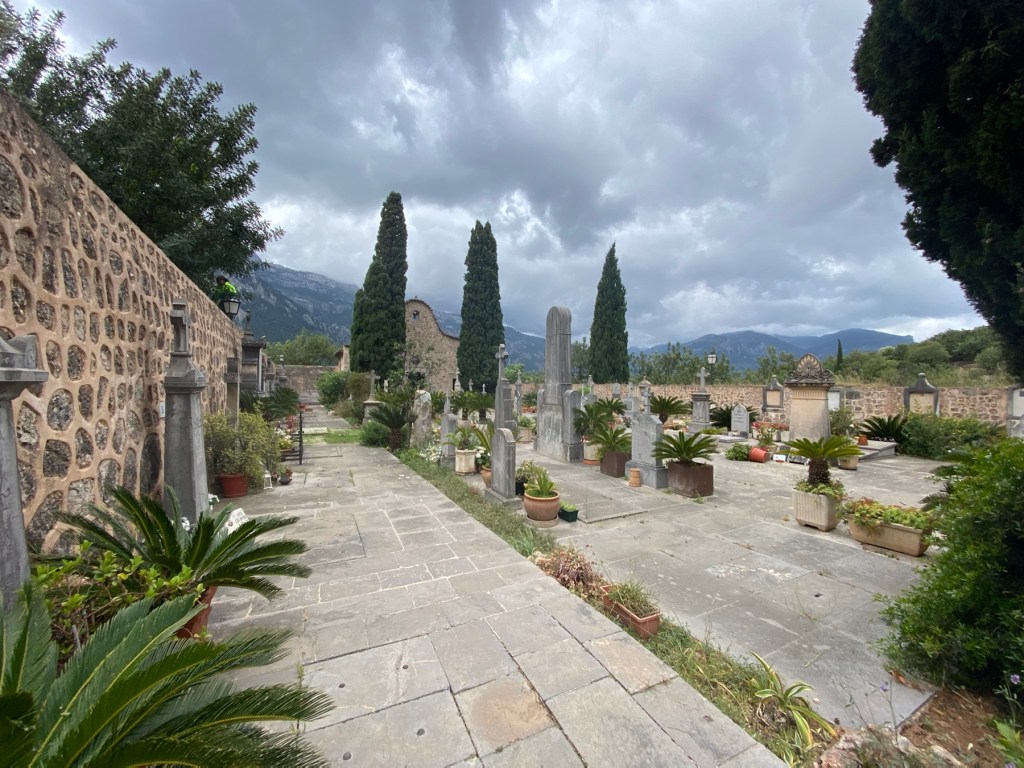
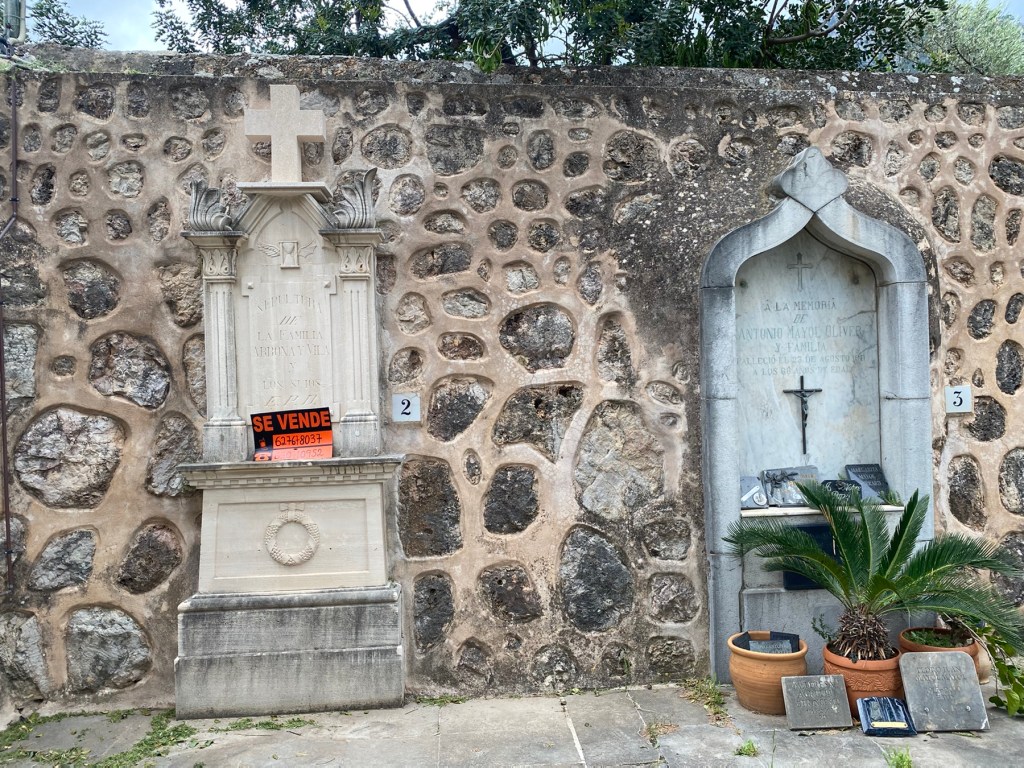
The village is high up and there were some fantastic views over the orange groves and olive terraces. The cemetery on the outskirts of town was very peaceful against the backdrop of the mountains. We’re not sure if the grave was truly for sale but thought it could be worth investigating as a final resting place.
Kim took a view as we left the village and we cheated with a shortcut back to Soller. Jacky and Ken were determined not to be beaten by a little hill and some rubble and carried on to the viewing point and cafe at Mirador de ses Barques. Our route continued up through wooded terraces, along very narrow overgrown paths with steep drops. It seemed a bit unfair to still be climbing when all we wanted to do was head downhill back towards Soller. The route flattened out and we stopped briefly for a picnic lunch in an olive grove with a backdrop of grazing sheep.
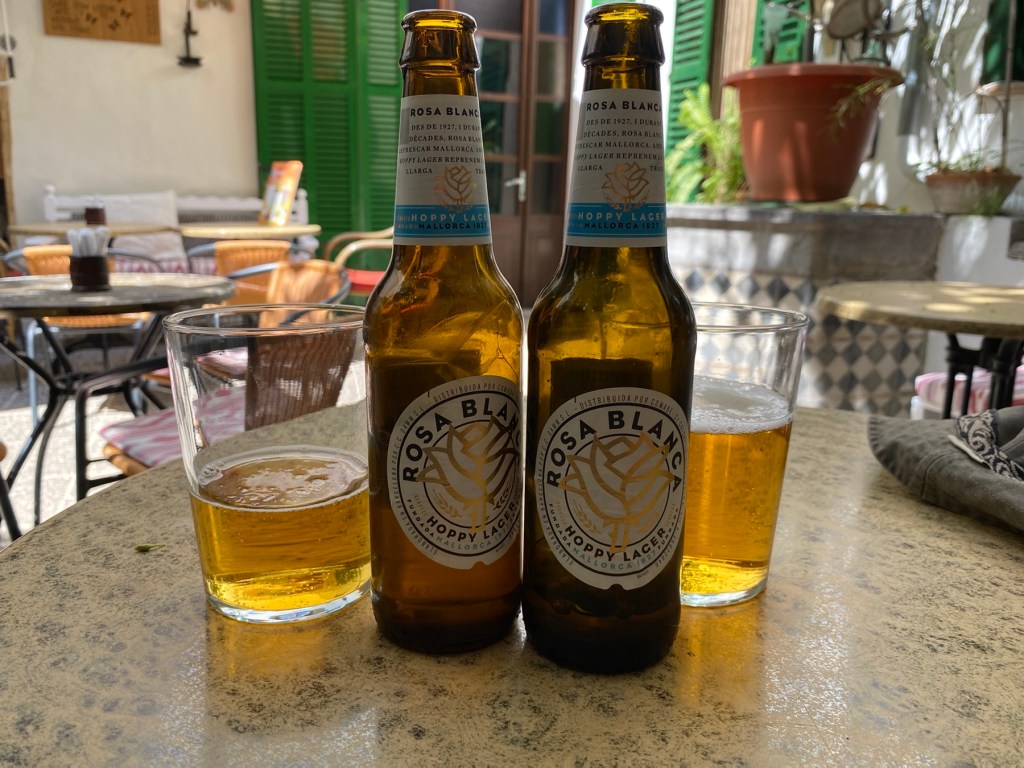
At this point the path started to descend and suddenly we were wishing for some nice rugged ascents. Why is downhill so much harder than uphill? That just seems plain contrary! It was hard work and when John suggested that we could have a beer in Biniaraix, Kim gave him a very hard stare and pointed out it would add at least another hour to our walk. He saw sense and opted for a beer in a quiet, shady terrace in Soller, no more than 10 minutes walk from the hotel.
Ken and Jacky arrived back less than an hour after us and had made good time. There was grumbling about sore feet and knees as well as distances quoted on our walking notes. The whole walk was meant to be 11.5 km, just over 7 miles in a real measure. They had done somewhere between 10 and 11 miles depending on who you believed. We had walked over 7 miles and that was with our ‘shortcut’. So much for an easier day before walking to Deia tomorrow.
On a positive note, Ken and Jacky did see the stunning views over the bay and we booked into C’an Pintxo again for dinner tonight.
We had two options walking from Soller to the Port. First was a simple, straightforward 5km, the alternative was nearer 10km taking in Refugi de Muleta and Cap Gros. We chose the more adventurous route, it was only 6 miles and Kim insisted she was capable despite hobbling down to breakfast.
We picked up provisions from the nearest supermarket and set off just after 10am. Our route notes estimated a 4 hour walk so, even with Kim limping, we’d be at the Port by mid-afternoon.
All routes start from the main Square in Soller and, as we left town, we realised we’d walked quite a loop around to the back of our hotel. There was plenty of eye rolling and we were only 15 minutes in. Soon we had left the town and were walking out through Olive, Orange and Lemon groves with the Tramuntuna mountains curving around us. They looked very high and stood between us and the Port. We consoled ourselves with the thought that estimated walking times hadn’t let us down yet. It’s worth mentioning now that, by the time we were nearer our destination,
FollowingGR221, Ruta de Pedro en Sec or The Dry Stone Route, which followed old cobbled paths that had once been the main communication routes between villages. It took us up through rows of Olive terraces. As we walked, the dry stone route suddenly became the dangerous wet stone route as the rain came down. Luckily it didn’t last long but it turned a challenging route into something deeply unpleasant.
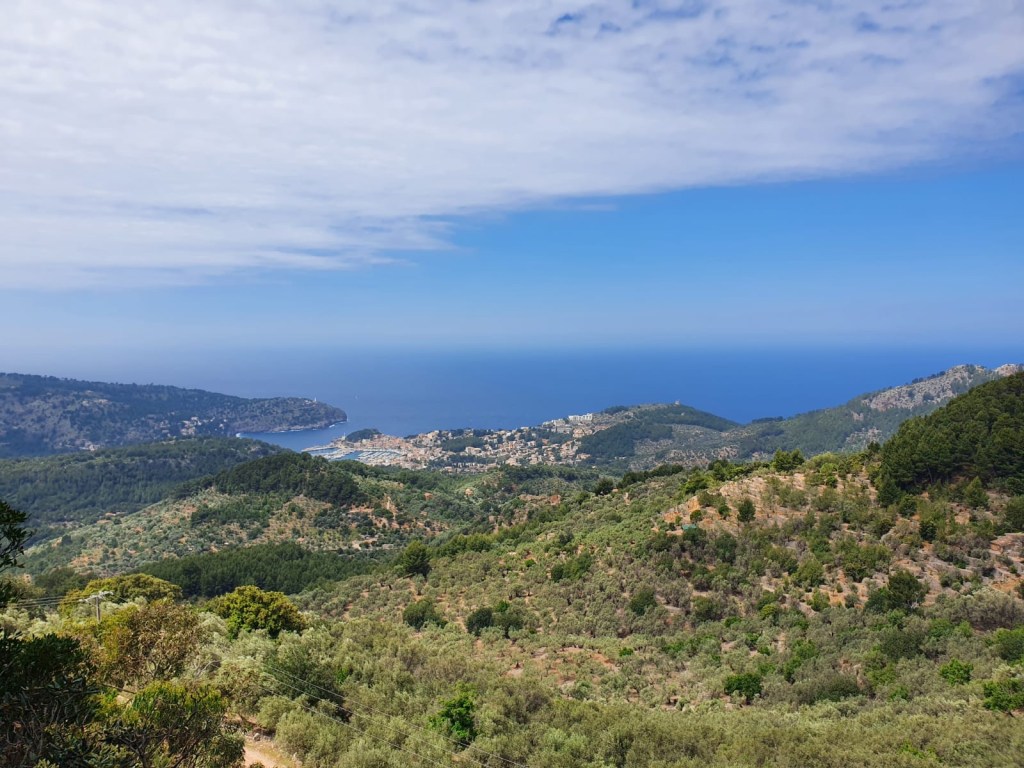
As we wound up through stone terraces we started to see glimpses of the port through the trees. We also started to see signs warning us of ‘Big Game’, the subject of much speculation. The wildest creatures we had seen were a couple of donkeys lazily grazing under overhanging trees.
It had been hard work and, about 2/3rds of the way along our route on the Muleta Plain, we came across Muleta de Ca’s Hereu, an old guest house perched on the hillside serving coffee and cake. It seemed rude not to stop and the almond cake was delicious. A few hundred meters on, we came across a young girl squeezing fresh oranges and selling the juice by the side of the path. A great business opportunity and we had two thoughts – shouldn’t she be at school and how do we get by without seeming rude, we had only just drunk a cuppa. Luckily, a couple of German walkers stopped as we went past.
We met numerous people along the way, of many different ages, abilities and nationalities. These narrow paths must get difficult to negotiate as the weather warms up and the number of walkers increases.
Finally, we reached Cap Gros, having decided the extra 5 minutes to Refugi de Muleta just wasn’t worth the effort. We may have missed the most picturesque stone hostel with breathtaking views but, quite frankly, we’re no longer bothered.
The final 3km into Port de Soller was on welcome tarmac. The only problem was it was steeply downhill with a lot of hairpin bends. Kim made it this far without too much complaining, but that last stretch was probably the most difficult.
The route timings were fairly accurate, we had walked for just over 4-hours. We stopped briefly in the Port for probably the most overpriced cuppa ever before taking the tram back to Soller.
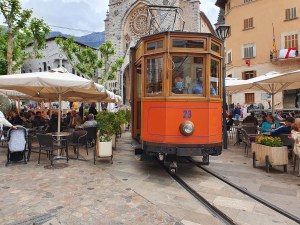
The tram is a Spanish Heritage tramway and one of only a few first generation tramways to survive in Spain. Opening in 1913, the route is nearly 5km long and a very big tourist attraction. We decided we ought to do it even though, for the cost of one tram ticket, all four or us could get back to Soller in a taxi.. it was quaint but very overcrowded. According to Wikipedia, there are 17 stations along the route, quite how anyone could elbow their way through the crowds to get off is beyond us. And why would a local use it when there’s a perfectly good, faster cheaper bus service
Dinner this evening was a recommended local tapas bar, and it was delicious. We’re not good at remembering to take food photos but the carrots were quite exceptional!
For those of us who could walk without limping, our final morning in Palma was spent visiting the Museum of Contemporary Art. Despite our best efforts we are not renowned for our culture and, true to form, everyone was back at the hotel within the hour.
This gained us an advantage and we caught an earlier train to Soller. The tiddly pom train left Palma along a track down the middle of a busy road, whistling and tooting at every intersection. It would have been great to watch it go past from the kerbside. Once out into the suburbs, we passed many homeless encampments before winding our way up through Olive groves into the Tramuntuna mountains. Thunder storms had been forecast but, apart from some heavy showers in Palma, the weather has been lovely.
We arrived in Soller at lunchtime and spent the afternoon exploring. The town is very busy and gearing up for the big Es Firo Soller, a four day festival celebrating theregion’s defence against Moorish invaders in 1581. Luckily, we leave on Saturday and hopefully will escape being chased round the streets by Moors with paintbrushes and pots of tar.
An out of town village bar in Biniaraix up in the hills was recommended by an English couple who have been spending their winters here for over 30 years. Luckily, Kim wasn’t paying attention otherwise she of the purple twisted ankle would have vetoed the uphill walk. It was worth the trek, stunning views accompanied by the heady scent from orange groves. We stopped for refreshment at a lovely bar with an excellent music choice. It was a walk well worth doing.
Our day started with a walk to the station to buy our tickets for the Tren de Soller, otherwise we may have an expensive taxi ride tomorrow and miss one of the highlights of the holiday. So popular is the train that the ticket queue went right round the Square and we were advised to return later in the day when we were assured it would be much quieter. Next stop was the Mercat Oliver, an undercover market selling everything from tripe to beetroot seeds. It appeared to be the place to have a mid-morning Prosecco and oysters as well, so we stopped for good value tea and coffee.
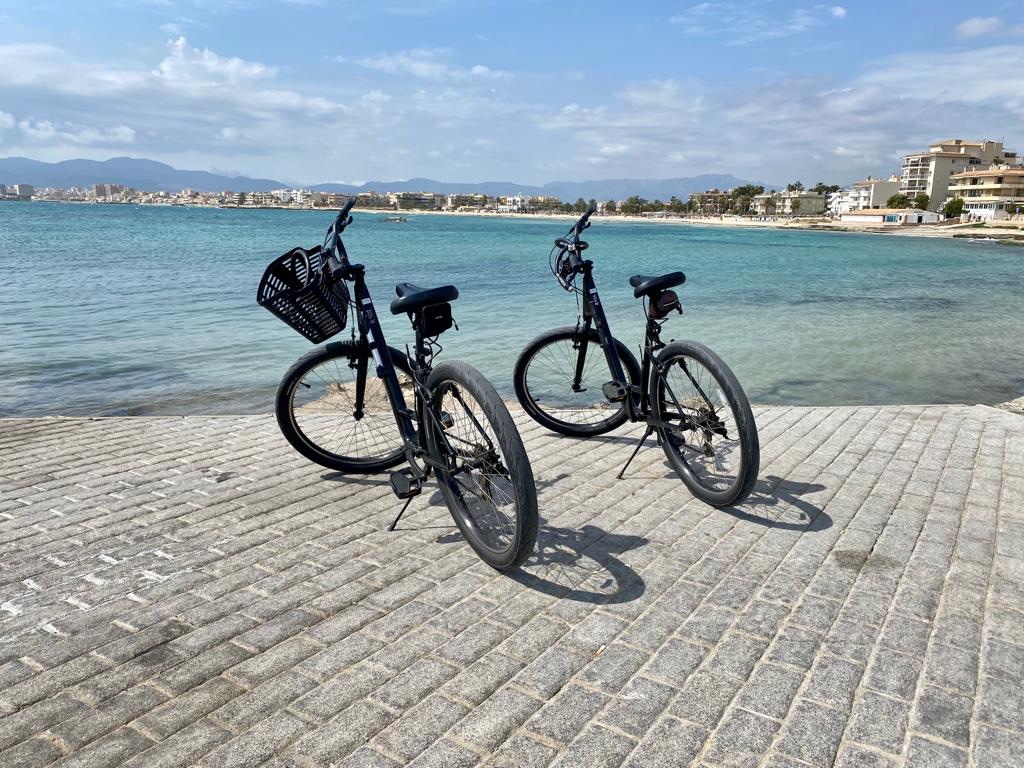
Then we headed to Nano Cycle Hire. The plan was to cycle out to the Marina before retracing our steps and cycling back along the coast to Arenal, a flat round trip of approximately 30km. Our route took us along dedicated cycle paths which were narrower than we were comfortable with, but we were safely away from traffic. The route out to the Marina gave Kim another opportunity to recreate Ken’s photo from 1964. The yachts are significantly larger.
Cycling back towards Arenal, we stopped for lunch on the outskirts of Palma. It was nice to stop at a Mediterranean beach bar, but it was overpriced and highly average. We continued on to the outskirts of Arenal and bemoaned the fact that 30 minutes outside Palma we could have had a more authentic meal at half the price. We really should know better by now.
We didn’t make it to the centre of Arenal but the ride took us along some very pretty seafront routes.
Bikes were returned at 5, with just enough time for John and Ken to get back to the station and buy our train tickets. Something had been lost in translation, the ticket office had closed at 3pm and now we have our fingers crossed that we can get on a train tomorrow
Our evening meal was booked at the popular Cellar sa Premsa, a converted warehouse that has been a source of Mallorcan food and hospitality since 1958. It didn’t disappoint but, not knowing what to expect, we ordered a starter and main course each which was far more than we needed.
Finally, someone’s ankle was sprained in a kerb and bike related incident. Guess who had this accident? It may make the ‘walking’ part of our holiday more challenging.
Ok, so it wasn’t a difficult question. We are spending a week walking in Mallorca with Jacky and Ken, three days based in Palma followed by another 4 days in Soller.
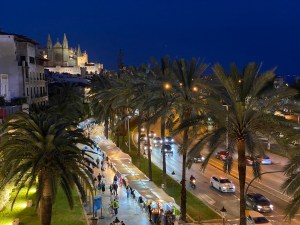
We flew from Luton with none of the expected delays and 2 hours later arrived in warm, sunny Palma. Our base is Hotel Almudaina right in the heart of the city. There is no view from our balcony, but the hotel’s roof terrace is amazing. Yesterday was spent getting our bearings before we went full blown tourist today.
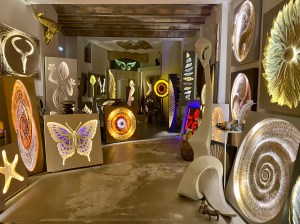
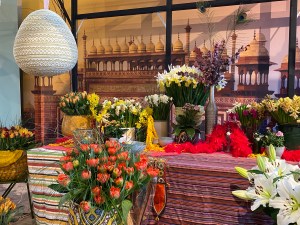
Our break was booked without thinking too much about dates, and today is a public holiday and most of the museums are shut. It’s also Mother’s Day, andyesterday the flower market was preparing bouquets late into the evening for when the town comes alive and in the UK most people are asleep. John and Ken had done some evening exploration devising today’s plan which included walking through the art district and down to a sea front craft market.
If you click on the smaller photos, with the wonders of modern technology, they expand to full size!
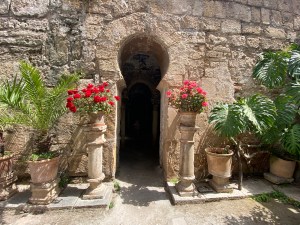
Kim was keen to visit the old Arab Baths, dating back to about the 10th century and the only remains of a Moorish invasion in the 8th century, an occupation that lasted almost 500 years. The baths are centred around a tranquil, courtyard garden. The domed ceiling of the main room is supported by 12 columns recycled from an earlier Roman building.
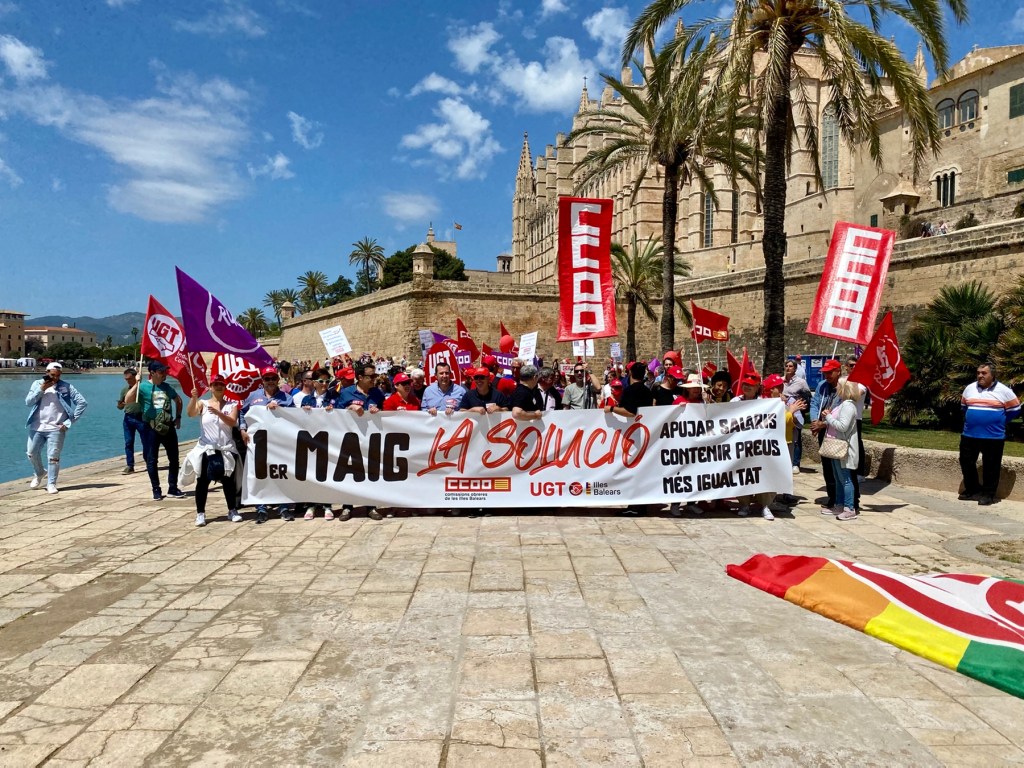
As we walked back to the seafront, we could hear loud drumming and suddenly found ourselves caught up in the ‘Labour Day’ demonstrations with protesters demanding higher pay, better pensions and greater rights for women. Apparently these demonstrations have been organised in most Spanish cities today, and although peaceful and good natured armed police were keeping a watchful eye on events from various vantage points.
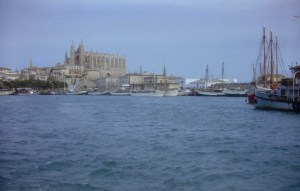
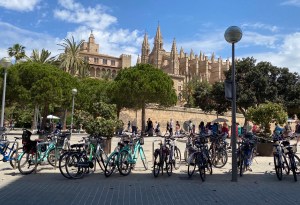
Kim’s dad, Ken, visited Palma in December 1964, where he took a photo of the Cathedral. We tried to recreate his original photo and you can barely see the difference.
Dinner tonight was traditional tapas. Tapa means ‘lid’ and beer or wine would be served with a plate of ham or cheese on top to keep out annoying flies. Over time the Tapas became more refined developing it’s own dining culture – at least that’s what we read at tonight’s restaurant.
A slight problem occurred early evening as we discussed plans and timings for the next few days. Jacky scribbles circles, lines and crosses all over maps with a flourish that is alien to John, and Ken appears completely incapable of grasping a basic itinerary. We are currently evaluating our future holiday plans.
During our walking tour of Amsterdam, we learned a bit about Dutch provinces. Technically, this is final thoughts from Clophill but our trip had officially been based in South Holland with a brief visit to North Holland.
If Holland wasn’t so wet and windy, apparently it is wetter than the UK, we would want to live there. It is so geared up to life without cars, ours went in the car park on arrival and didn’t re-appear until we left for home.
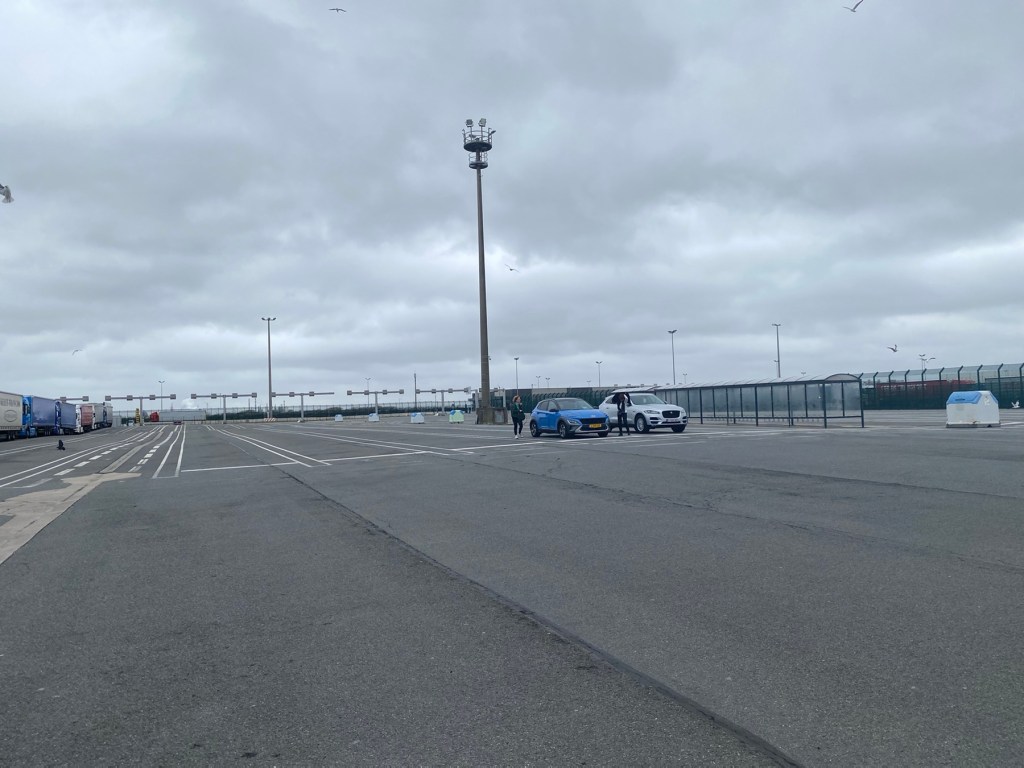
Our journey home was interesting. DFDS asked us to allow 2 hours for check in rather than the usual 45 minutes. After our Dover ‘adventure’ we didn’t want to risk missing the ferry and were up at 6:30 for the 3.5 hour drive. Next time we will use Harwich to the Hook of Holland which has served us well in the past. The route to Dunkirk is fairly easy driving but its a long way. We arrived at Dunkirk to be greeted by clear empty lanes and a shiny new Duty Free building. Did they want us early just so we’d be lured into Duty Free.
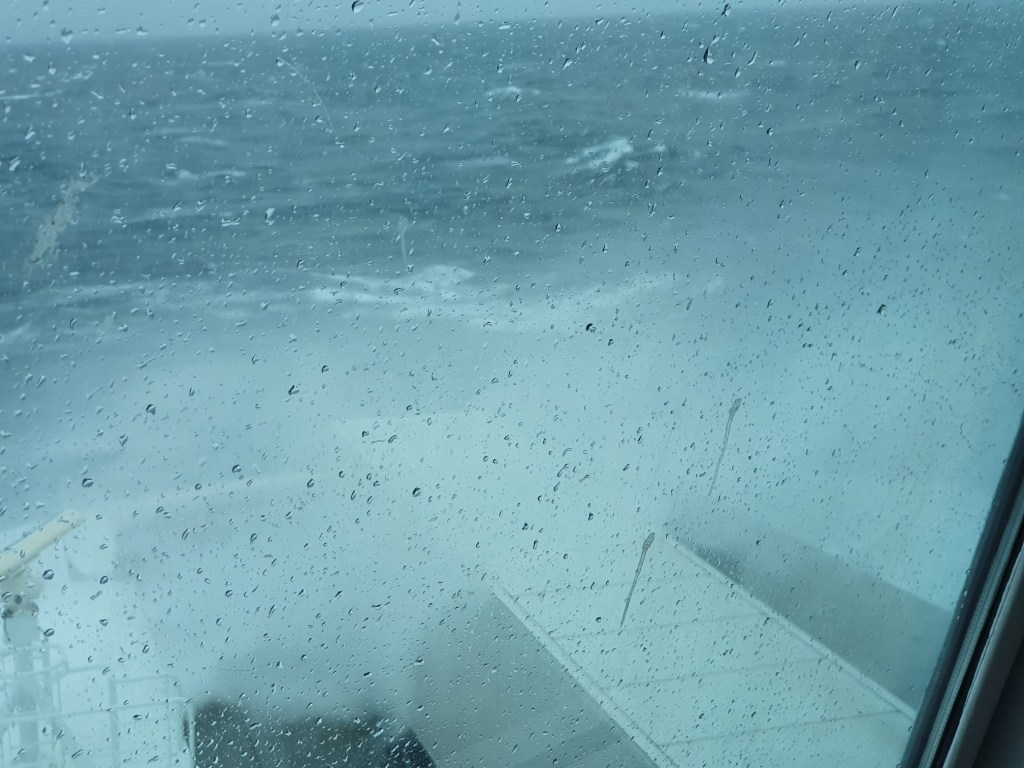
Dunkirk was lovely and sunny but, before leaving port, our Captain warned us we ‘might notice some movement on board’ as we approached Dover. Experience says that professionals always tone down any bad news and we were in for a choppy sailing.
We were held outside the Port at Dover for over an hour, waiting for a little tug to assist us into port. It was very dramatic with harbour walls and berthed P&O ferries all within hitting distance. We admired the skill of the tug captain, a tiny little boat dwarfed by the ferry. It was all very dramatic in a calm, understated way. The only sign the crew were preparing for a potential accident was seeing them all calmly lined up watching what was happening outside, ready to take action if needed. It really brought home the impact of P&O’s decision to use agency staff.
We landed safely at Dover and it was a relief to see the miles of parked lorries had cleared, let’s hope those drivers wish to return to the UK in the future.
The less said about our journey home, the better. 3.5 hours through torrential rain with a detour through Sevenoaks and Dartford. At one point we thought Google was having a nervous breakdown!
Anyway, we safely home and counting down to our walking holiday later this month.
Despite changeable weather we chose to cycle to Keukenhof, the 79 acre site which opens for 8 weeks annually, to showcase the products of bulb growers and flower producers in the region.
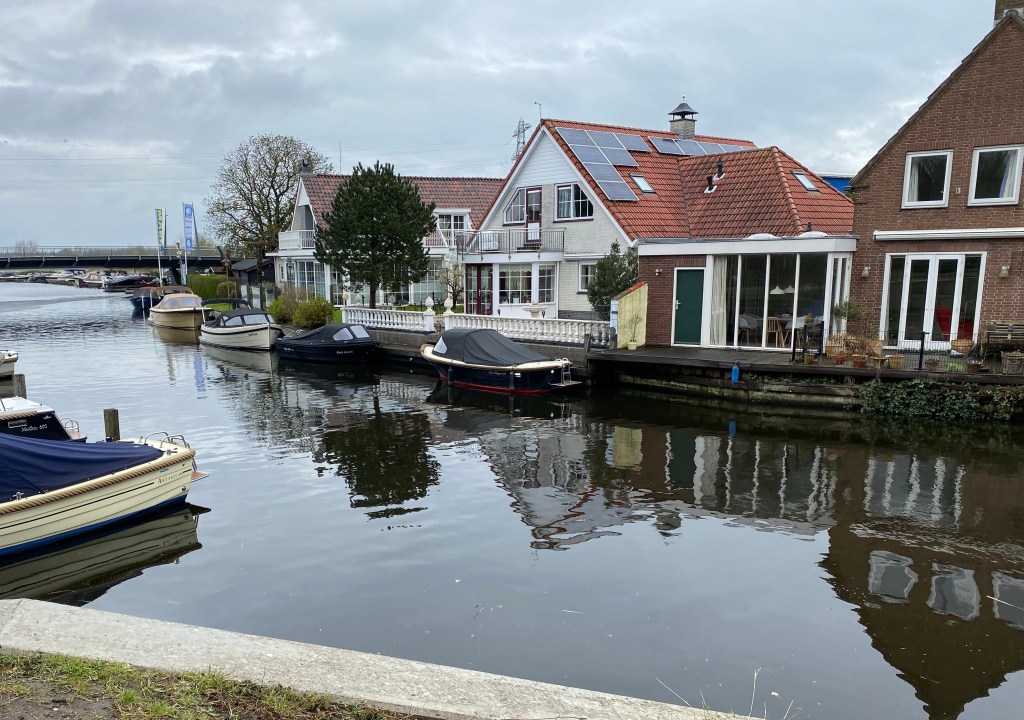
The joy of Dutch cycle networks is they generally take you away from main roads. We cycled out of Leiden, along the river and past some fantastic houseboats and houses .
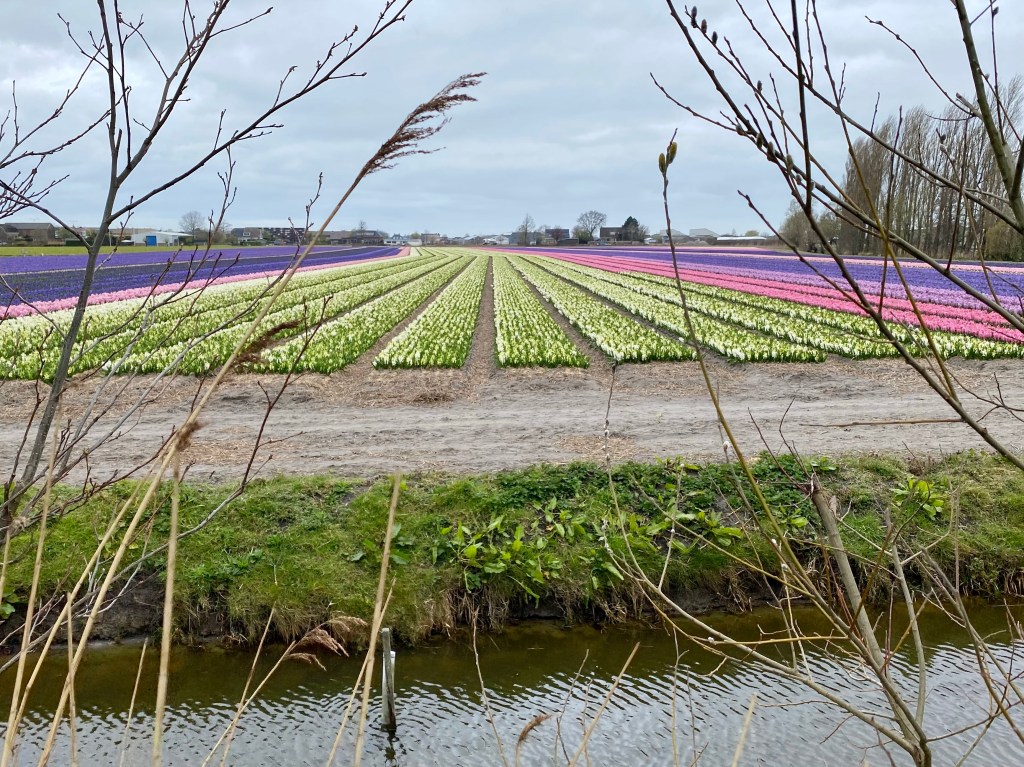
Then we were out in the Tulip fields although Narcissus and Hyacinths were putting on the best show and, despite relatively cool temperatures, hyacinth scent was strong in the air.
We made an unscheduled stop at De Tulperij, a grower of tulips, daffodils, hyacinths and dahlias. Although along a narrow road, it’s a local attraction. There was a spotless, barn divided into a clean orderly work area and a beautifully decorated cafe. You can walk around their growing fields and order bulbs for autumn delivery. It was a fantastic find and we felt obliged to stop for a cuppa and homemade apple cake.
On to Keukenhof, Ken had last been there 30 years ago and was amazed by its transformation. The rest of us has nothing to compare and simply thought the entrance looked new and smart.
Both gardens and flower displays were stunning. It was a few weeks early for tulips to be at their best and it looks like there will be azalea displays too. Layered bulb planting was meticulously planned and there was plenty of colour to keep us occupied. Flower pavilions around the site were equally engrossing. Our photos really don’t do it justice.
On our way back to Leiden, we took a detour into Lisse to visit the Museum of the Black Tulip. It was a lovely little museum, tracing the history of the Tulip from China to the Netherlands in the 16th century to the present day and the Novacap floralis scandal – now that’s something for you to Google.
We learned about bulb glasses and crocus bowls as well as how bulb growing and harvesting has developed over the centuries. Finally, in 1850 Alexander Dumas wrote ‘The Black Tulip’, a successful novel telling a story about the battle for a black tulip which was often believed to be true. We knew better from our Keukenhof visit.
Our ride back to Leiden was into a headwind with the odd smattering of rain. It was hard work and a relief to get back to the hotel.
We have an early start tomorrow and, fingers crossed, it will be a straightforward trip home.
Heavy rain and strong winds had been predicted and the forecast was surprisingly accurate. This morning, we noticed even the hardy Dutch were struggling to cycle in the appalling weather. We were booked on a walking tour in Amsterdam and couldn’t quite believe we were daft enough to attempt it in such awful conditions.
John was seriously impressed by trains each one with specific areas for bikes, but his admiration was dented when we ground to a halt, stuck behind a train with a defective door. It was a short delay as we were sent back to Haarlem but enough to turn our lunch plans into a quick stop for coffee and a snack.
Tip of the day: If you are cold, wet and hungry head to a Dutch department store. They usually have a warm, clean, reasonably priced cafe and don’t mind you dripping on the floor. We have tested this theory twice so it must be true.
Our guided tour started at the national Remembrance monument opposite the Royal Palace. We were a mixed group with people from New Zealand to Brazil. As we walked, our guide, Sem, gave us an entertaining talk on Dutch political history. We learned about. Dutch architecture and how the style of the houses was influenced by wealth and taxes. Taxes were calculated on the width of your property and the number of windows and steps.
Many of the tall narrow canal front houses lean forwards. We always thought it was something to do with poor building practices, but we learned today, it’s a mix of practicality and tax avoidance. The houses have such narrow staircases, all the furniture has to be hoisted up the outside and the lean helps to avoid furniture crashing into the property. The design feature also helps keep water away from the building. We’re not sure it’s true but it made a good tale.
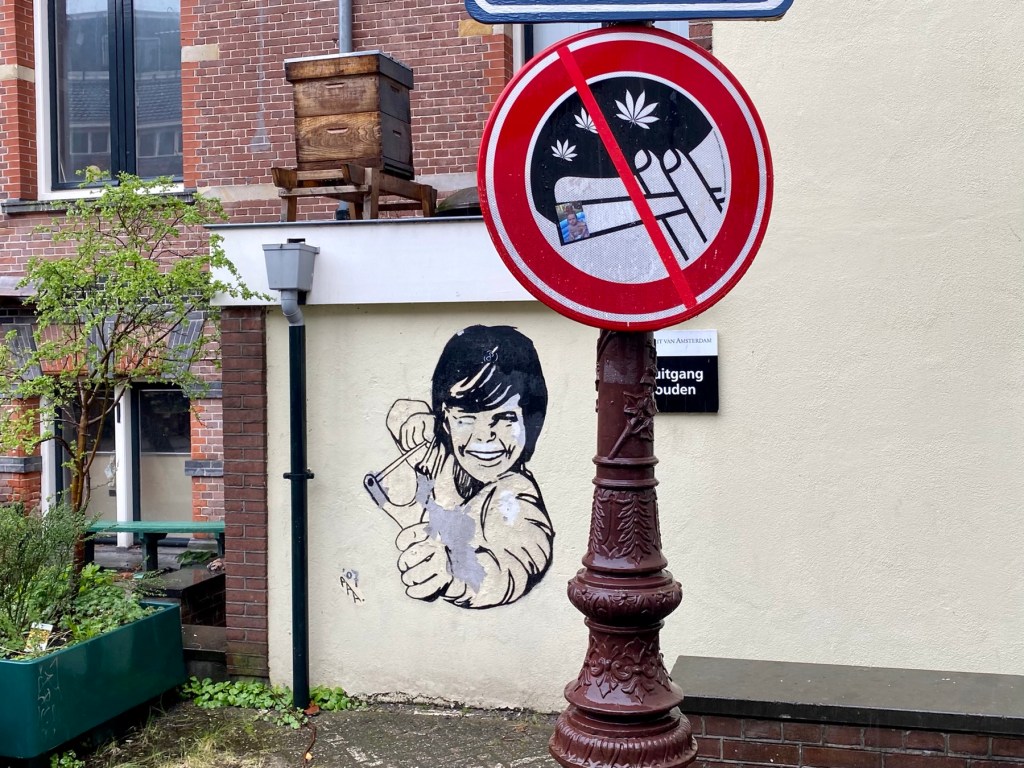
Our walk through one of the university buildings stopped at an original Banksy and the most frequently stolen traffic sign in Amsterdam. The sign came about following a long campaign by a local to stop students smoking weed outside his home. Now all he has to deal with is the sign regularly being stolen.
Next was the old Jewish Quarter. 80% of Amsterdam’s Jews didn’t survive WW2 and those that did, came back to find their homes had been looted and any combustible materials removed by locals to help provide warmth through one of the coldest winters seen in the city.
We are sorry to say we didn’t see any windmills in old Amsterdam or mice with clogs on, it was too wet and windy.
Just to be clear, Fietsknoop is not a bizarrely named Dutch town but an ‘App’ that enables route planning along the many miles of Dutch cycle ways. Jacky had mapped our route, 23.5km one way, with a plan to catch the train back to Leiden. There is only so much cycling Kim can be encouraged to do.
This morning, we discovered Leiden’s historic centre complete with obligatory windmill
Cycling in Holland is a joy. Well maintained, wide, signposted cycle routes feel very safe and the cyclist is king of the roads. It continues to amaze us that cars give way to cyclists and even treat pedestrians with respect. If it wasn’t so blooming cold, we’d want to live here. The App was fantastic, reminding us to pay attention to route markers, and taking us away from the main roads.
We took 1.5 hours to cycle to Delft, just in time for lunch! It would have been rude not to try the local speciality of krokotten. Delft, like many Dutch towns has a very pretty historic centre with a lot of canals and some stunning architecture.
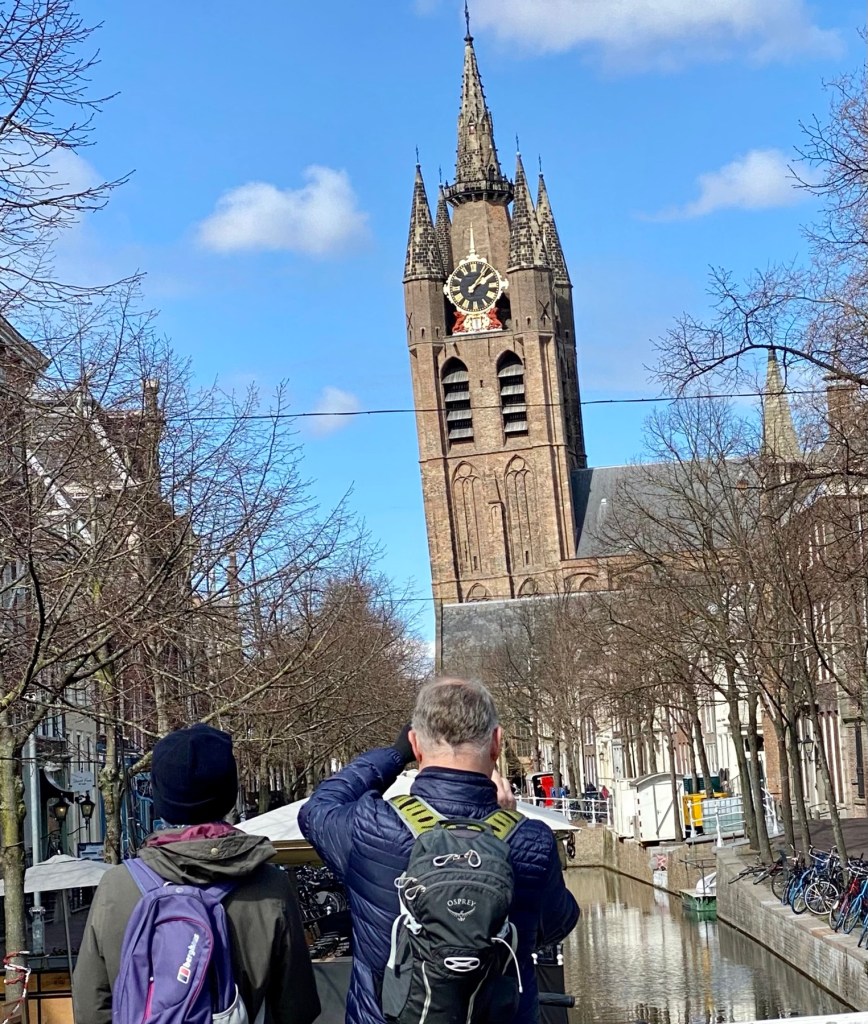
We were surprised by the alarming angle of lean on the ‘Old Church’ tower which stands directly on the ‘Delf’, the old word for ‘canal’. When plans were made to add a tower to the church in 1325, there was nowhere to put it. It is likely the canal was diverted, filled in and the tower built on top of it. This turned out to be a bad idea when the tower started to subside during construction. They managed to stabilise the structure and continue building it straight and that is why the tower has a kink.
Our route to Delft had been so straightforward, we thought we’d cycle back to Leiden. Now we’re not sure if it was all uphill, but it was far more challenging and we battled with a bitterly cold headwind. It was a relief to get off the bikes at the hotel and collapse with a cold beer.
Tomorrow, we are taking the train to Amsterdam and have a walking tour booked. Thank goodness we hadn’t planned to cycle, a break from the saddle will be welcome. The only problem is the weather – heavy rain and high winds are forecast.
Every day for the last two years during lockdown, Kim has spent time diligently improving her ability to speak French. So as the world begins to open up our first post-Covid adventure is to…. Holland.
Neither of us know any Dutch but our passports are dusted off, the car has it’s post Covid UK stickers. We are staying in Leiden, with Jacky and Ken, and cycling to see the tulip display at the Kuekenhof gardens. Trips to Delft and Amsterdam are also on the itinerary.
If you have been paying attention to the news over the last couple of days, you will know that the last place you want to be, in the UK, is Dover and that is where we headed for our ferry crossing.
This is where you really do need to pay attention… our original crossing to Dunkirk was scheduled for 8am, DFDS changed it to noon. Bad weather and crashed ships had upset their timetable and that’s without mentioning the P&O debacle. We complained about the noon sailing so DFDS helpfully re-arranged for 8:30 to Calais.
We left home at 4am for the 2 hour journey, made really good time until we were 2 miles from the port and it all started to go wrong.
Dover was at a standstill and we mean the whole of Dover.
You have to feel sympathy for the lorry drivers, hundreds parked up on the Dover approach roads, many of whom had been there without any facilities for over 24 hours, it’s easy to see why they are becoming increasingly relectant to deliver to the UK
Eventually we made it to check in at 11am, and booked on the noon Calais sailing. Yippee, we thought. Ken and Jacky were checked in an hour ahead of us and on the same ferry. Never mind the delays, we were now the correct side of the check in barrier
To cut the rambling short, we drove straight onto an empty ferry which promptly departed early at 11:30 and left Ken and Jacky, in Dover, wondering how on earth they weren’t in France ahead of us.
Amongst the first to disembark, after a 3 hour effortless drive on some lovely roads we reached our first planned stop at Willemstad. We’d stayed there on a previous cycling holiday and it was still beautiful. The sun was out but the wind was bitter so we didn’t stay long.
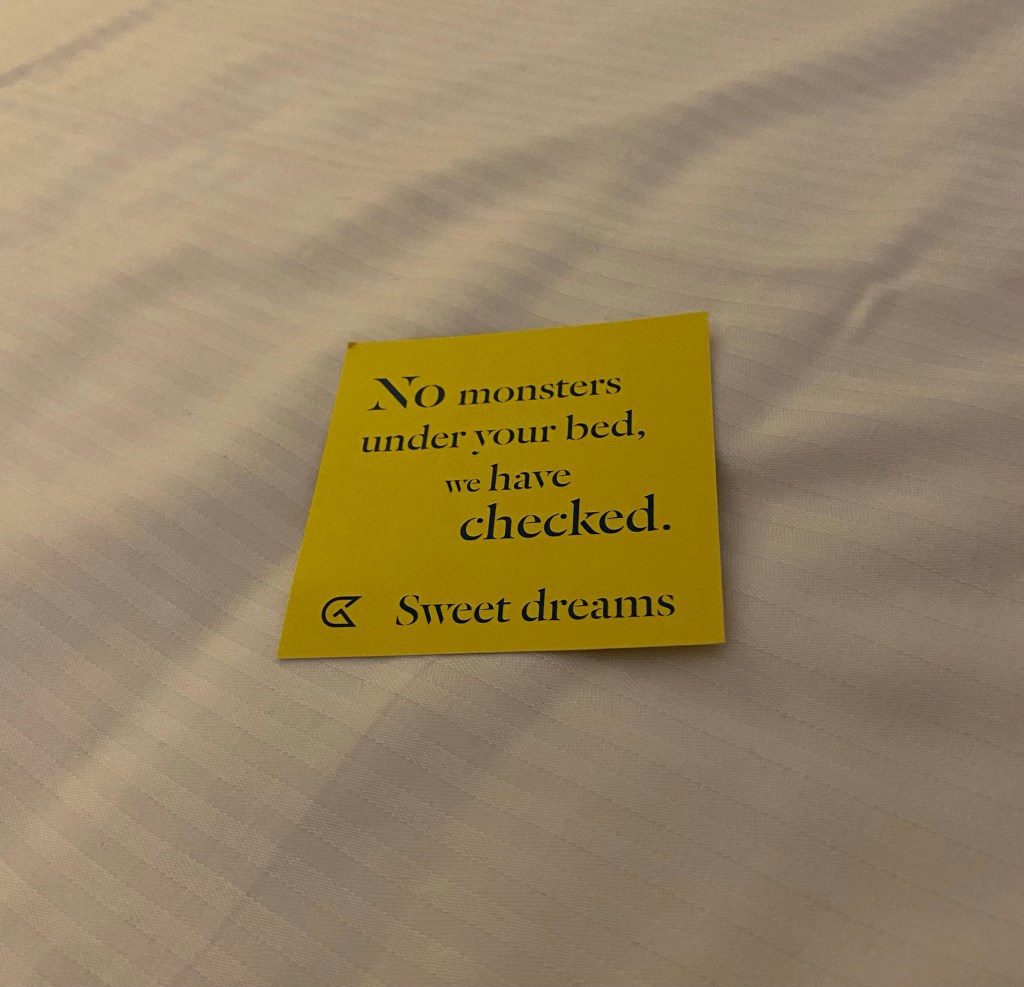
So we haven’t done much today, other than sit in queues and drive a long way. An early night beckoned and you have to love a hotel that hides cards like this in your bed
We decided a micro adventure was needed to celebrate our 27th Wedding Anniversary. ‘Abroad’ still feels far too complicated so Anthony Gormley’s ‘Another Place’ was our destination. Please bear with us, Wales will feature at some point and, because we passed a sign saying ‘Welcome to England’ we feel we have been abroad.
Anyway, the Gormley statues have been on our list for a while and 2021 became the year to make it happen. We started early, stopping for a romantic breakfast at Keele Services before arriving in Crosby.
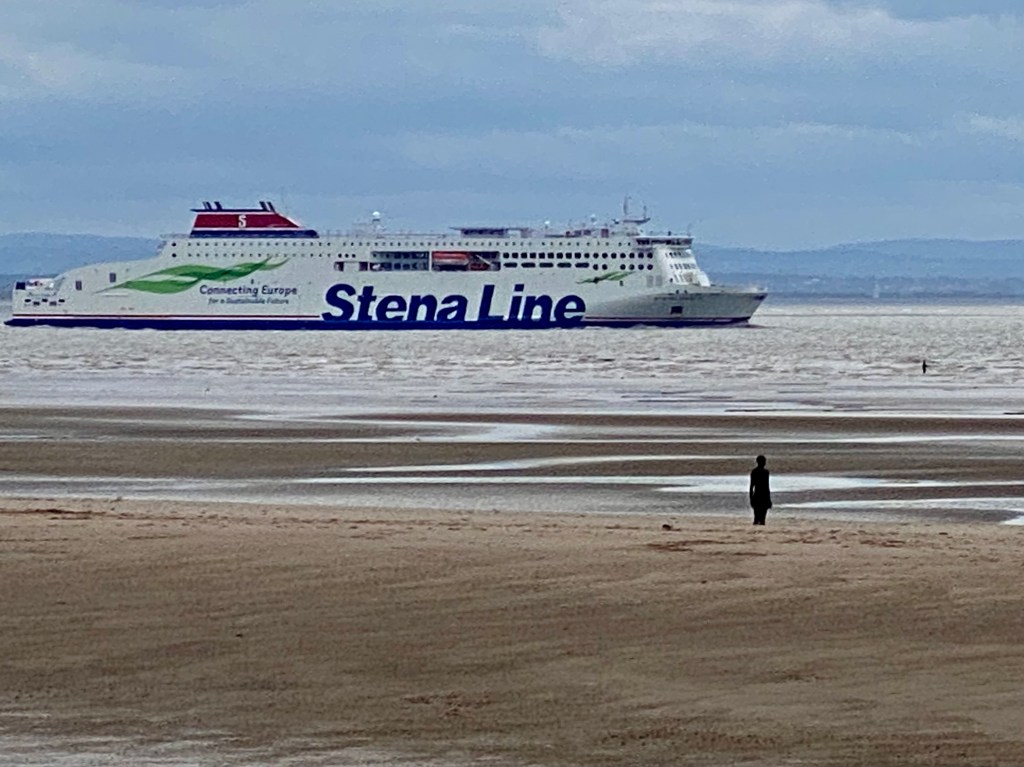
Neither of us were sure what to expect when we clambered over the sand dunes to find the statues. 100 life sized cast iron versions of Anthony Gormley spanning across 3km of beach and stretching 1km out to sea was not it. It’s difficult to convey the impact of all the statues, looking out to sea, in a single photo. You really need to visit to appreciate the emotional impact they have, it’s really very impressive.
Crosby is also home to the grand Plaza Cinema which first opened its doors on 2 September 1939 and was immediately closed again that same day, due to regulations introduced by the outbreak of war! Luckily it was saved from redevelopment and is now run as a successful independent cinema.
By midday, we’d walked the length of the beach and back through the town to the car. It was too early to head to the hotel so ‘what next’ we asked ourselves. John had always wanted to visit Rhos on Sea and it was only an hour away, so we headed under the River Mersey using the old tunnel and out along the North Wales coast.
Whilst eating lunch, John suddenly announced we could visit the aqueduct at Llandudno, we were only a few miles away and the aqueduct is famous although Kim had never heard of it. Luckily Google maps told us it was the Pontcysyllte Aqueduct near Llangollen, not Llandudno, and only a short detour on our route to the hotel.
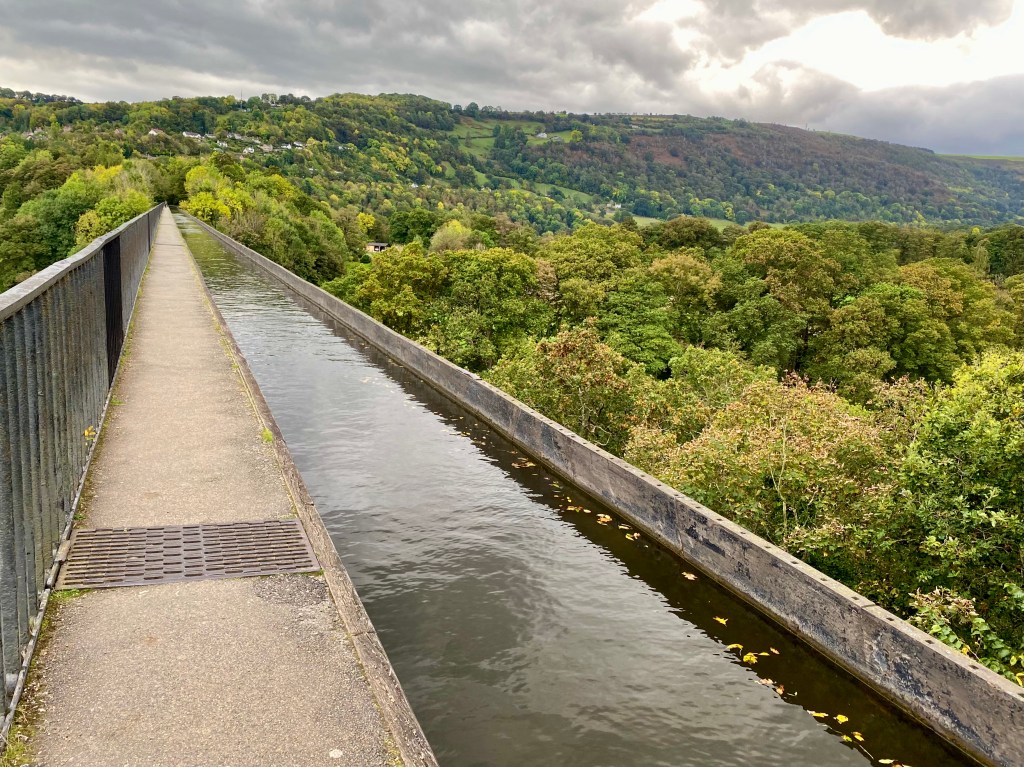
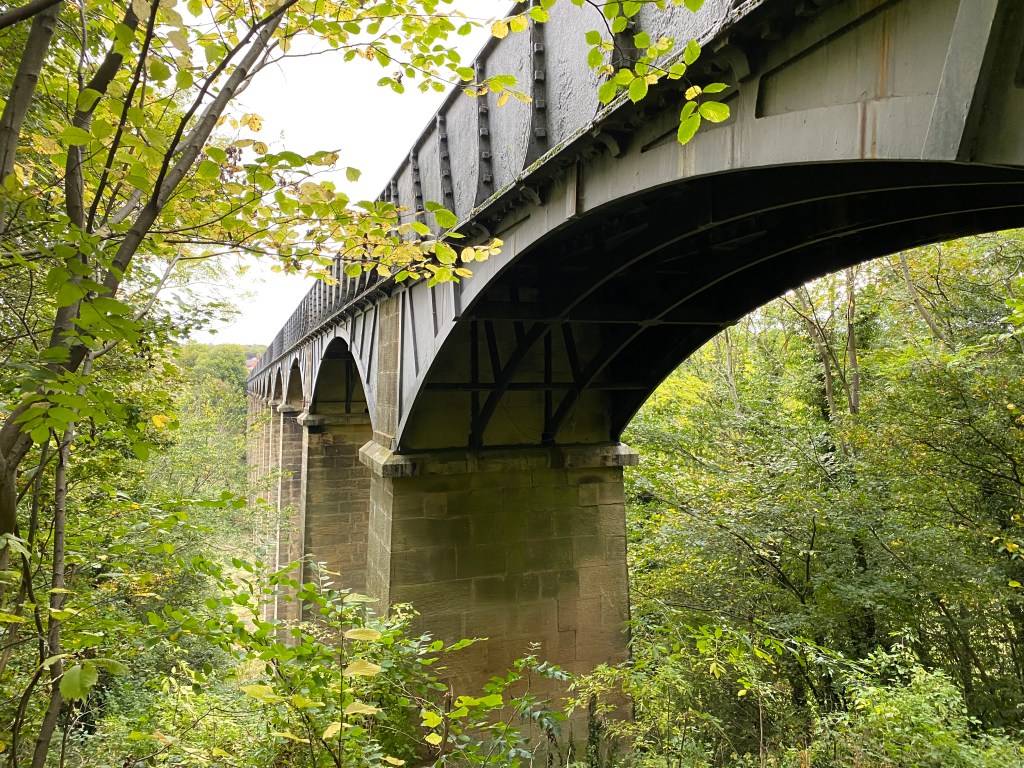
The aqueduct was stunning, especially if you like views with sheer drops either side! Thomas Telford designed and completed in 1805, it carries the Llangollen Canal across the River Dee and is the highest canal aqueduct in the world and the longest aqueduct in the UK. It consists of a cast iron trough supported 126 ft above the river on iron arched ribs resting on eighteen masonry piers. The bridge is 310m long but only 3.5m wide. Much respect has to go to some very skilled and brave bricklayers, pattern makers and foundry workers.
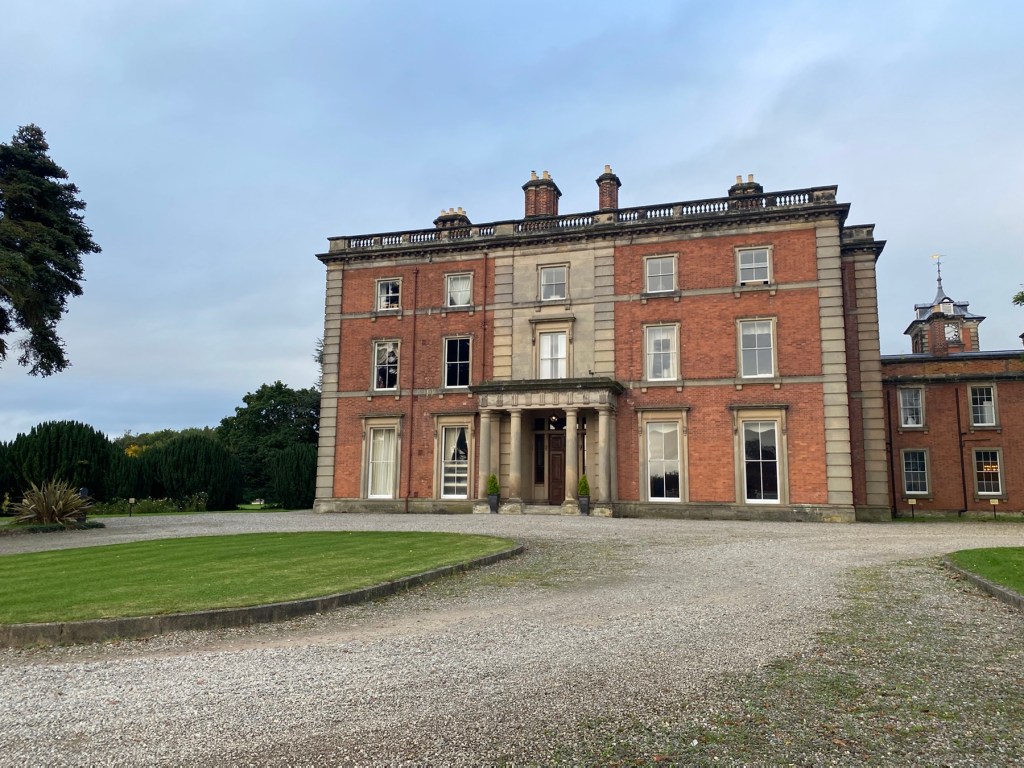
We finally reached our hotel, the rather grand Netley Hall, just south of Shrewsbury as it got dark.
The following day, our first stop was Ralph Court Gardens near Bromsgrove. Now this was an experience to put a smile on your face.
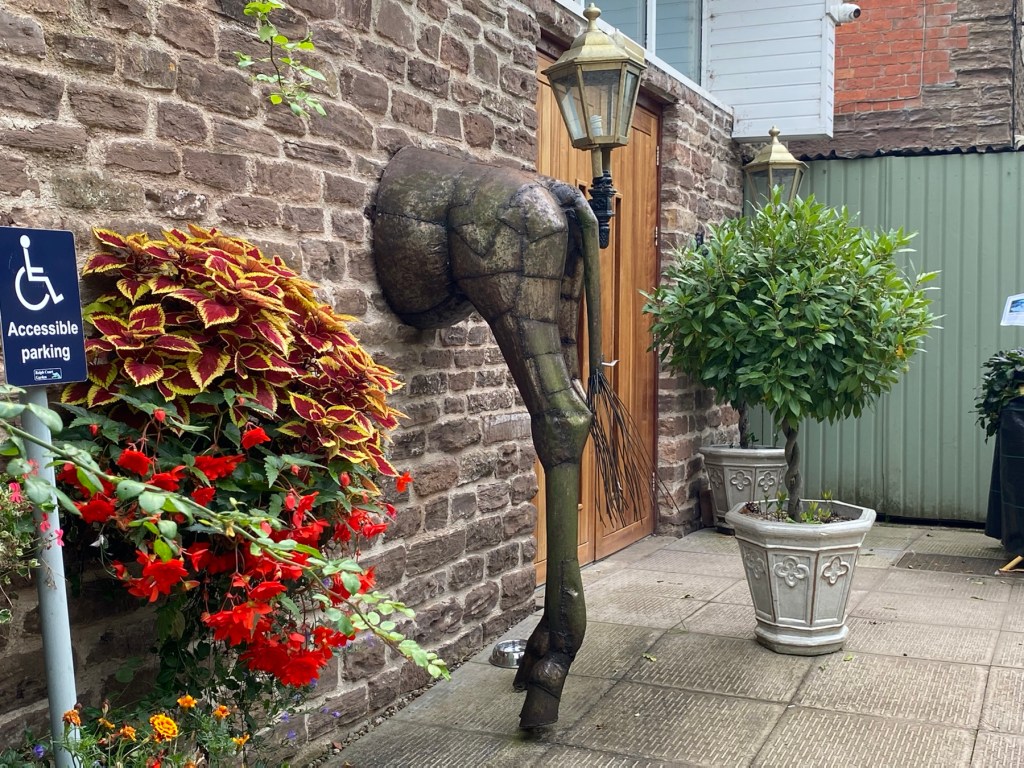
Each of the garden areas depicted different countries and most were quirky and entertaining. We don’t want to give too much away, you may not want to visit for the planting schemes, but if this place doesn’t make you smile, there may be no hope for you.
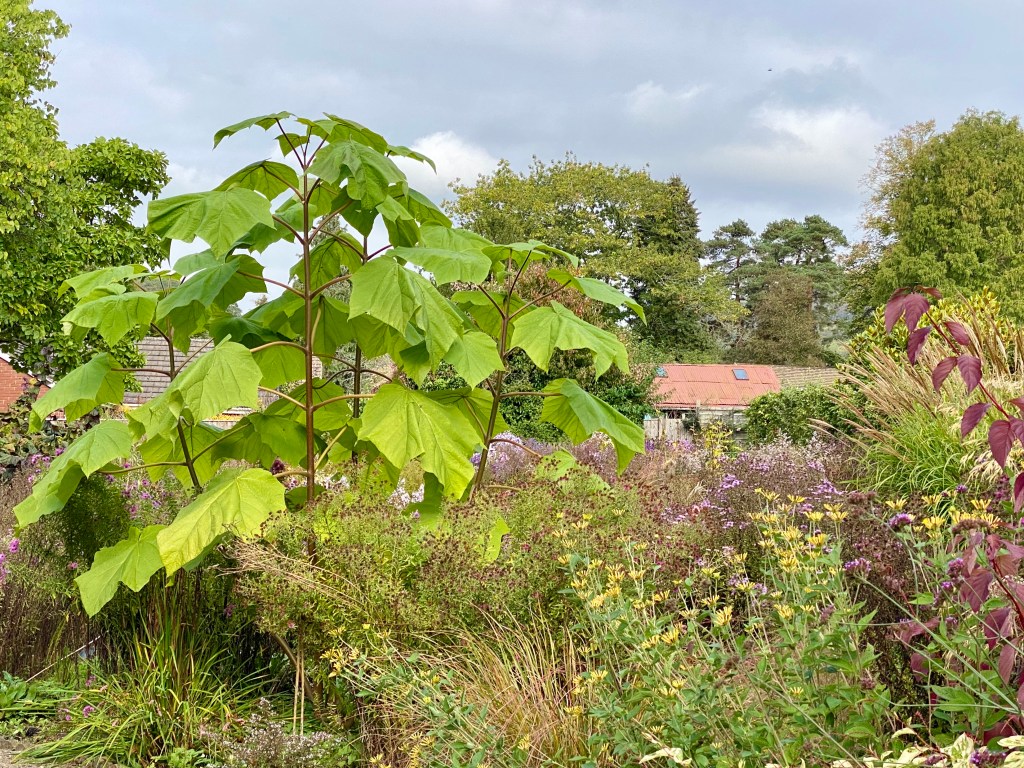
Next stop Old Court Nurseries and the Picton Garden. The nursery holds a national collection of Asters and has a lovely garden to showcase them, together with some more unusual specimens. Well worth a visit and only £4 each to wander round.
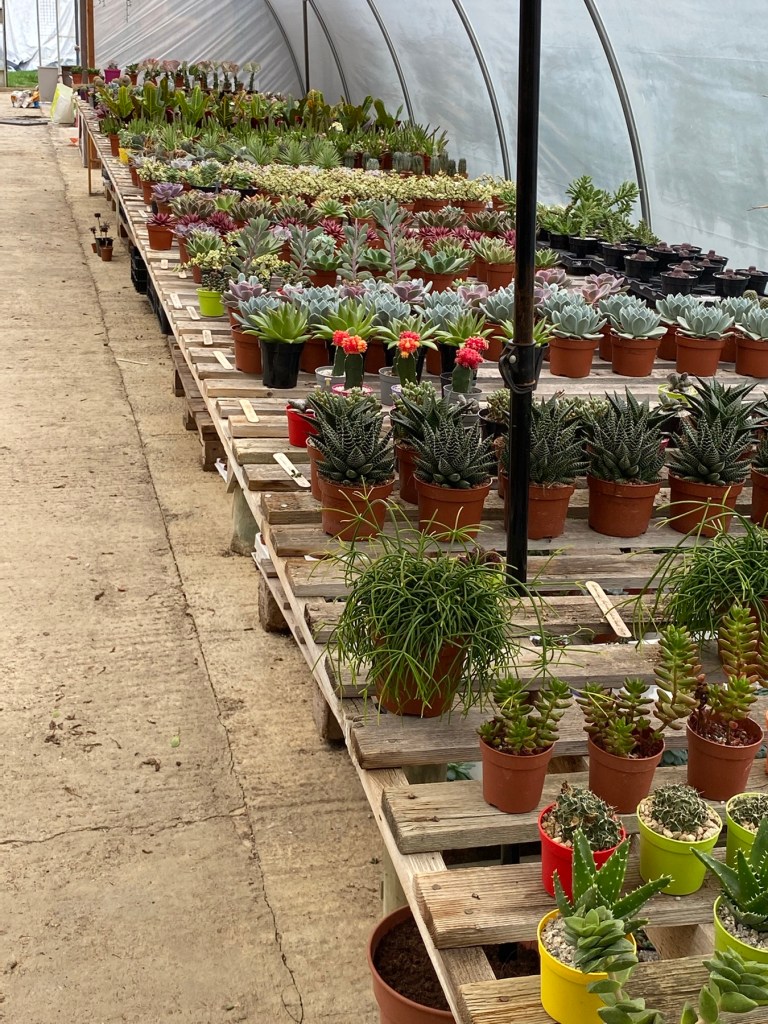
That was followed by a visit to Mahlakas Plants in the Vale of Evesham. A hobby turned into a career by a former music teacher. He grows and sells succulents from his back garden with the assistance of two dogs and a opinonated cat.
Our final stop was back in Worcester, the view of the cathedral from the river was lovely. 600 miles in 36 hours, we need a holiday to recover.
Here’s a rather delayed final day on the Isle of Wight. It’s taken until now to recover from Friday’s journey home.
We had a few hours to while away before our crossing home. There was no chance of changing our booking, according to a number of people we had met it seemed that most residents were leaving the island ahead of the festival and, as well as clogged roads, there were clogged ferries!
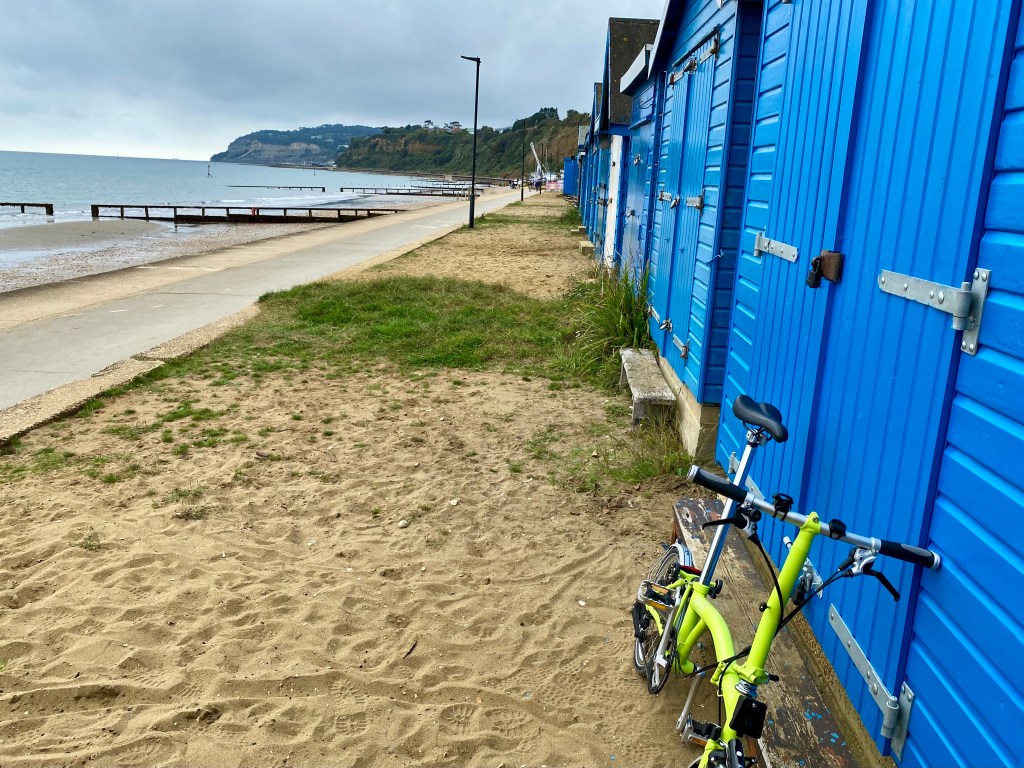
With nothing else to do we decided the Bromptons deserved one more outing and that was a round trip between Sandown and Shanklin. Now this was Kim’s sort of cycling – five miles of flat esplanade alongside beach huts.
As we sailed out by ferry ahead of schedule, our good luck didn’t stay with us, severe delays on the M25 more than made up for any saving. Of course the alternative would be to use a helicopter in the same way that Tom Jones and other festival performers do, although if you have seen the photos of Liam Gallagher’s face after falling out of his helicopter, possibly not.
Finally, do you know what happens if you post a letter to your neighbour on the Isle of Wight? We’re assuming ‘no’!
It is taken from the Post Box, put on a ferry to be sorted in Portsmouth and transported back across the Solent before being delivered to your neighbour.

















































 braysabroad