Sunshine? Perhaps..

The Dana weather front has thankfully exhausted itself in the Majorca area, yippee! The last time we were in Palma, we had intended to visit the Fundacion Miro but someone fell off her bike en route! Today, we took a taxi into Palma to finally tick that off our list.

It was well worth waiting for. The land was bequeathed by Miro’s wife, Pilar, and she sold 26 of his paintings to fund building the museum. The site also includes Miro’s sculpture studio and another purpose built studio designed by his friend Josep Sert and of course gardens. Can you identify which photo isn’t modernist art?

It was quite a long walk back into the city, along the harbour front past all the expensive boats which was rather pleasant. We stopped for a leisurely lunch before a taxi back to Soller.

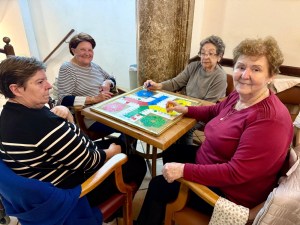
Having arrived back in Soller, beer was calling us. It’s always surprising how difficult it is to choose a suitable bar in an unknown town. We wandered past many before settling on one, filled with locals and, most amazingly, a group of elderly ladies playing Ludo. Beer turned into more beer and eventually food…
Tomorrow, we brave public transport to the Agriculture and Craft festival in Inca, Dijous Bo.

It’s been a mild sunny day, we could almost be on holiday!

And it rained

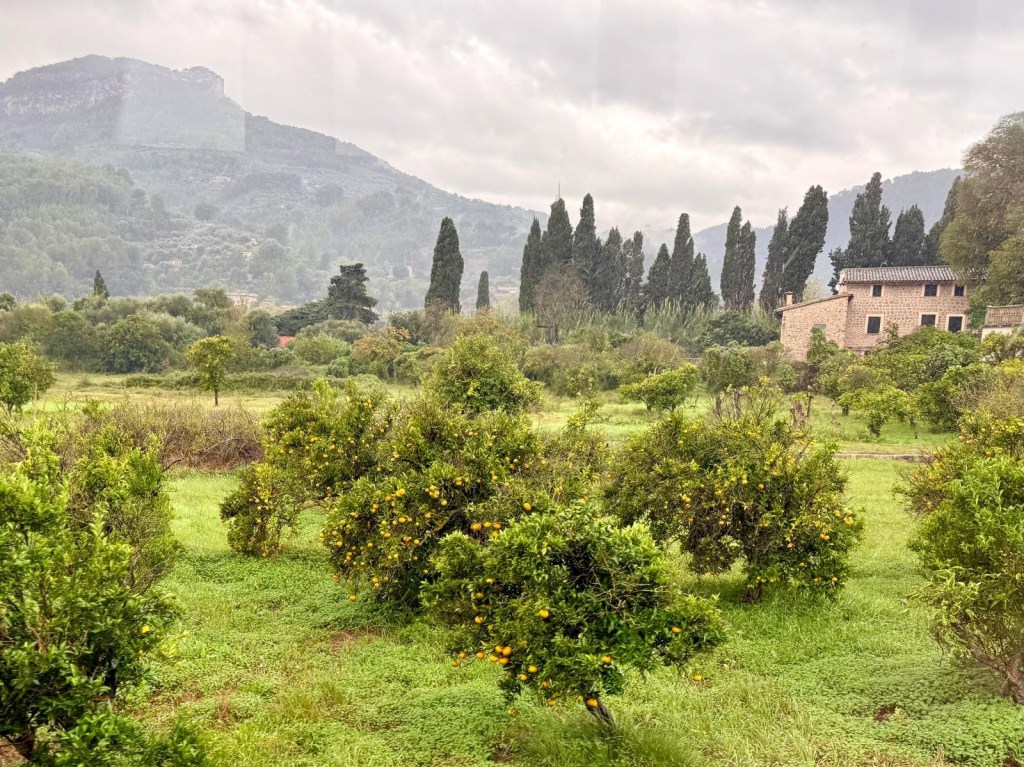
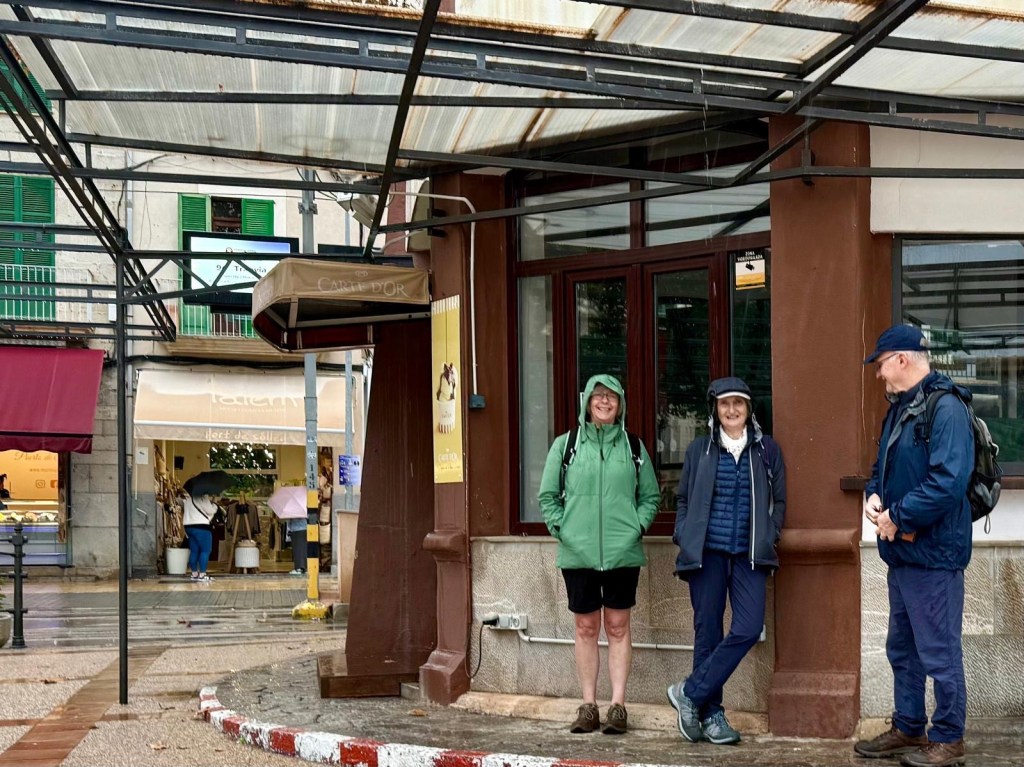
We intended to walk from Soller down to Port de Soller, dusting off our old InnTravel notes for the 5k, reasonably flat walk. It was drizzling as we left but the forecast was hopeful. Within 15 minutes the downpour started and, after a short debate sheltering under a dripping balcony, we decided to return to town and take the tram down through the citrus groves.

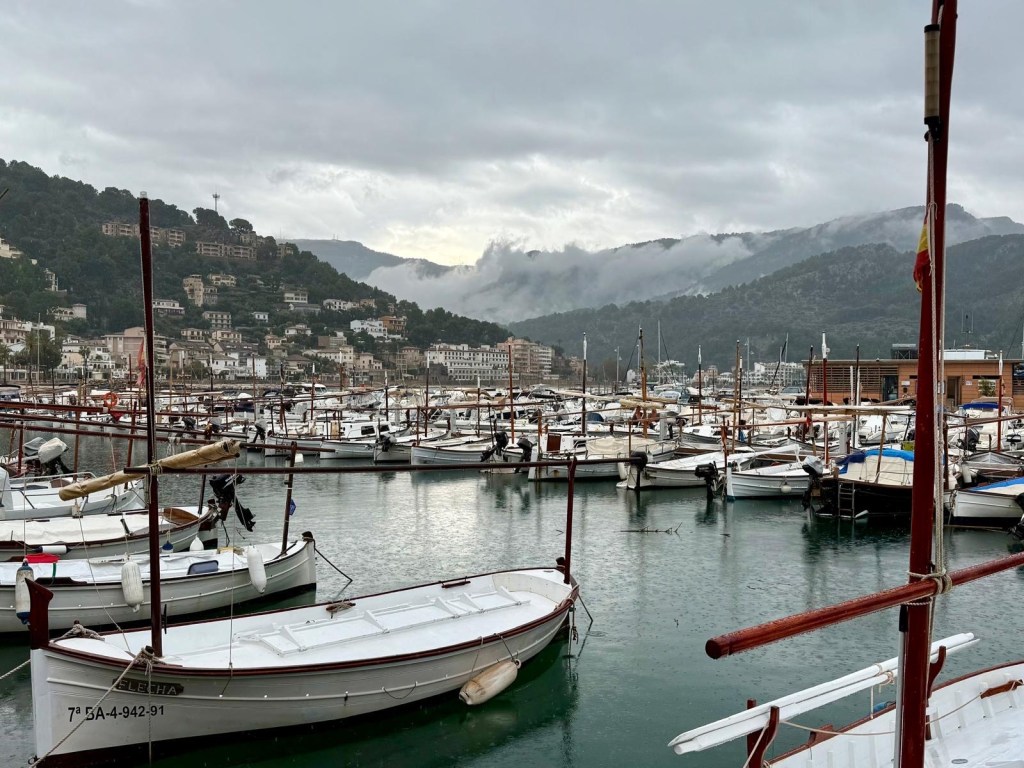
Port de Soller was mainly shut so we caught the next tram back and the safety of the hotel

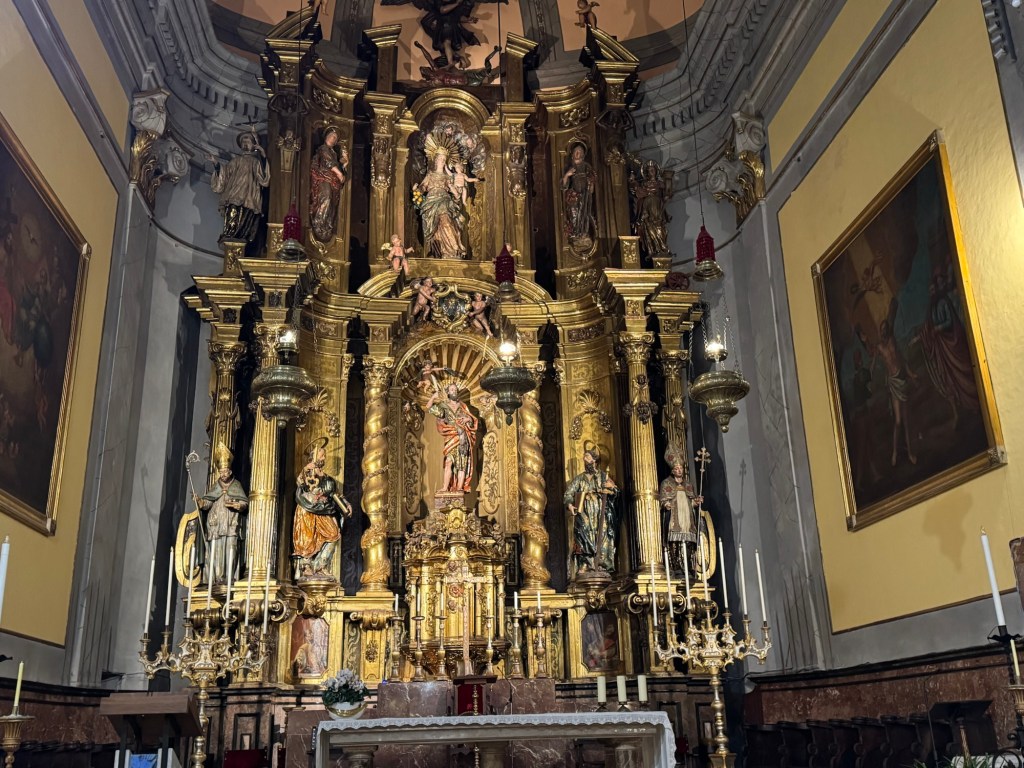
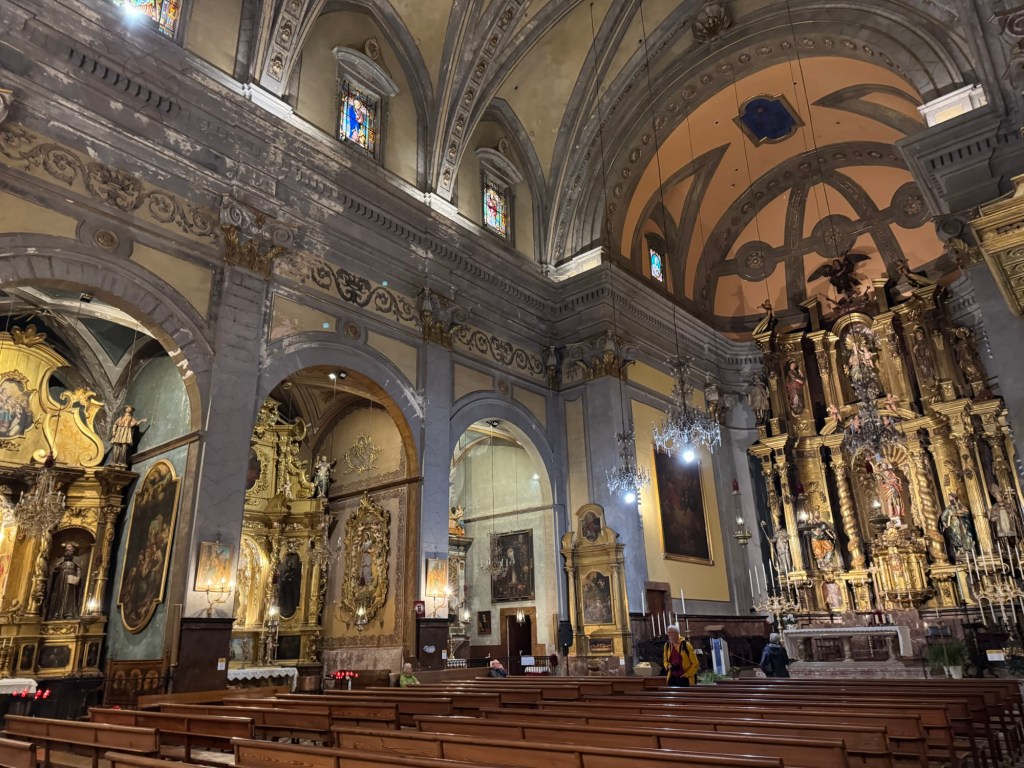
Mid afternoon, rain stopped, we ventured out to visit the Church of San Bartolome and its museum. A church has been on this site since at least the 13th Century and expanded to encompass 14 individual chapels. It’s gothic modernist facade was designed by a disciple of Gaudi and is quite imposing.

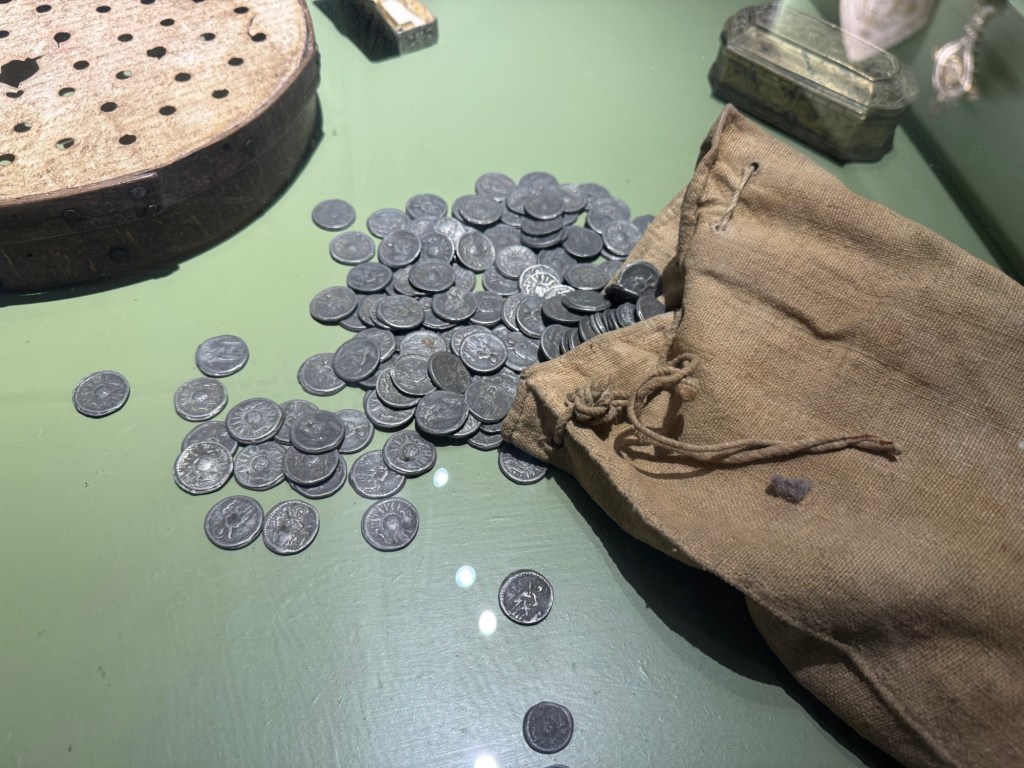
The museum comprised a couple of small rooms dedicated to historic church furniture together with a few odds and ends. We were taken with statues of baby Jesus that looked remarkably like a dressed up Tiny Tears doll and a bag of coins that had us debating their metal composition.

Most interesting was the story of Francisca Alcover Morell. After devoting her life to Christian principles, promoting the Catholic faith in newspapers, writing poetry and setting up a school to teach women of the area how to read and write, she died in 1954, aged 42. Francisca has received beatification from the Pope and the congregation pray to her for a miracle which would assure her sainthood.

As we left the church, rain sent us back to our hotel and we haven’t left since. Apparently we are in the midst of an amber alert Dana weather system so could remain damp for a little while longer.

It’s officially winter….

And we know this, courtesy of the Information Service at Palma Airport. There was no direct bus to Soller because ‘that is summer only’.

In October, our plans for a few days cycling in the Alsace were scuppered by illness and we chose a simple, warmish alternative so we are back in Soller, Mallorca with Jacky and Ken.

After an early flight from Luton into Palma Airport we were looking at blue skies and warm sunshine. If only our winter was as appealing! Courtesy of an airport taxi, we were at our hotel by midday and set about reacquainting ourselves with the town.
To our delight, at the railway station, we found two small exhibition rooms, one for Joan Miro and the other filled with Picasso ceramics. The ceramics are from the private collection of Padre Josep Sert, a Mallorcan architect and contemporary of both Miro and Picasso. At the entrance to the Miro rooms, there is a poster translating some of his recurring images which made them far more interesting.

We may return, before we come home, because it turns out you can keep adults entertained for hours scouring Modernist art for ull, cor, pits and boca (hint: a Catalan translation will help).

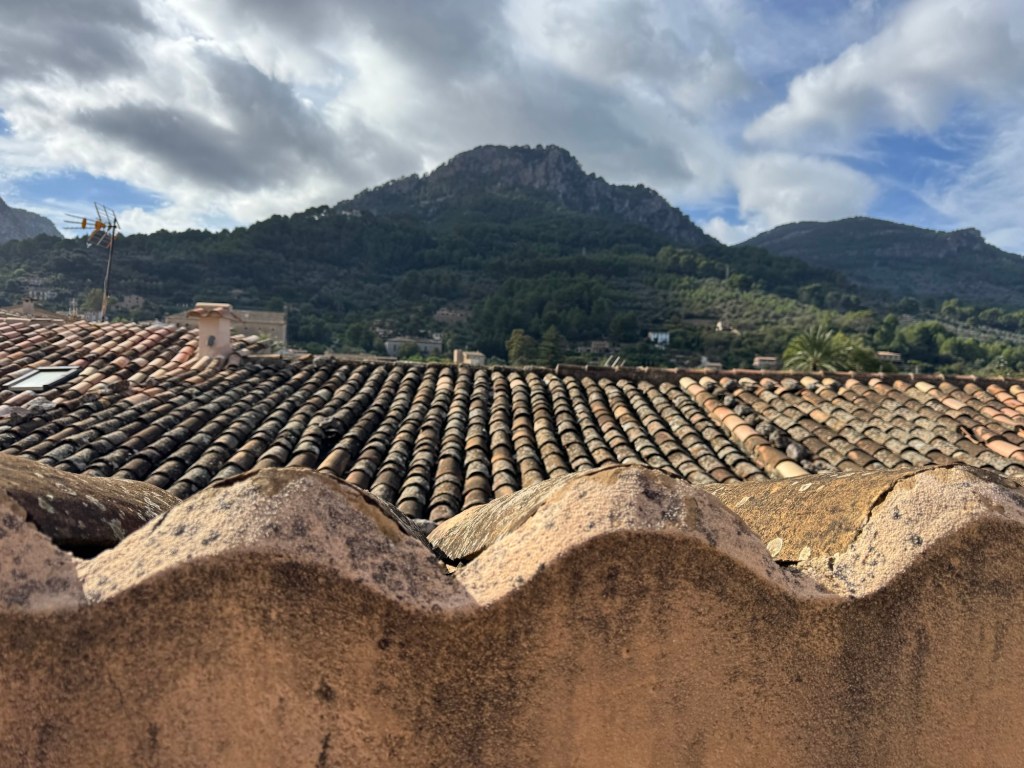
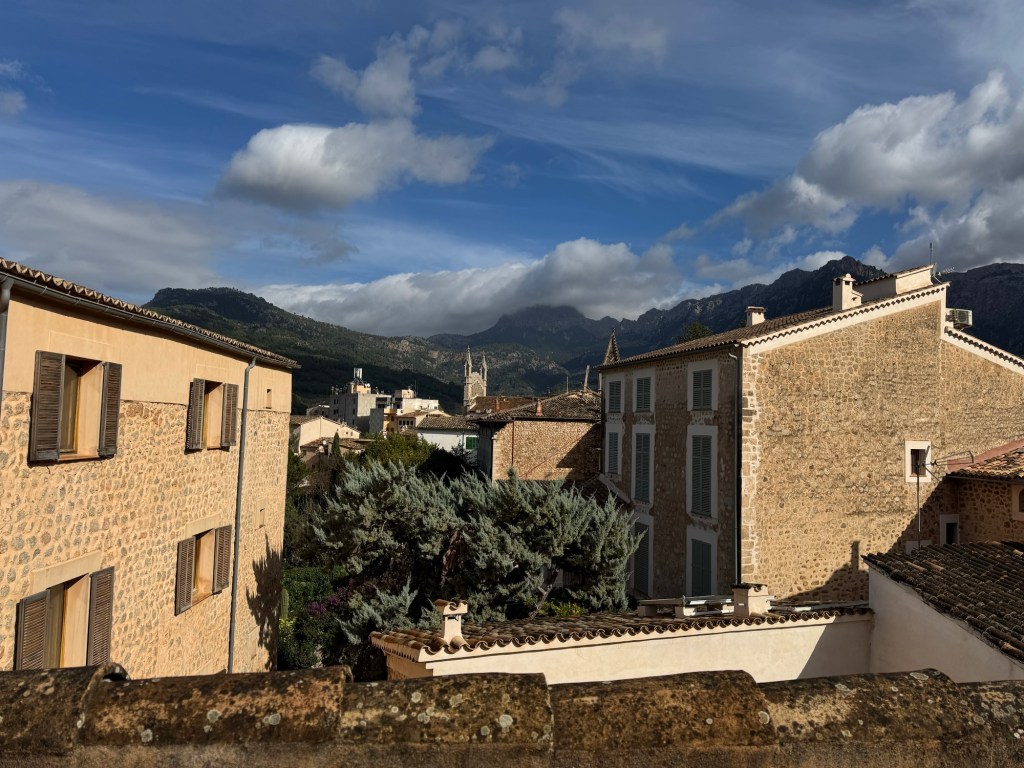
We have views of the Tramuntana mountains from both our balconies, the weather is looking rather grim tomorrow so this could be the last we see of these for while.

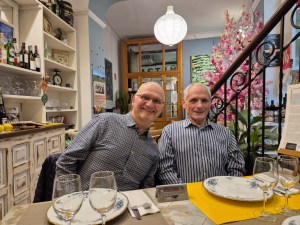
Should you ever visit Soller, we recommend an evening at C’an Limona – freshly prepared food with home made pasta and a quirky setting.

The Longest Yarn

We write this while waiting for our ferry to depart Ouistreham. We’ve been warned that the crossing will take an hour longer than usual. On the way out we thought Brittany Ferries hadn’t paid the heating bill, now we’re wondering if they’re economising on fuel too.

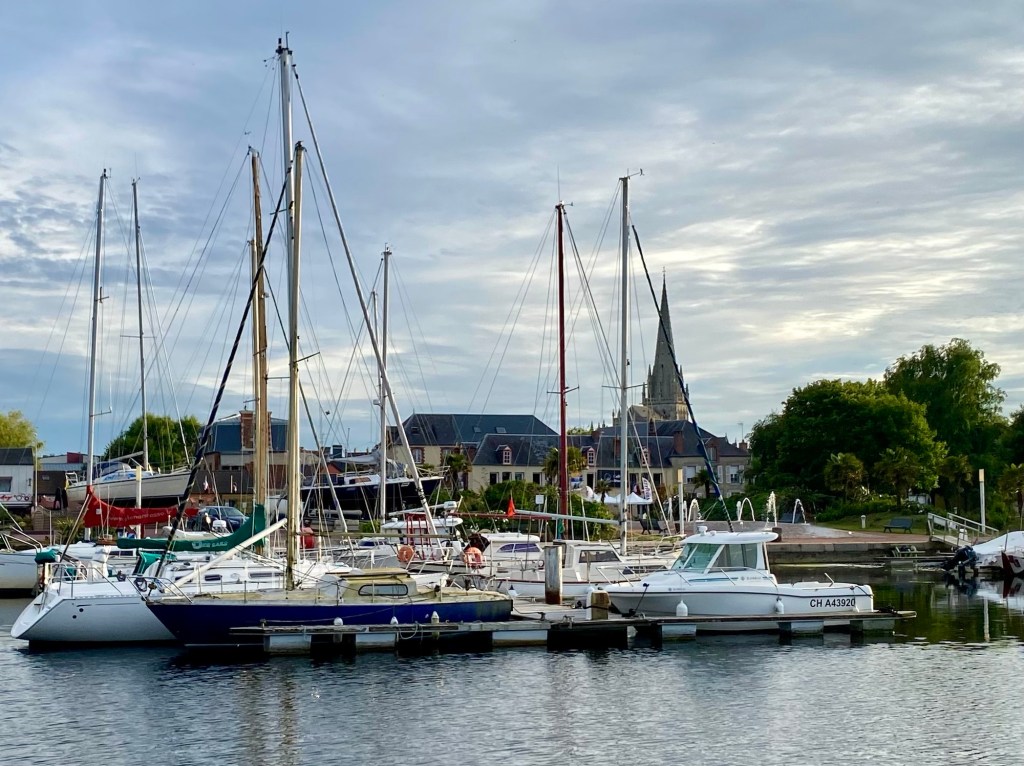
Our hotel was nothing special so we declined breakfast and our morning caffeine hit was taken sitting outside a patisserie on a cool, breezy terrace while we waited for the Eglise Notre-Dame de Carentan to open. The town looked far nicer than we gave it credit for yesterday.

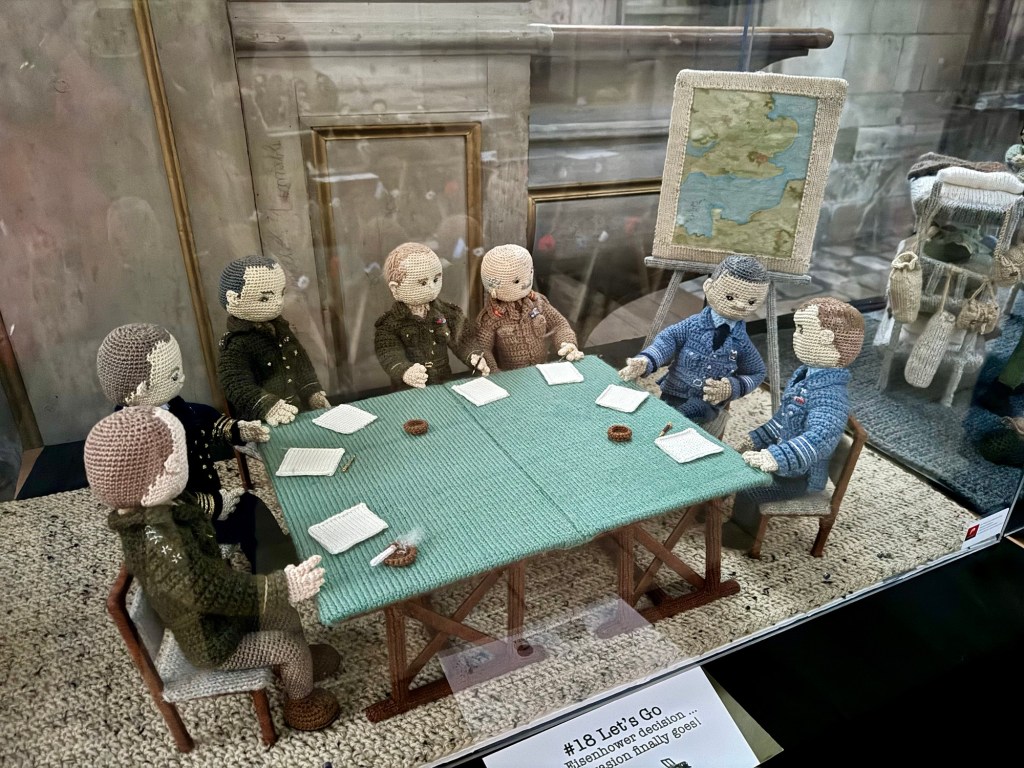
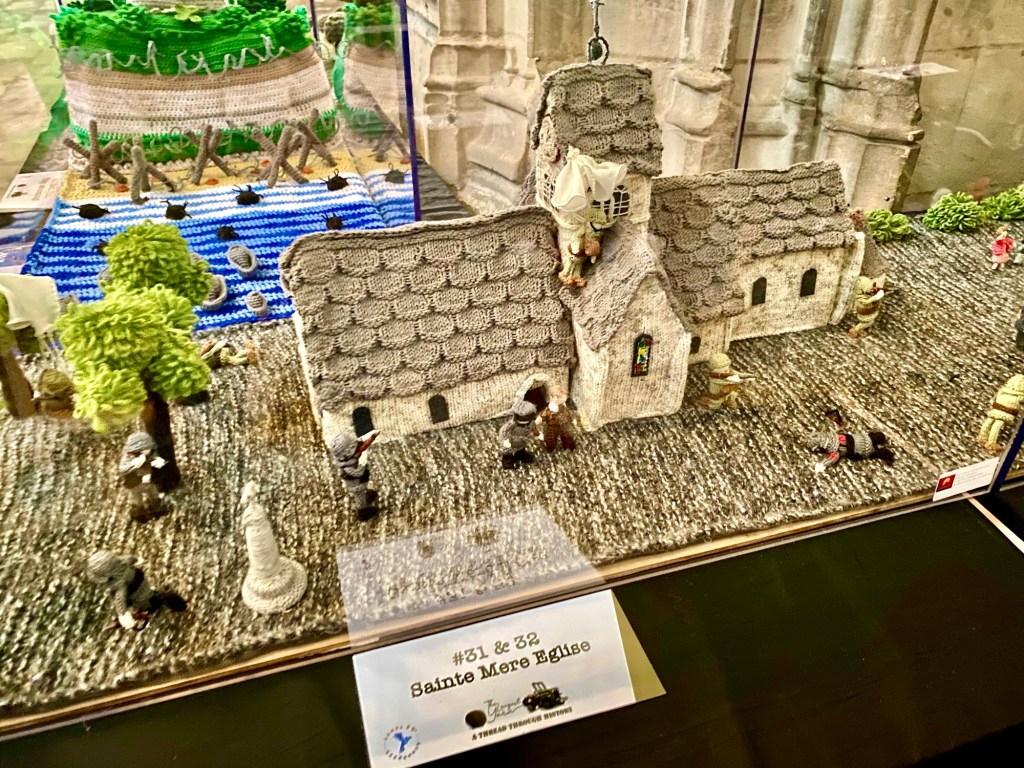
The Longest Yarn challenge started 12 months ago. The aim was to create a display, 80m long, commemorating D-Day in Carentan and the surrounding area.

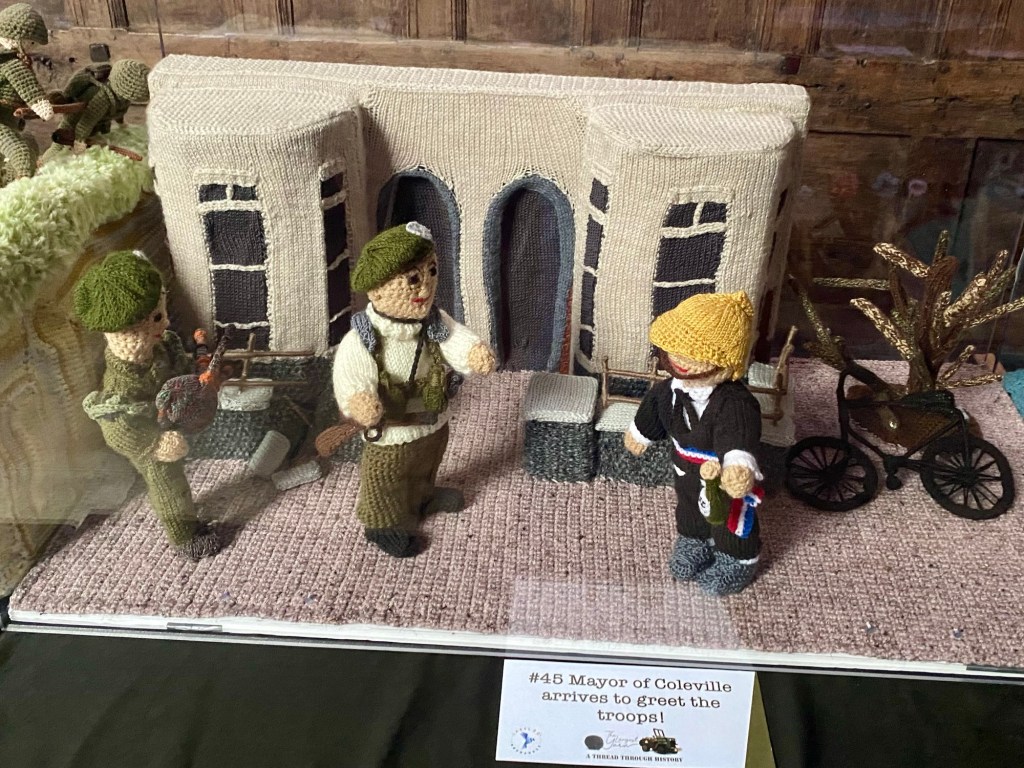
80 displays wound their way round the cathedral, each depicting a different scene relating to the planning and subsequent D-Day events. The imagination, skill and detail that have gone into them is amazing. We can’t share a photo of each scene so here’s a selection.

As we were leaving, we chatted with a couple from Hereford who were visiting the display. The lady was responsible for ‘Scene 45’ which she had designed and completed on her own, her initial thoughts were ‘how hard could this be?’ We all know that is a daft thing to think because it’s always more difficult than you could ever imagine! Anyway, she told us the tale of her scene which depicts The Mayor of Colleville arriving to greet the troops as the town is liberated and features Piper Bill Millin, a Scottish Piper who played his bagpipes as the troops advanced along the beach. Hidden in the display is a bottle of wine which Piper Bill was presented with at the time, the crafty French having buried all their good wine and spirits. Bill never drank his wine and his son is now the custodian. Bill also had a favourite jumper which his son inherited. Said jumper was donated to the project and wool from it is included in his bagpipe, shoes and scenery.
This display of little woolly figures delivers an unexpectedly emotional punch.

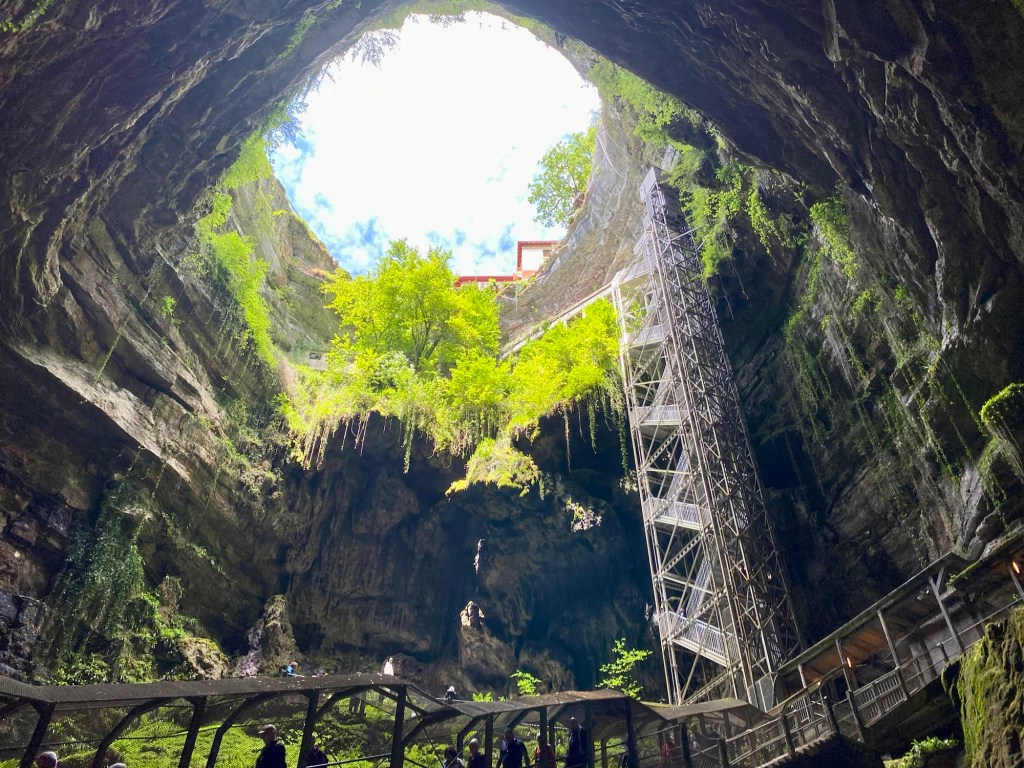
And now it’s time to take a moment to reflect on our highlights of the trip. Jacky and Ken thought the countryside, and wildlife, we came across during our walks were stunning and well worth the challenging days we had experienced. We all know a lot more about butterflies as a result. John was really impressed by the Gouffre de Padirac caverns and it takes a lot to impress him! Kim wrote this so she got to break the ‘one thing’ rule. Oradour sur Glane and The Longest Yarn were emotional and thought provoking. Both agreed that, after 30+ years, it was rather special to catch up with Dave (Bunny) and meet Suzy.

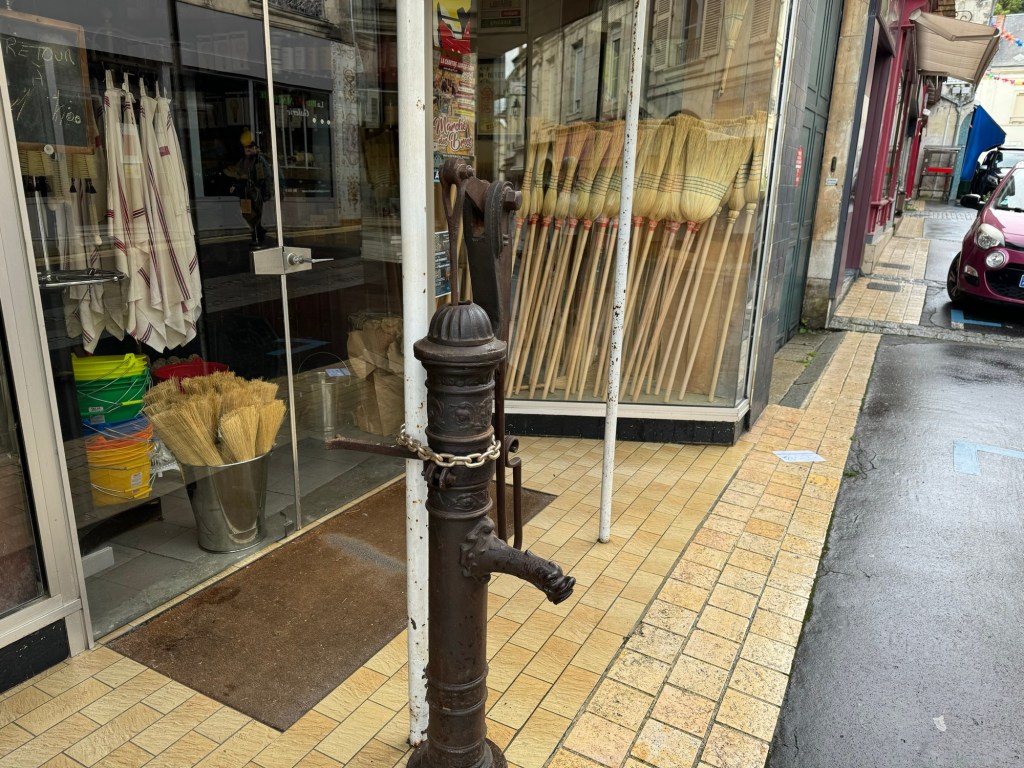
Every town should have a brush shop

Words cannot adequately express how disappointed we were that the brush shop in La Chartre wasn’t open this morning. We just knew the right brush for us was lurking in its depths.

Our route to Carentan included a detour for lunch with our friends, Jane and David, at their holiday home in Lassay les Chateux. We haven’t see them for a few years and David maintains he is still deeply scarred from joining us on a JustGo Italian Motorhome relocation back in 2018.

They are holidaying with their friends Chris and David, who we have not met before and spent an interesting afternoon getting to know them. It turned out that John had met David before, he was John’s tutor, when he did his degree, and supervised his Field Trip to Cyprus. As they say, it’s a small world

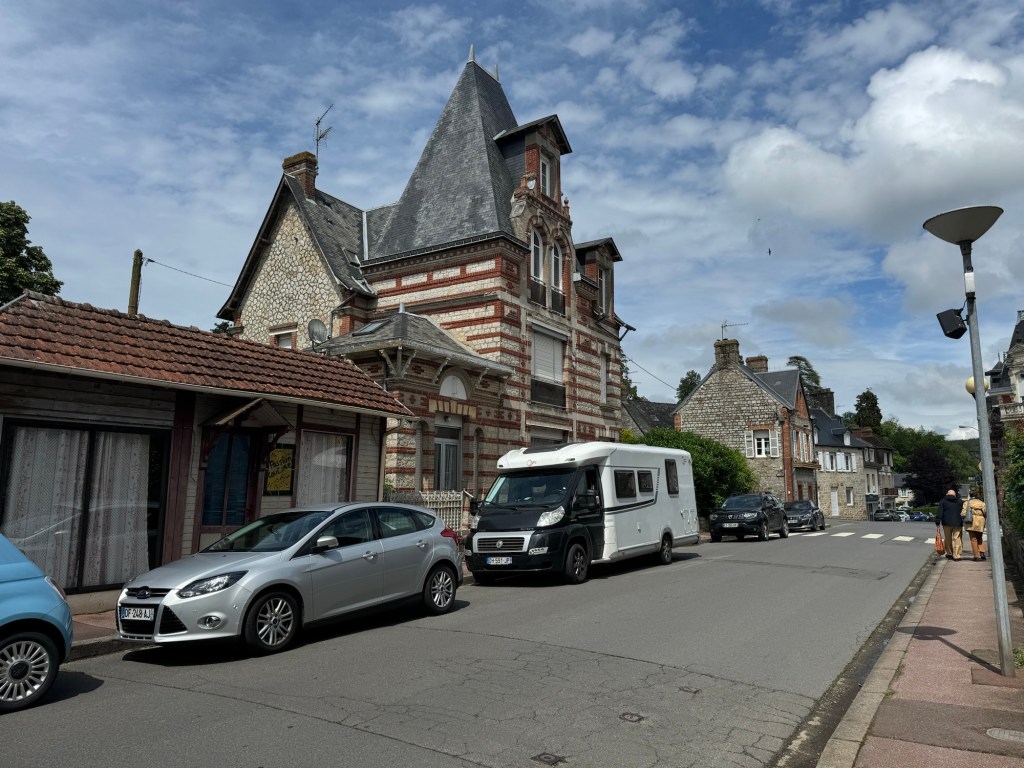
We were very close to Bagnoles de l’Orne where we had an apartment for many years and took a drive through. It was very busy so we didn’t stop but managed a nostalgic photo of the building. Kim wondered why we don’t have a place in France or a motorhome. John continued to pretend he hadn’t heard and simply ignored her.

Our final night is in Carentan, in a hotel with very tired rooms. After the lovely places we’ve stayed, it’s come as quite a shock but we’re here to see The Longest Yarn. It’s a knitted and crocheted depiction of scenes from the D-Day landings. Kim and her friend Rowena contributed 20 of the 10,000 poppies needed for the display. Not only do we need to identify these 20 poppies but admire the creativity that has gone into the 80m display. That’s our task for tomorrow morning, before we board the afternoon sailing from Ouistreham.

At last!

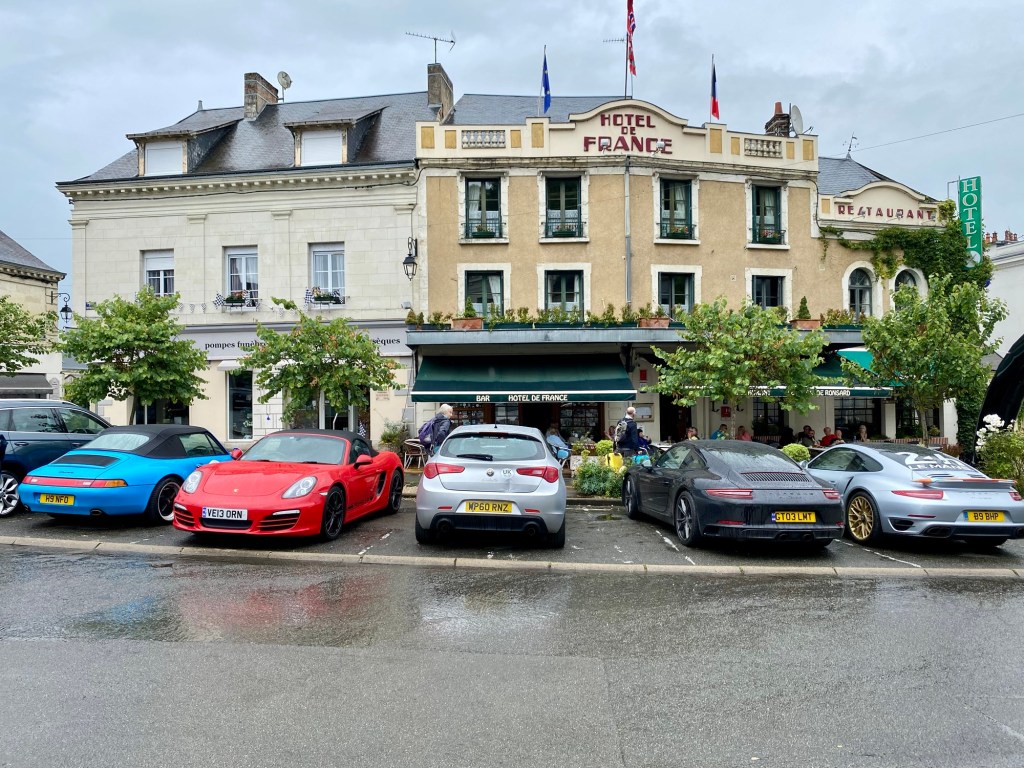
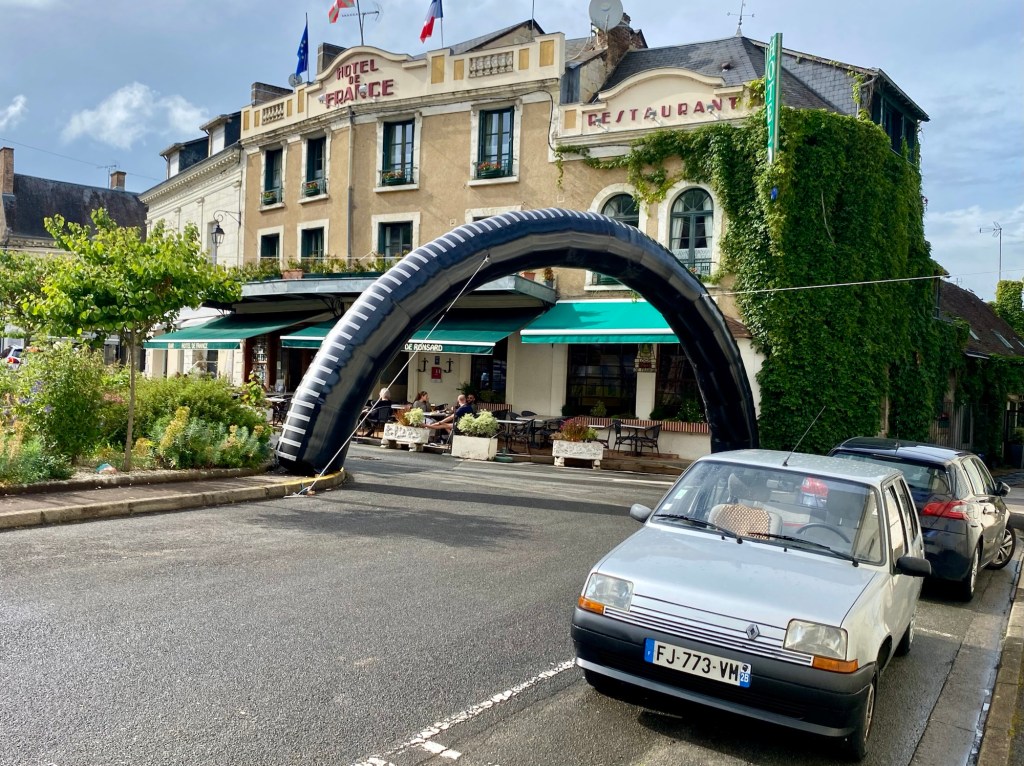
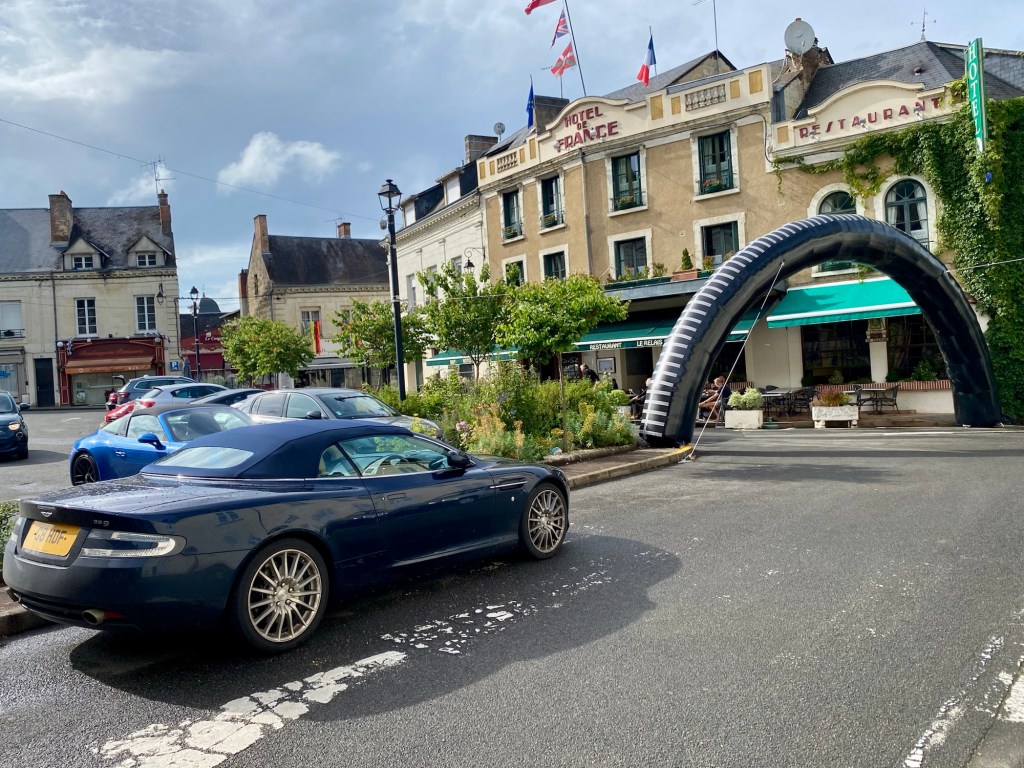
This could refer to a number of things throughout the day but, after years of wanting to stay here, John has finally booked into The Hotel de France in La Chartre sur le Loir.

We will tell you more but, first, you have to read about our 8 hour drive. Google told us it would take less than 6 hours for our 320 mile journey from the Tarn. We had a brief stop in Bellac, roads have been fairly clear so not sure why it’s taken us so long.

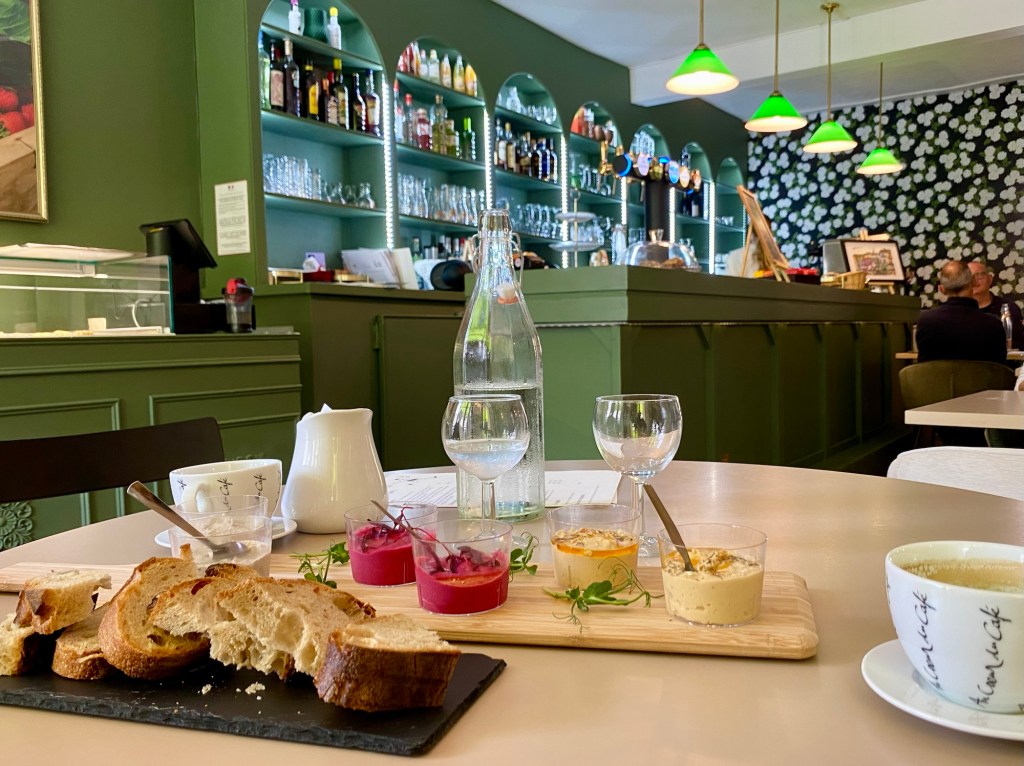
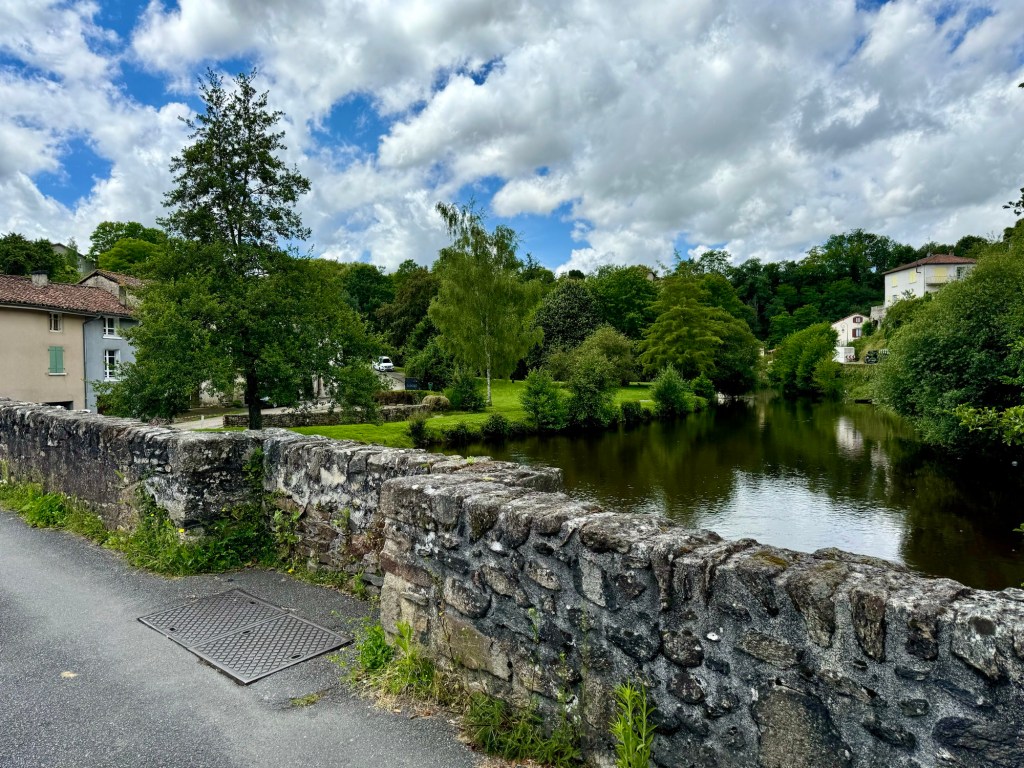
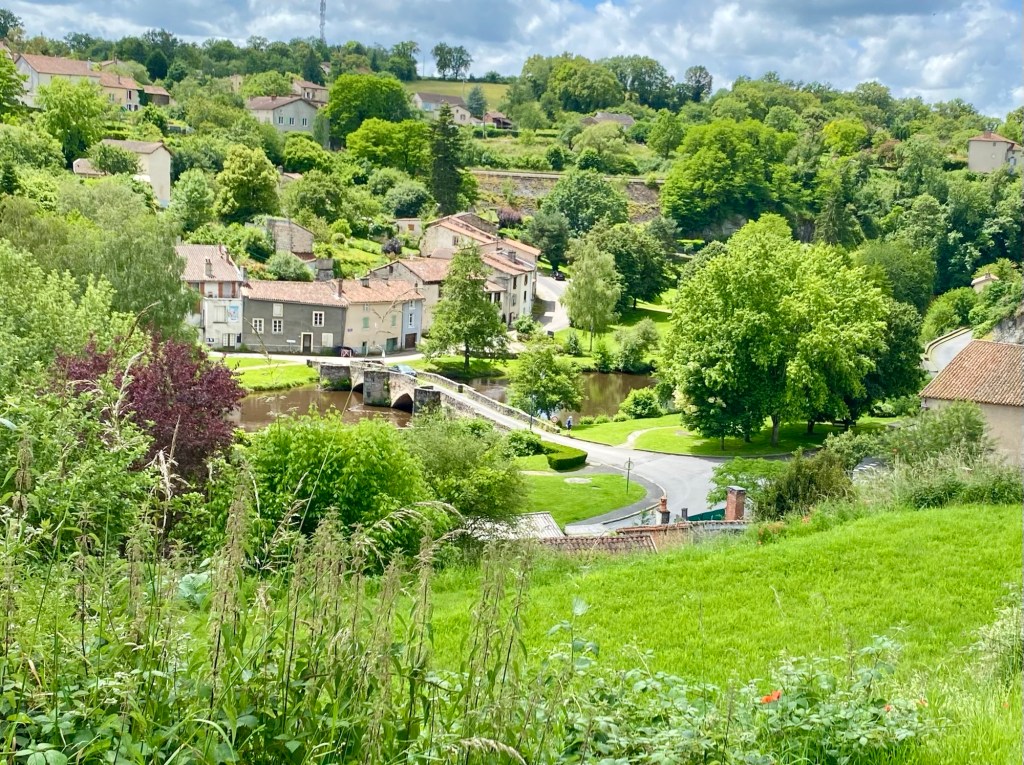
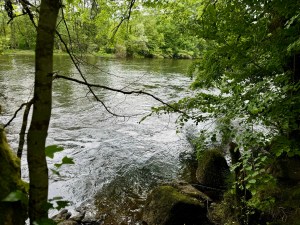
Bellac was about halfway, we needed sustenance and pulled off the main road. Of course, it’s Monday and France doesn’t do Mondays. We wandered past several closed cafes and shops, before coming across Le Central where we were greeted in perfect French by a young man from Lancaster. Drinks and a sharing platter of dips were devoured giving Kim enough energy to walk down a steep hill to the river…. John decided to take in ‘the bigger picture’ which in reality meant he was staying up top and taking photos. Look carefully and you can see Kim in the picture below.

Next our penultimate stop, the famous Hotel de France, home to many Le Mans winning teams and drivers of the past, including John Wyer, Steve McQueen and Mike Hailwood and still very popular today. We’ll let the photos speak for themselves.

Home or Spain?

That’s the question on our lips. The weather at home has been awful, we have lovely weather and are only 100 miles from the Spanish border.

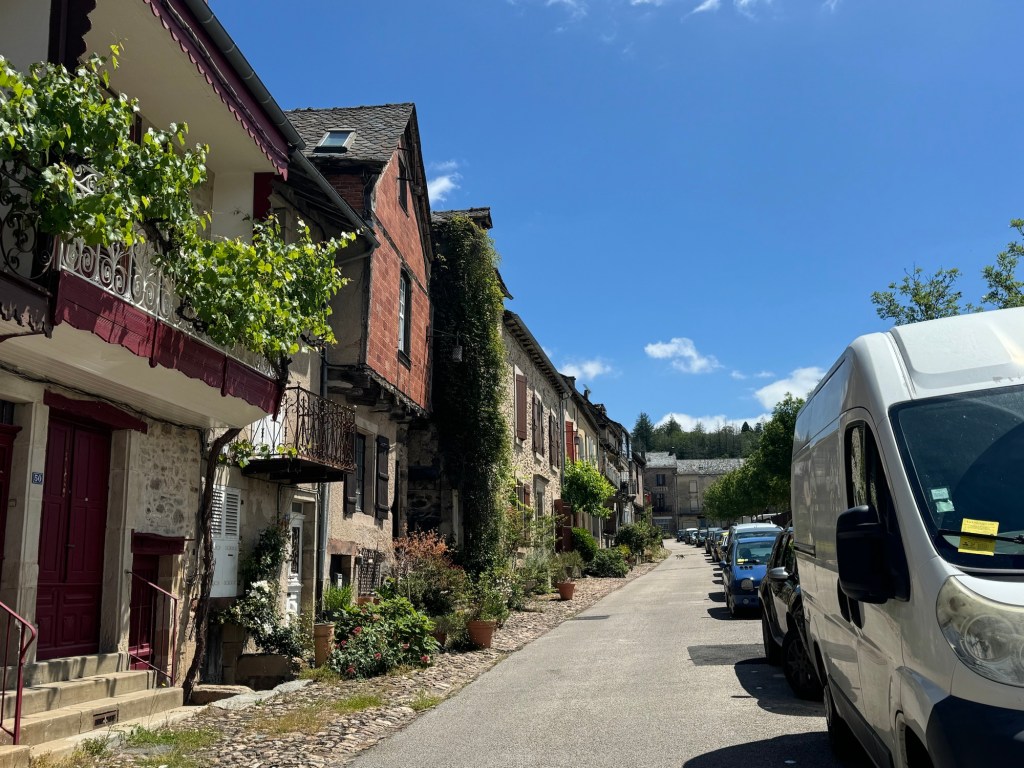
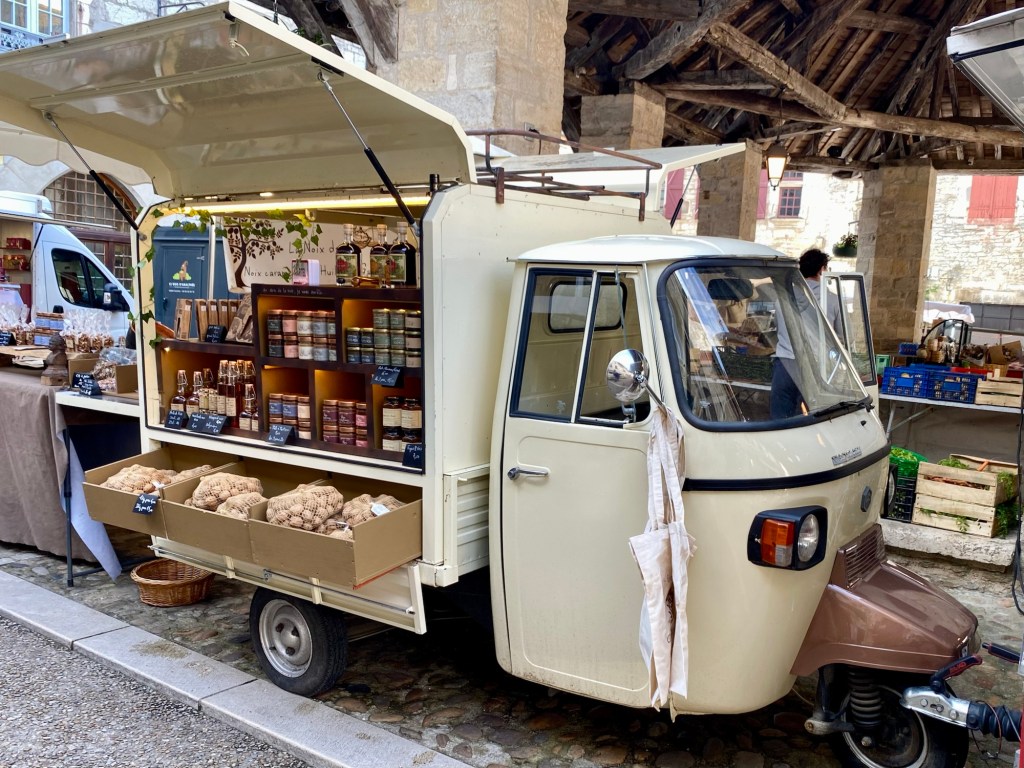
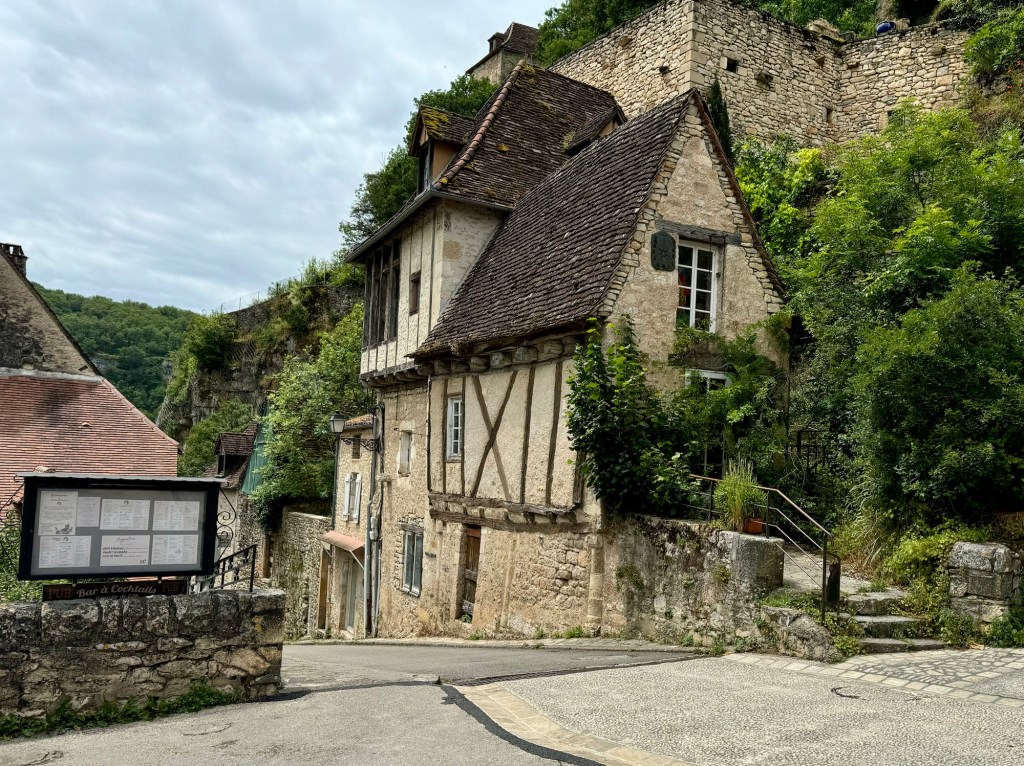
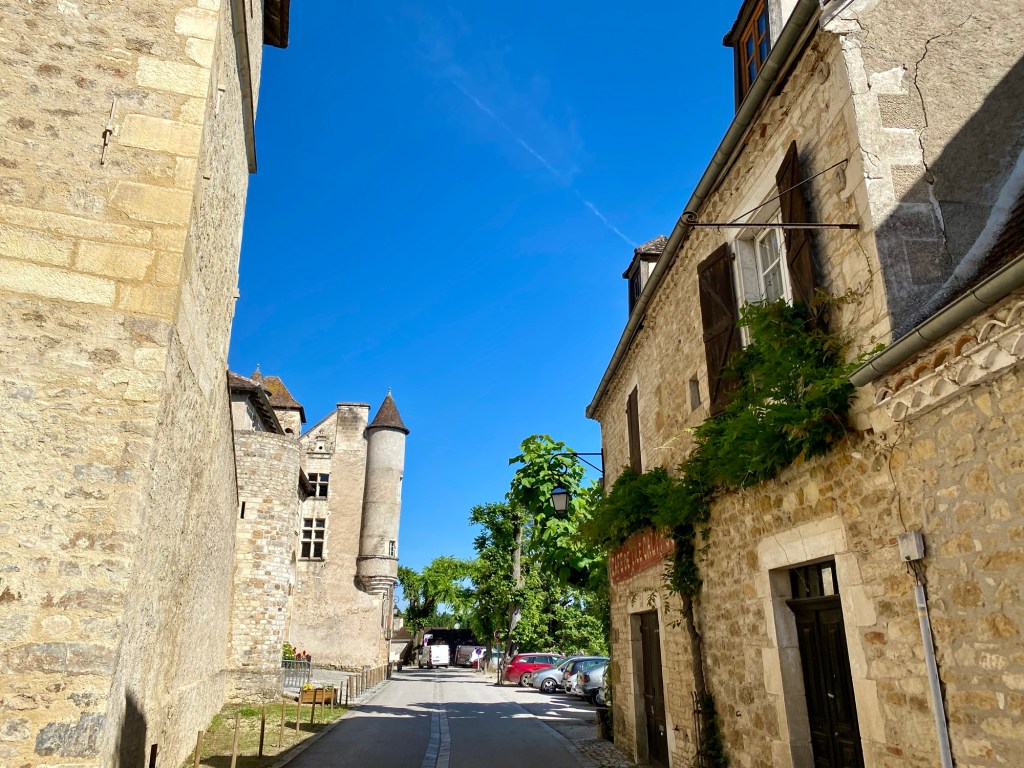
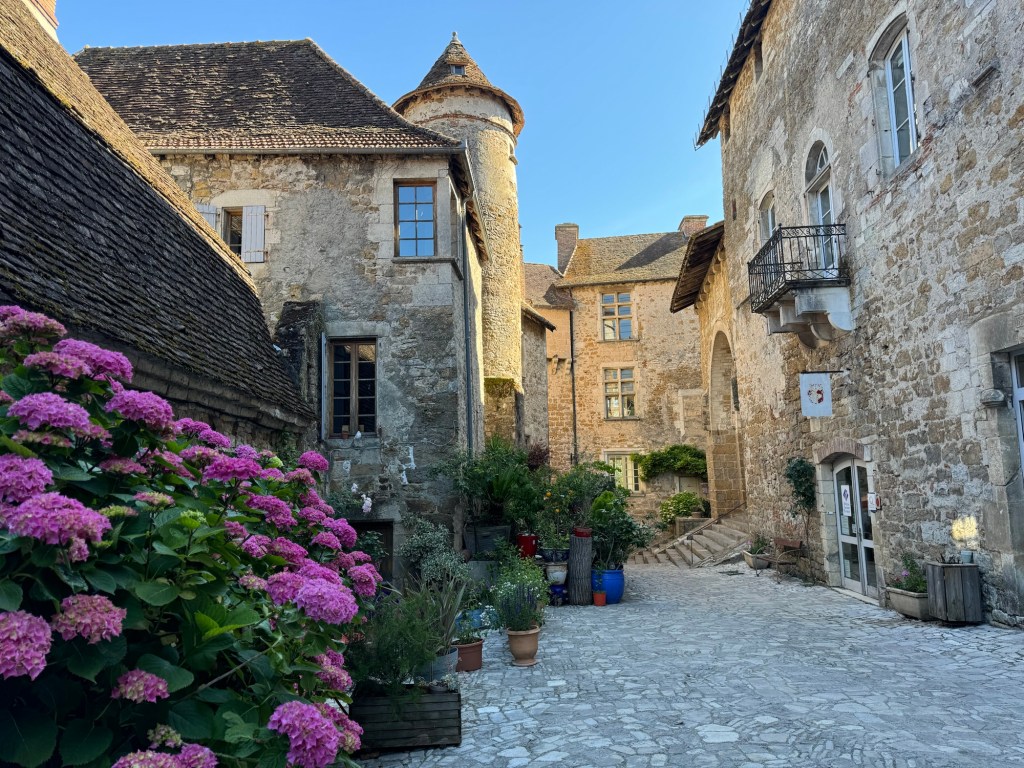
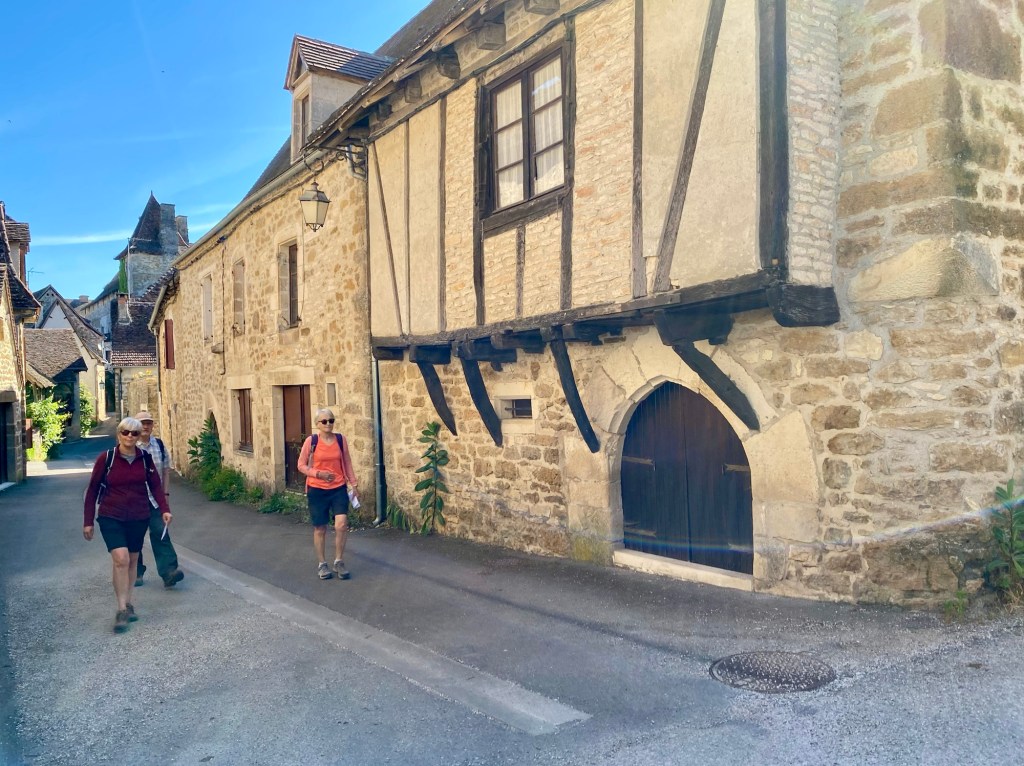
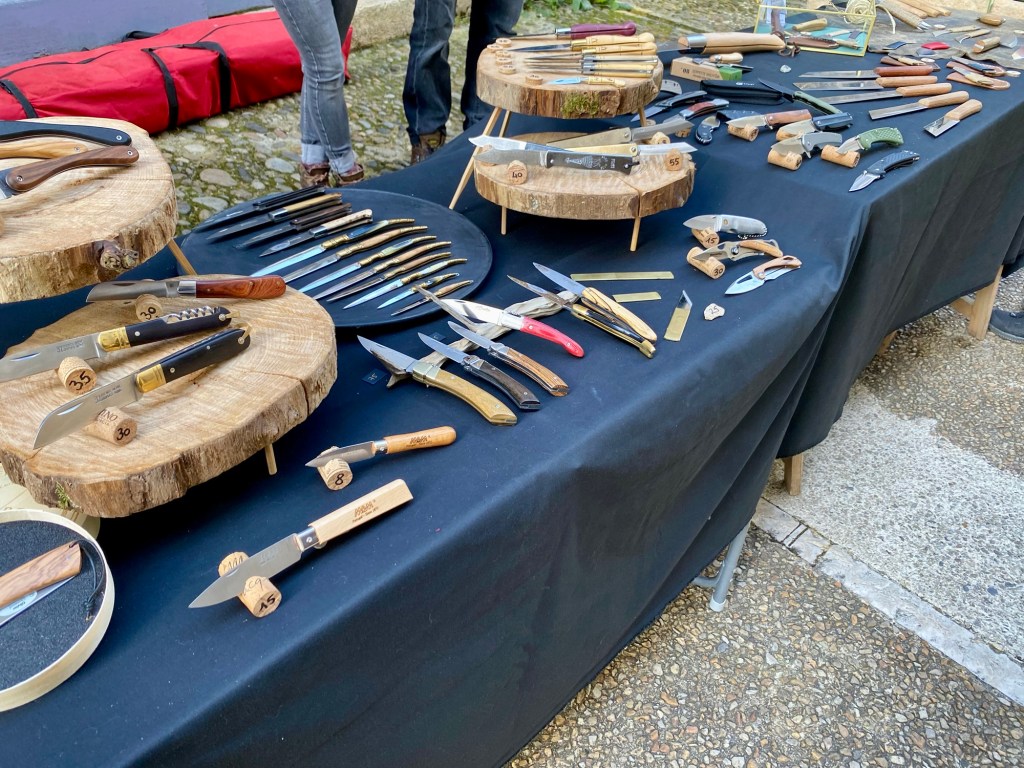
We spent the morning in the medieval town of Najac with Suzy and Dave. It was market day, the town is beautiful and was buzzing with a selection of stall holders and small artisan shops. Well worth a visit.

This afternoon was spent taking advantage of the weather – Kim sat on our terrace reading, while John turned on the tv and spent a couple of hours exchanging messages with Matt who is at the Le Mans 24 hour race which has had serious issues with the wet weather.

When we came to leave the hotel to catch up with Suzy and Dave, we discovered the hotel stairs had been barriered off, reception was in darkness and there were warning signs telling us alarms were on. We finally escaped out of an emergency exit only to find the car park gates locked. Luckily, Ken and Kim’s combined strength managed to release one gate and with a great sigh of relief, we were out and on our way.

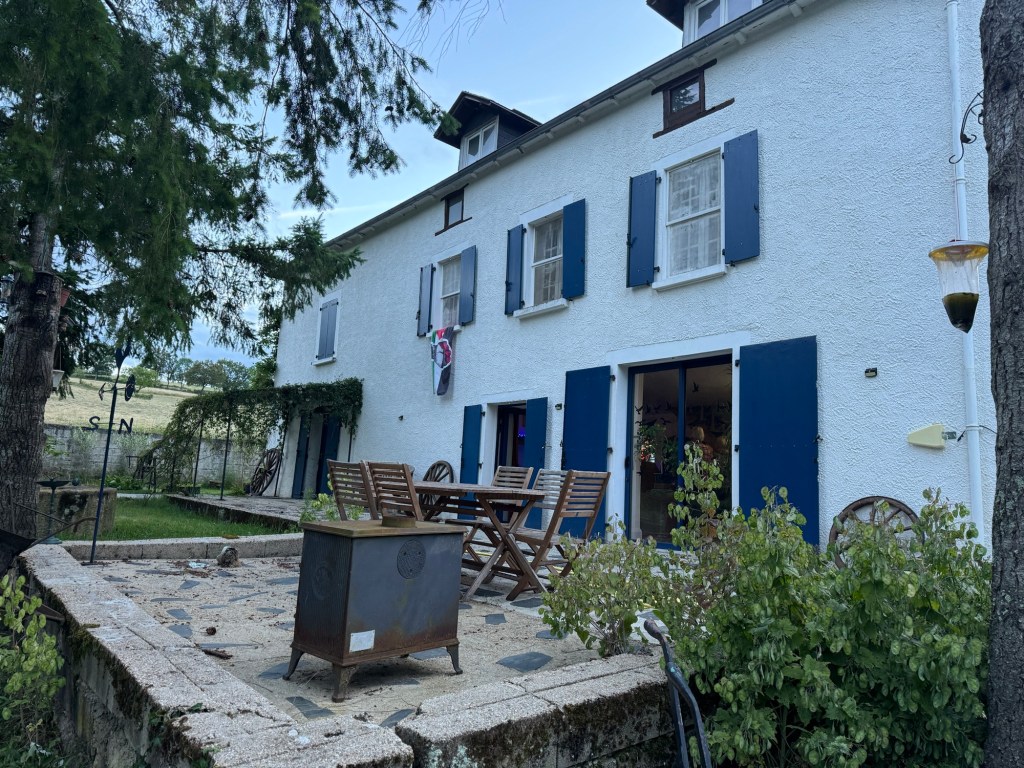
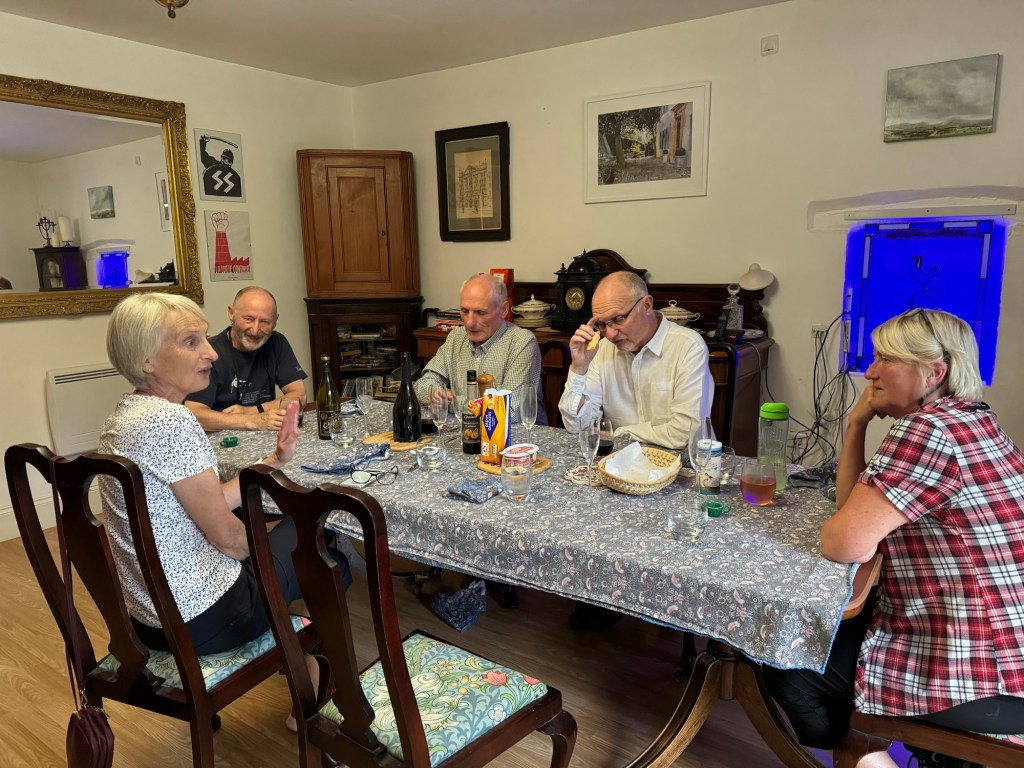
Suzy and Dave left their life in Plymouth for a 19th century farmhouse, in need of renovation, in a beautifully quiet location. Suzy had insisted that she wanted to settle in a town with cafes, cinema and shops before falling in love with the complete opposite. We had a lovely, leisurely meal with lively conversation. Thank you both for your hospitality, it was a special way to bring our time down south to an end.

Early start tomorrow for 300+ miles to La Chartre sur le Loir

Smaller than expected

Heavy rain, last night, re-inforced how lucky we have been with the weather. Walking was tough at times and would have been deeply unpleasant if wet and muddy underfoot.

Today was market day in Martel and you know how John likes a market. It was an interesting collection of stalls and even included a man selling just feathers.

We had a two hour drive to St Andre de Najac to catch up with Dave and Suzy who have been living in the area for the last 8 years. John and Dave met in their early twenties but paths haven’t crossed for 30+ years.

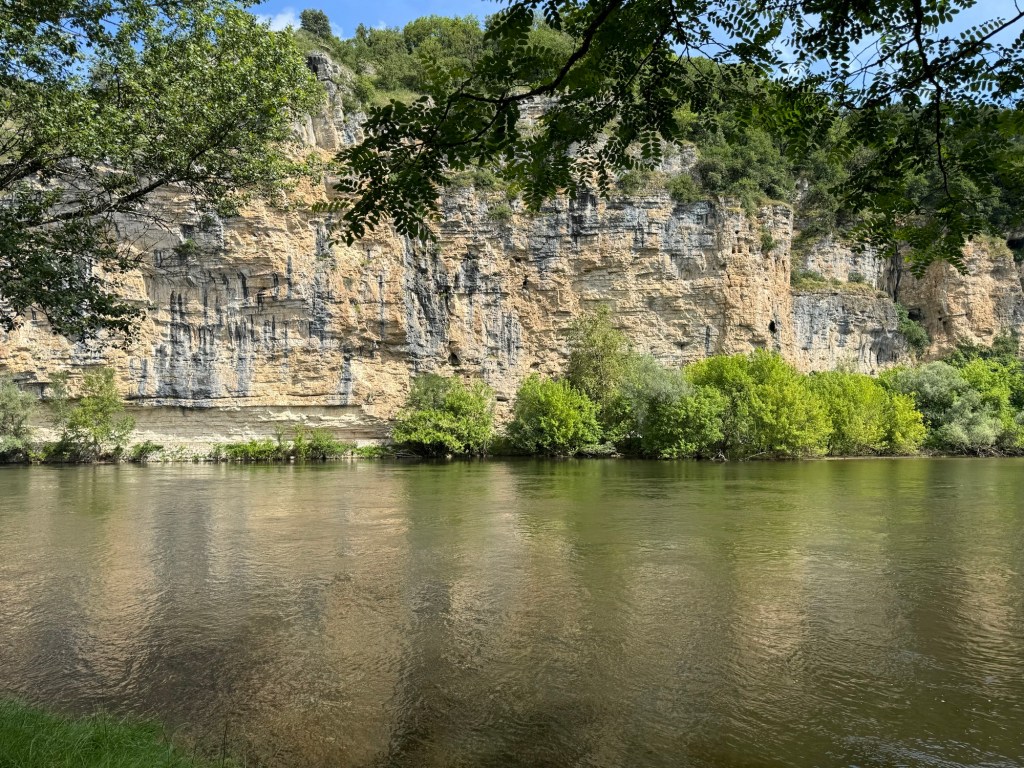
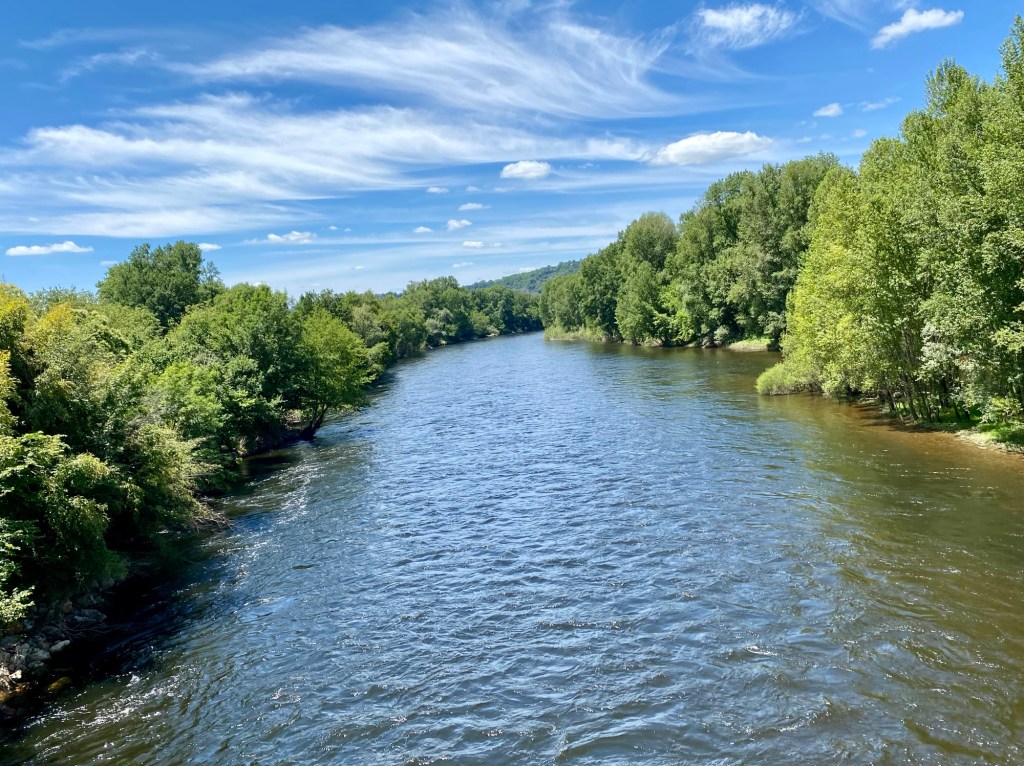
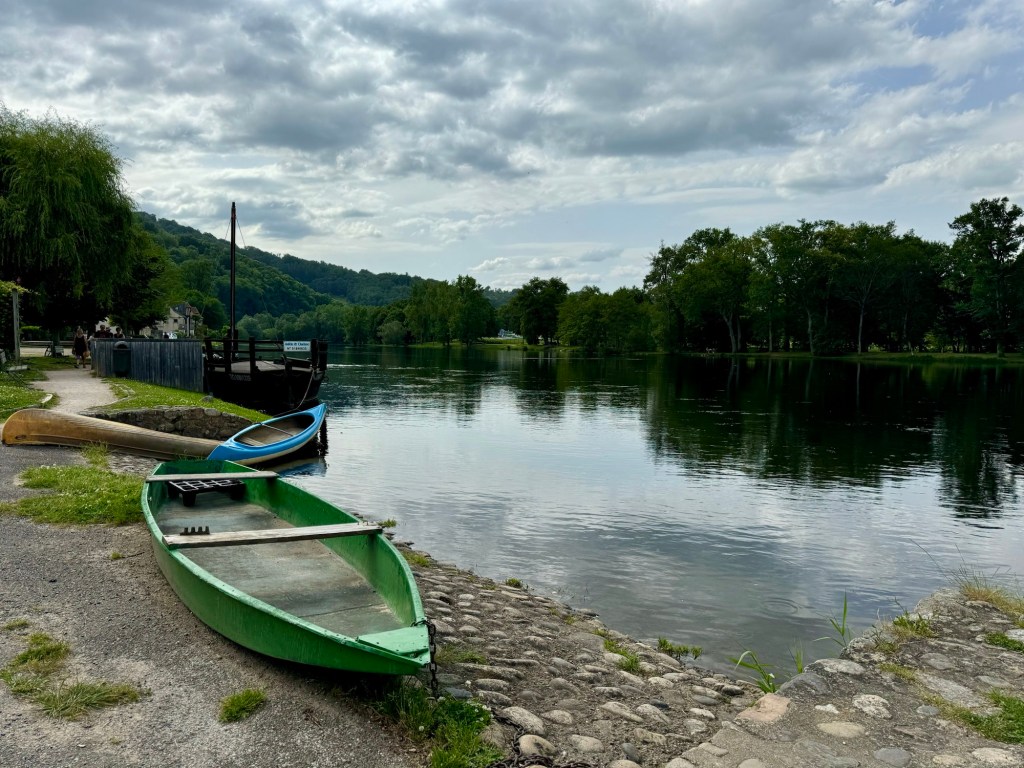
Considering our walking holiday is called ‘Villages of the Dordogne’, we haven’t actually seen much of the river. Leaving Martel, we crossed the river and stopped off for a photo opportunity.

L’Hopitalet was where we next bumped into Jacky and Ken as we stopped for an obligatory cuppa before setting off in different directions to explore.

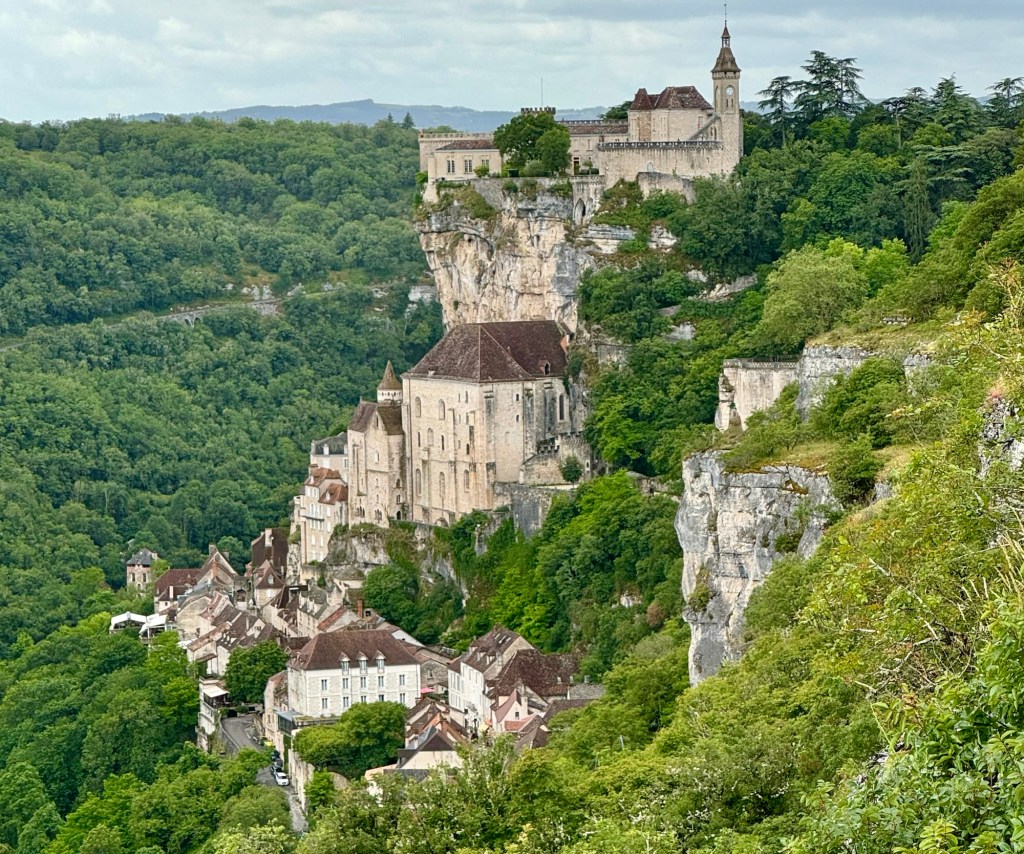
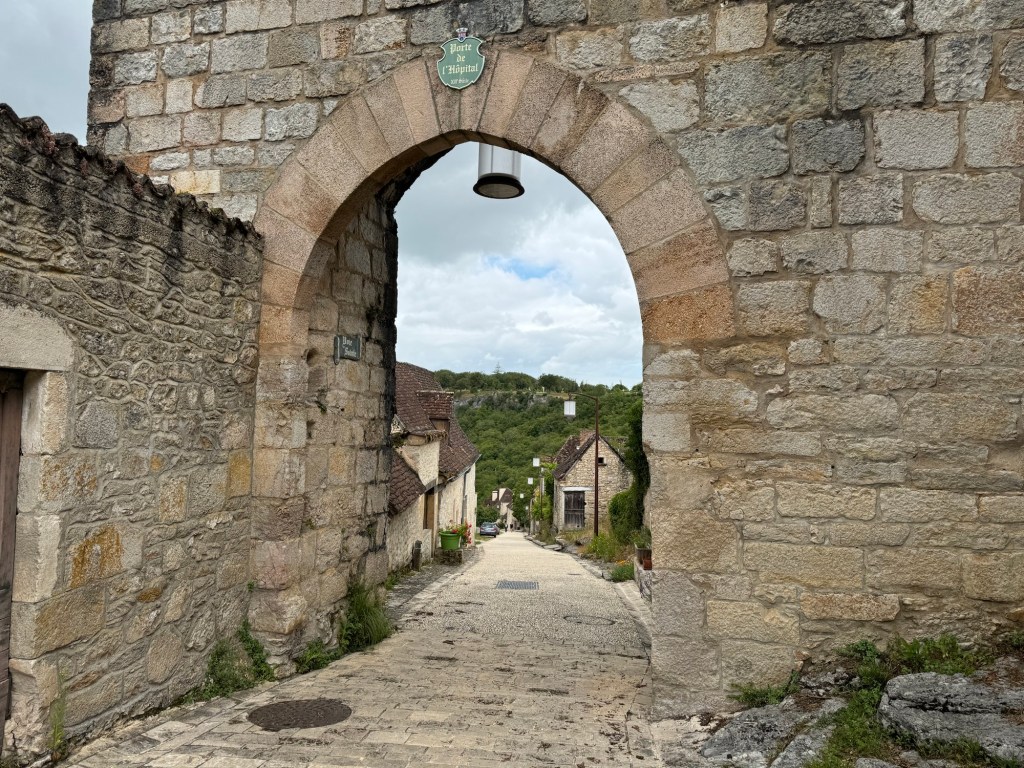
The walk down to Rocamadour was steep and hard on the knees. The view of the town hanging on the side of a cliff was amazing. We wandered through the medieval streets commenting that, just like Mont St Michel, it was simply a tourist destination. Pilgrims apparently do still visit to be in the prescence of the miracle working black Madonna, but in far fewer numbers. Having walked all the way down the hill, it was time to climb back up. Halfway, we popped into the church to see the vierge noir statue. As we left the church, we turned to each other and said ‘she’s smaller than we thought’. Obviously, there were no miracles for us other than getting the lift back to the top. Fundraising is interesting, for €1 you can hammer a nail into an old tree stump.

We have seen two large groups of cyclomoteurs. Moped riders to those of you less cultured than us! The first group in Rocamadour, we put down to over excited youths but the second group had us re-thinking. Our route into Najac was blocked by the Gendarmerie and we waited while at least 100 cyclomoteurs adorned with blue capes turned in front of us. They were followed by a cavalcade of cars and trucks with indicators flashing. With our poor French, I’m not sure we’ll get to the bottom of this.

We’re on the turn…

….and chose not to do today’s suggested walk. ‘No, thank you, to another 11k of hills and valleys. Let’s do alcohol instead’.

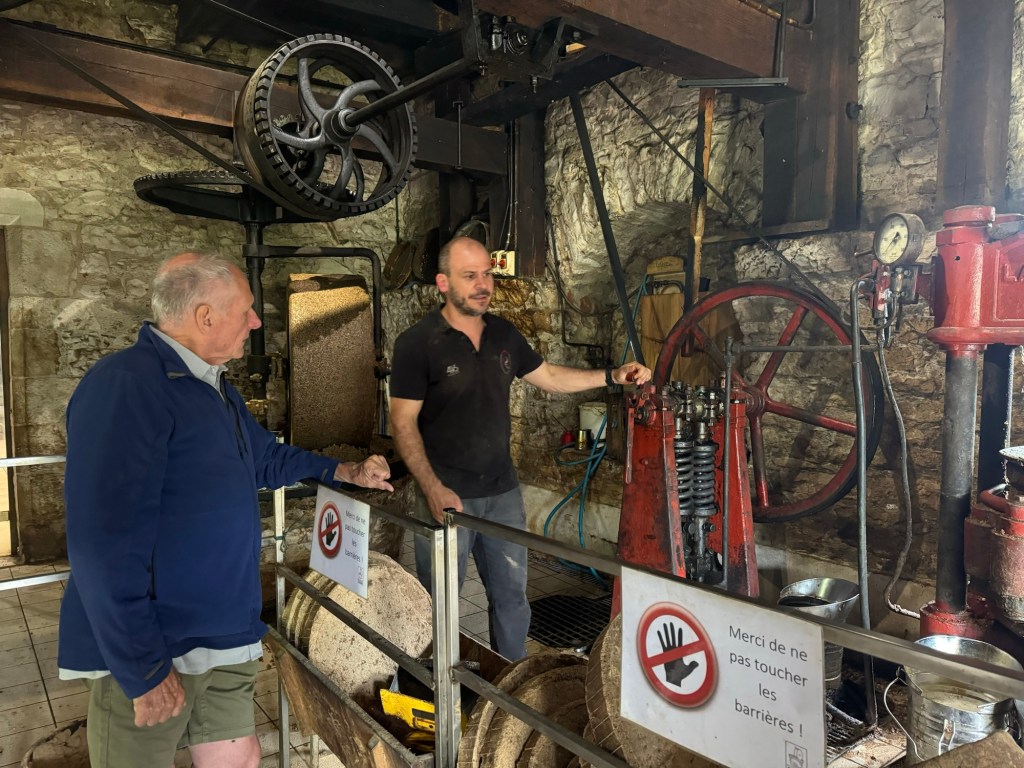
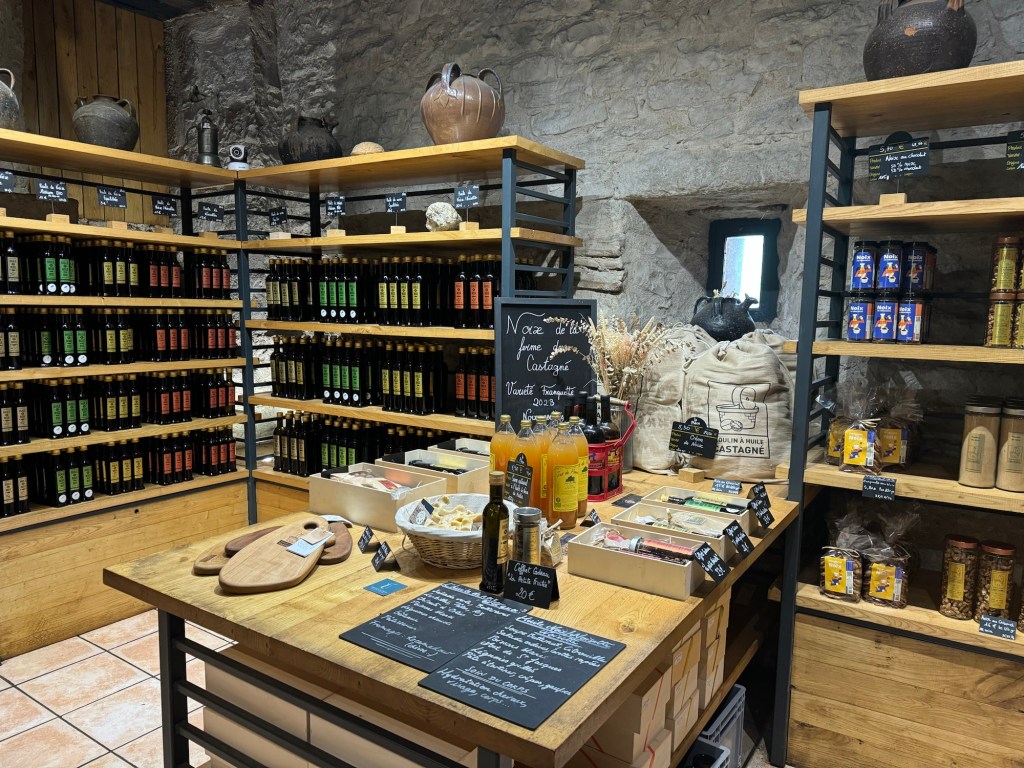
Last night, we tasted the local walnut oil and a chilled walnut aperitif. Our hotel is run by owners of an organic walnut farm and old processing mill. Cars were rescued from their holiday adjacent to the motorhomes and we drove 15 minutes along lovely empty, twisting roads to Moulin a huile Castagne.

The mill owner stopped milling to explain the process from harvest to oil and flour production. It was surprising how labour intensive it is. Walnuts are harvested in late autumn and dried. A machine cracks the outer shells and kernels are removed by hand. Kernels are crushed using a rotating millstone then roasted over a fire fuelled by walnut wood and shells, before being pressed for oil. Any waste products are turned into flour for baking or used as a sheep feed. The aroma was amazing and tasting of oil and walnuts followed.

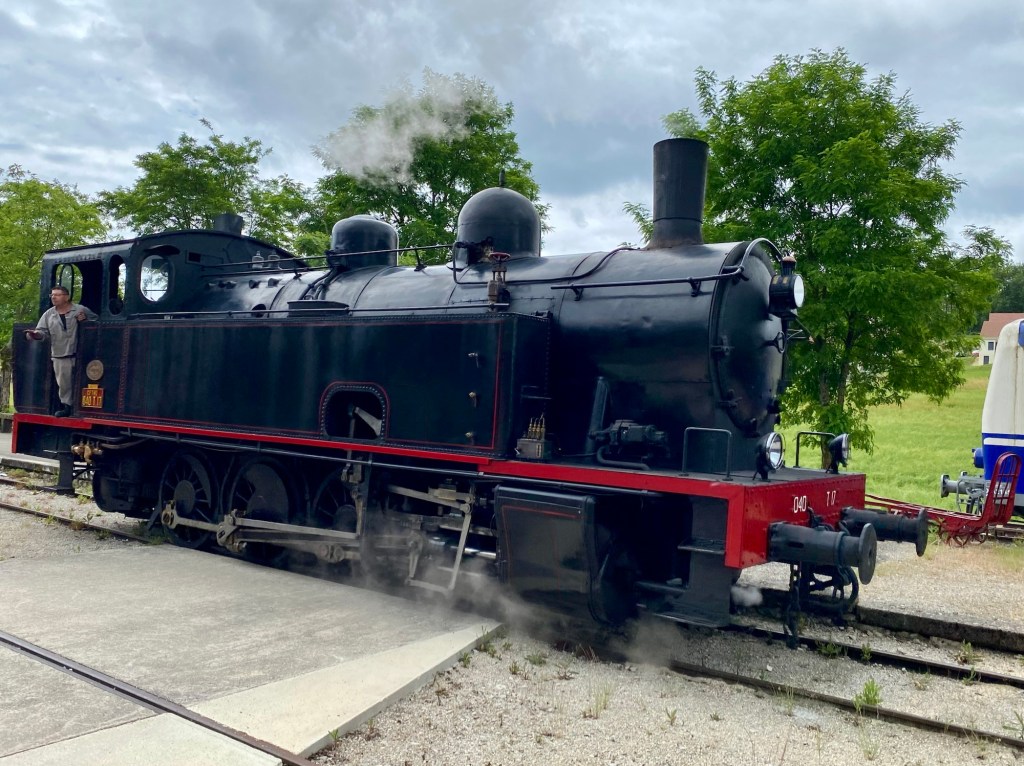
Next stop was the Chemin de Fer Touristique du Haut Quercy or Le Truffadou, a train that runs from Martel along to the viaduct we walked under yesterday. Originally, the line ran from Bordeaux and Aurillac and its primary function was export of Martel’s famous truffles to Paris. We weren’t expecting the station to be open but, in our constant quest for a cuppa, thought it worth a try. Luckily for us it was open, we had tea and coffee at bargain prices and were treated to a steam train pulling in to the station.

Our afternoon was spent at a local wine cooperative for a walk around the vineyard followed by the obligatory tasting. We managed half of the 6km walk through vineyards, walnut and truffle oak groves, then headed back for our tasting. Did you know that young oak trees are impregnated with truffle spores before planting? Each tree takes about seven years to produce truffles and will then continue to do so for up to 40 years.

It’s a very bad year for wine in this region, late frosts in April killed off the young shoots and since then, warm weather and continuous heavy rain have been perfect for mildew growth. Vines have plenty of new shoots but far fewer grapes, yields are expected to be down by 80%. Don’t worry, we panic bought and both car boots are full.

We tasted six different wines and do you have any idea how difficult it was to throw the remains of our tasting away?

Lesson of the day?

Never feel smug!

We left the comfort of Loubressac wishing we had another day there. It may have been something to do with the longest walk of the holiday ahead of us, including two steep climbs.

A taxi dropped us off in Carennac, a small medieval village on a cliff above the Dordogne. It was a pretty, historic village to start in but, worried about the length of the walk, we didn’t hang around.

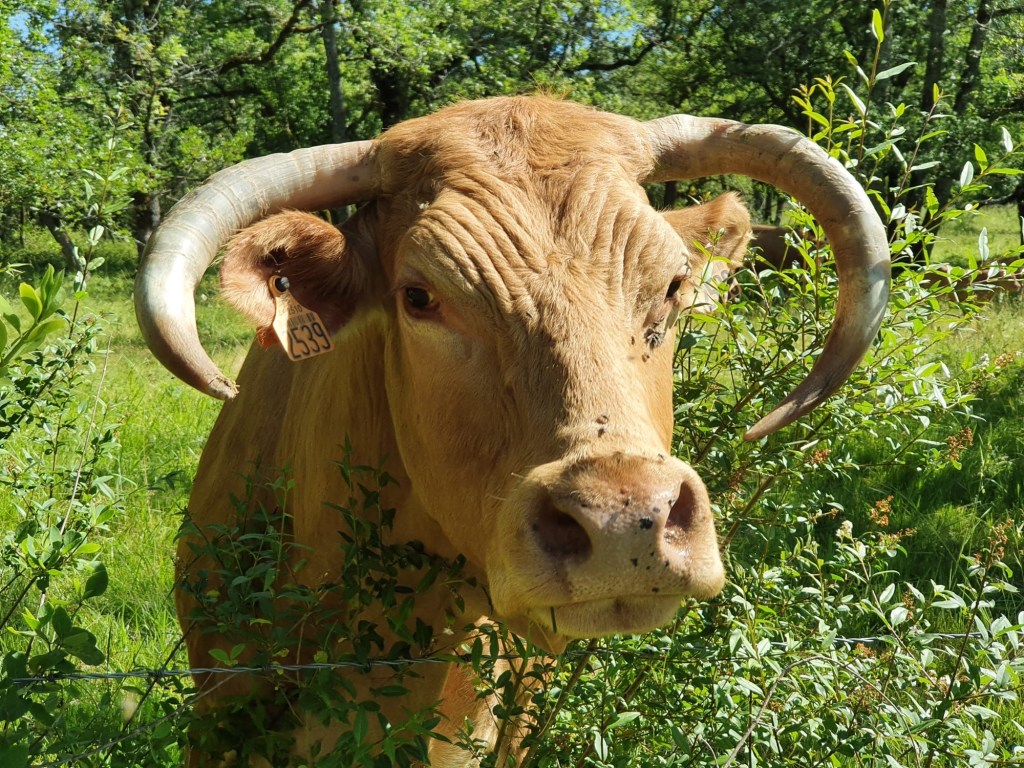
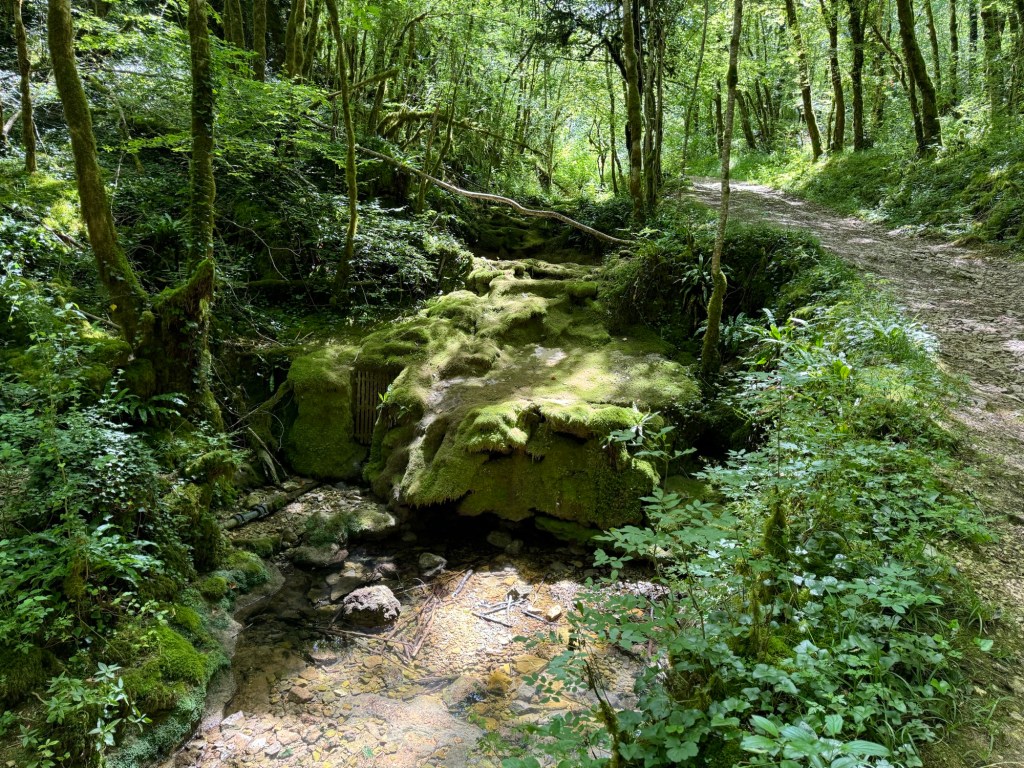
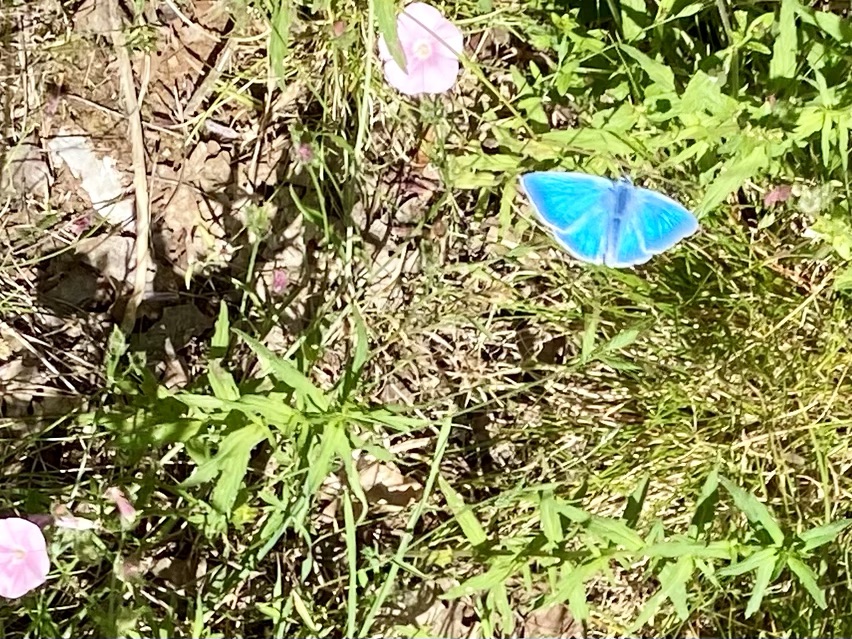
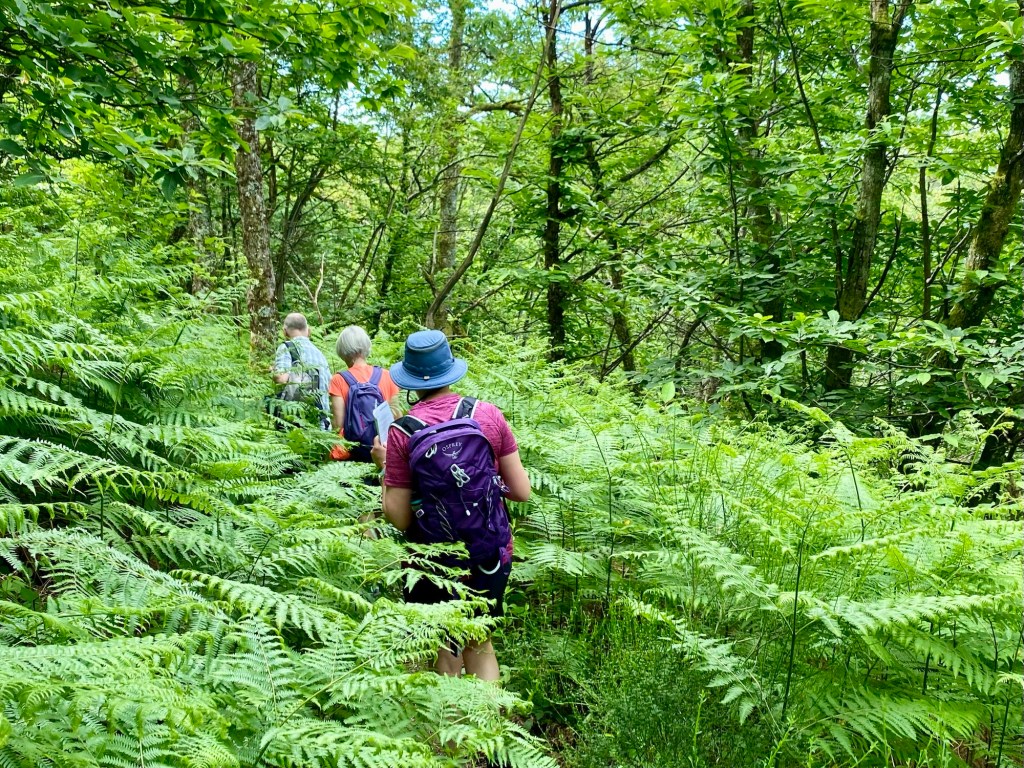
We tackled a long ascent out of town before walking along a ridge, through woodland and past meadows. We were kept company, in equal measure, by many different varieties of butterflies, flies and a cow.

Never ones to miss an opportunity to grumble, we were deeply disappointed not to find the bar open in Floirac, the largest village en route, or a cafe in any shape or form. What we did find was shade under which to eat our lunch and beautifully kept public toilets.

The route out of town took us alongside a railway line and there was talk of completing the last half of the walk by rail. We persevered and crossed the Dordogne over a bridge barely wide enough for a car.

Just before we started up a long, steep climb towards Martel, we came across an interesting approach to improving the look of pampas grass. That morning, Madame thought it needed tidying and decided to plait it. It had taken her only 40 minutes and she’d been really careful not to be cut to shreds by the nasty, evil thing. She was very proud of the result.

Our climb was every bit as steep and long as we’d imagined. We turned corner after corner and the path kept climbing. Luckily everything has to come to an end and finally we descended into Martel.

Throughout the day, our path crossed with the other couple on the same holiday. At one point, we’d commiserated with them about entry into their hotel after 5pm, no such restriction for us! Exhausted and footsore, we arrived at our hotel at 4 to find it ferme until 5:30! They were very kind not to gloat when they caught up with us, gulping down ice cold Perrier in the main square!

Our home for the next two nights is above a bar and next to the restaurant kitchen but I think we’ll cope. A bit worried that tomorrow’s dinner is coming out of a wall though

Speleothems

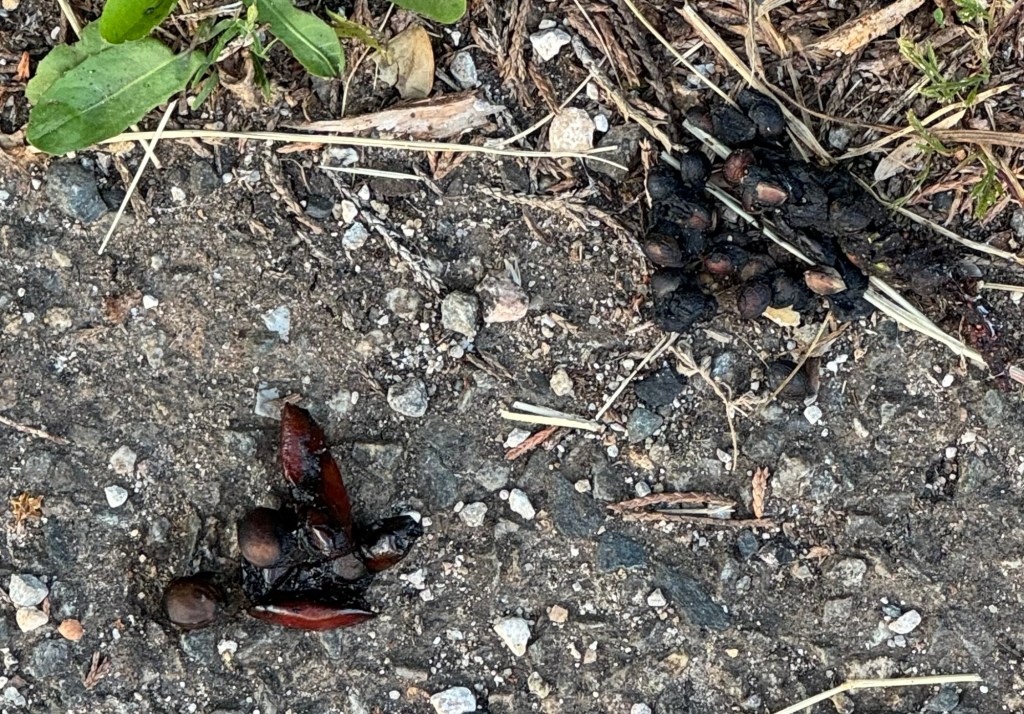
We thought our loyal readers would like today’s challenges. The first being ‘Name that poop’. Sorry, were you expecting something about speleotherms? We have avoided stepping in a lot of this along our routes. Any ideas? We could ask Google but thought someone would be up to the challenge.

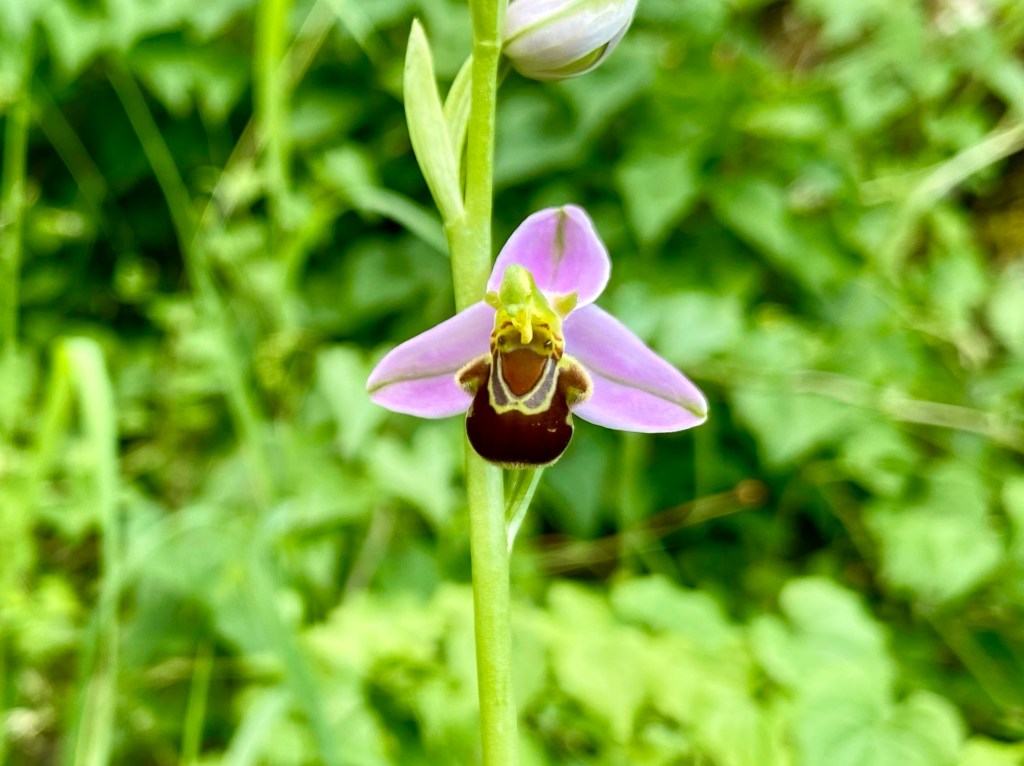
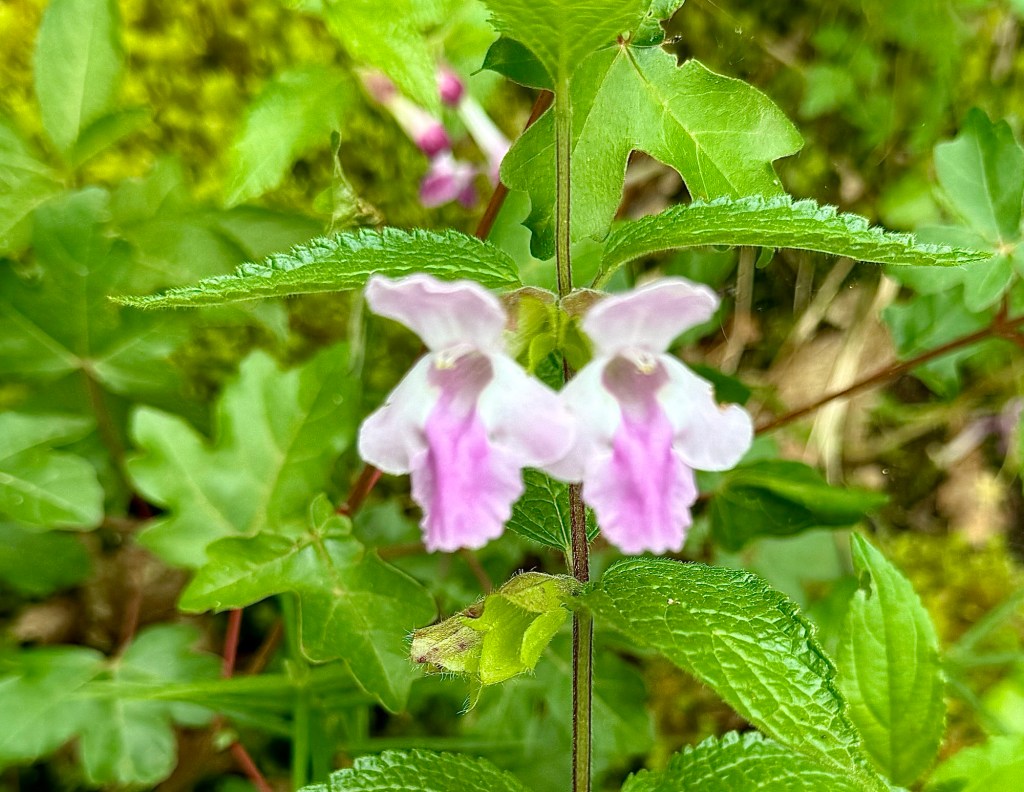
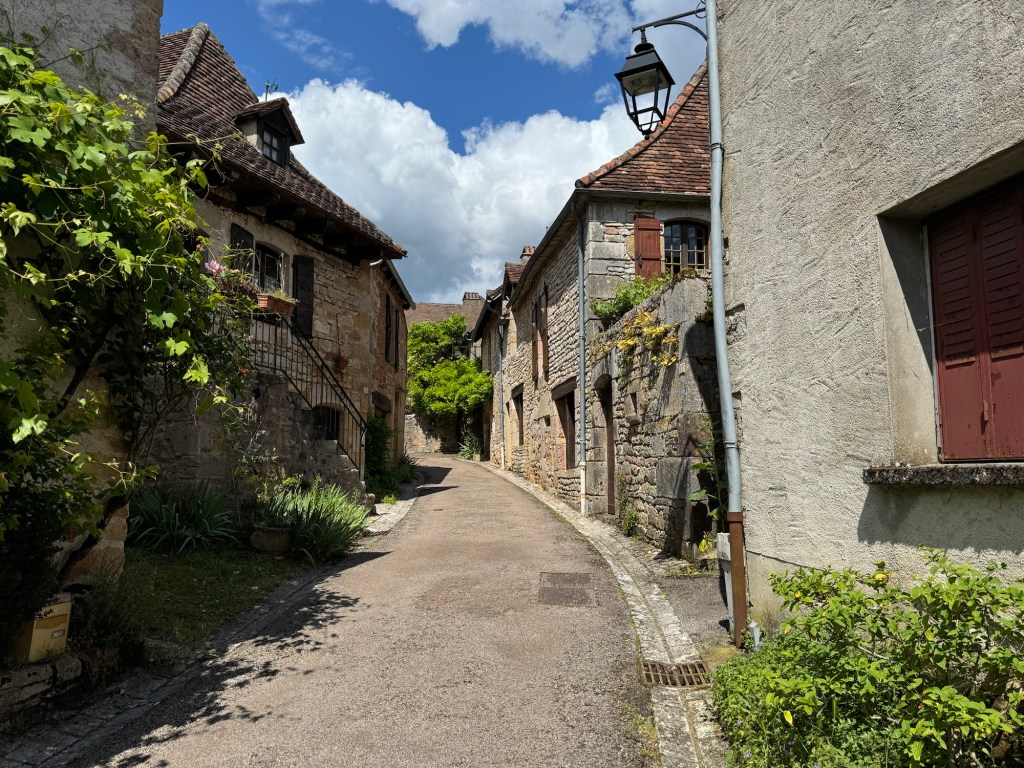
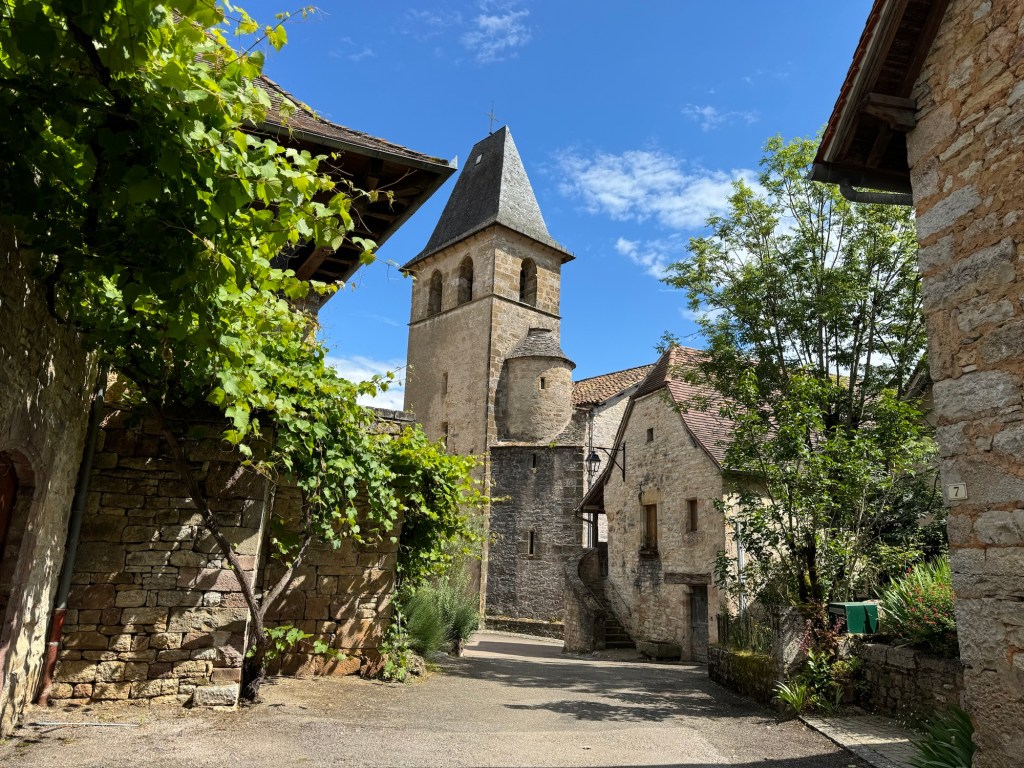
Today’s walk was a 15km circuit from Loubressac via Gauffre du Padirac and the Caves of Presque. The walk gave us the opportunity to attempt various plant identifications, can you name them?

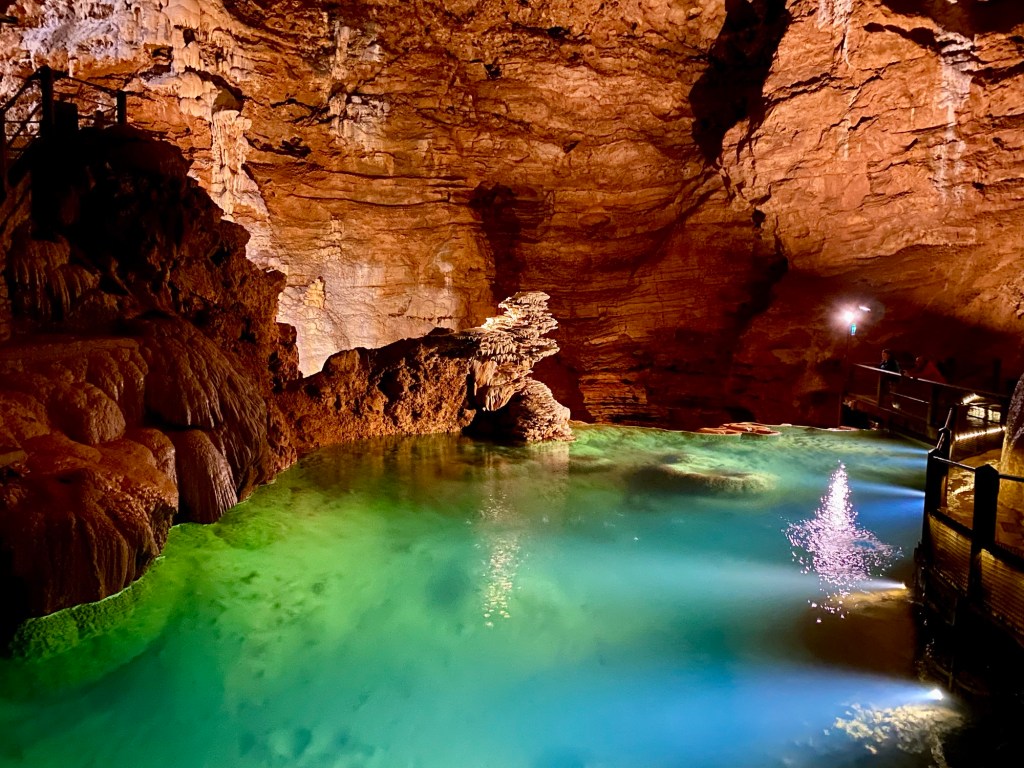
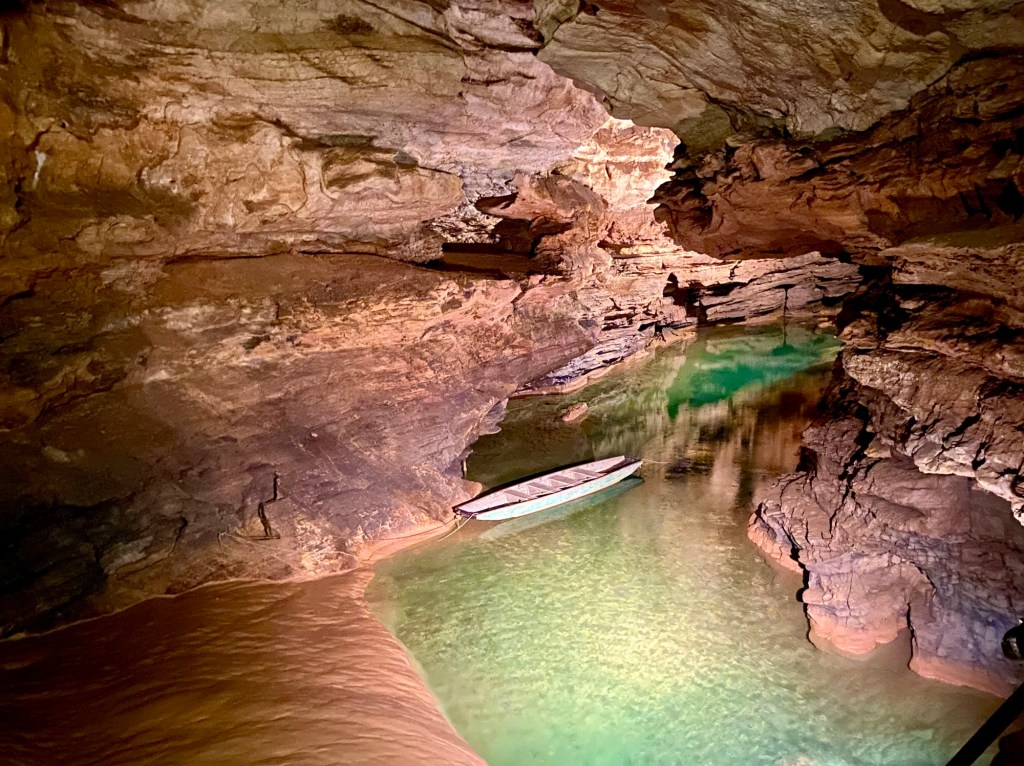
We’ve visited caves in the past and, as a result, no one was that keen to see anymore, especially after three days of hiking up and down endless hills. However, as the most impressive caves are accessible only by boat, Kim had booked tickets before we left home and we reluctantly gave it a go – they were fantastic.

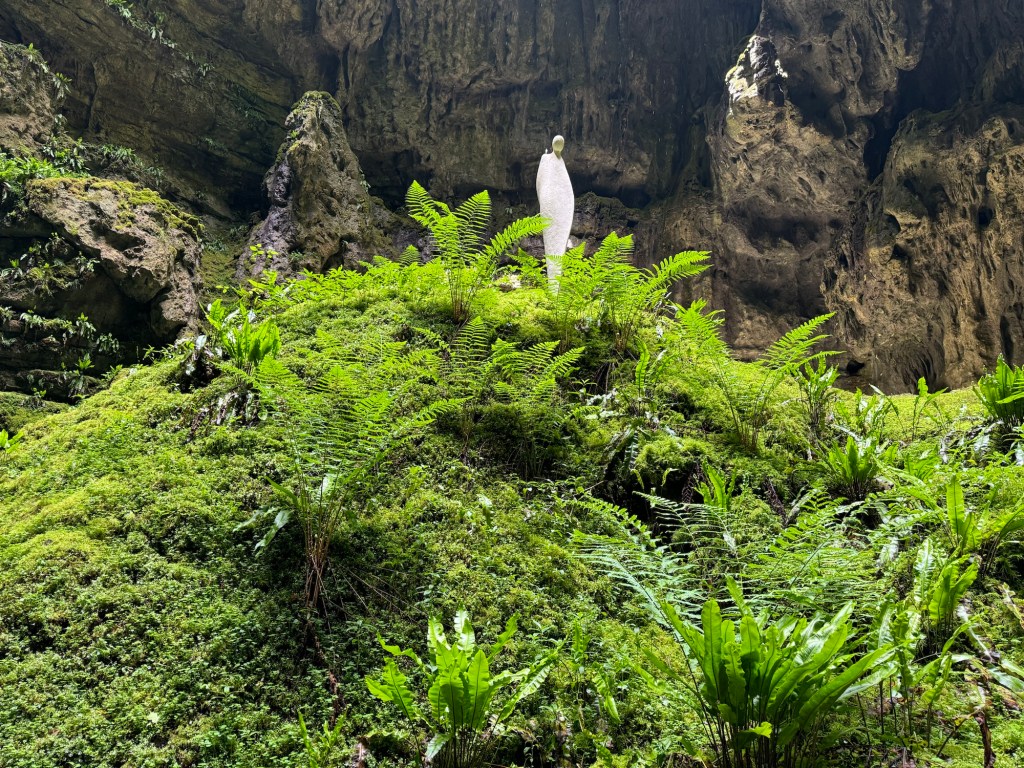
Discovered in 1826 during construction of the D673 road, which links Saint-Cere to Rocamadour, the immense underground caverns are accessed via many steps into various illuminated caves some with roofs nearly a 100m high. Each one displays various stalactites (speleothems!) and other calcite deposits in different shapes and colours. We reached a point where the path ended, boarded a small punt type boat which took us on to even more impressive caves. The river runs, underground, for 20km before joining the Dordogne. Words and photos can’t really describe the spectacle that greeted us.

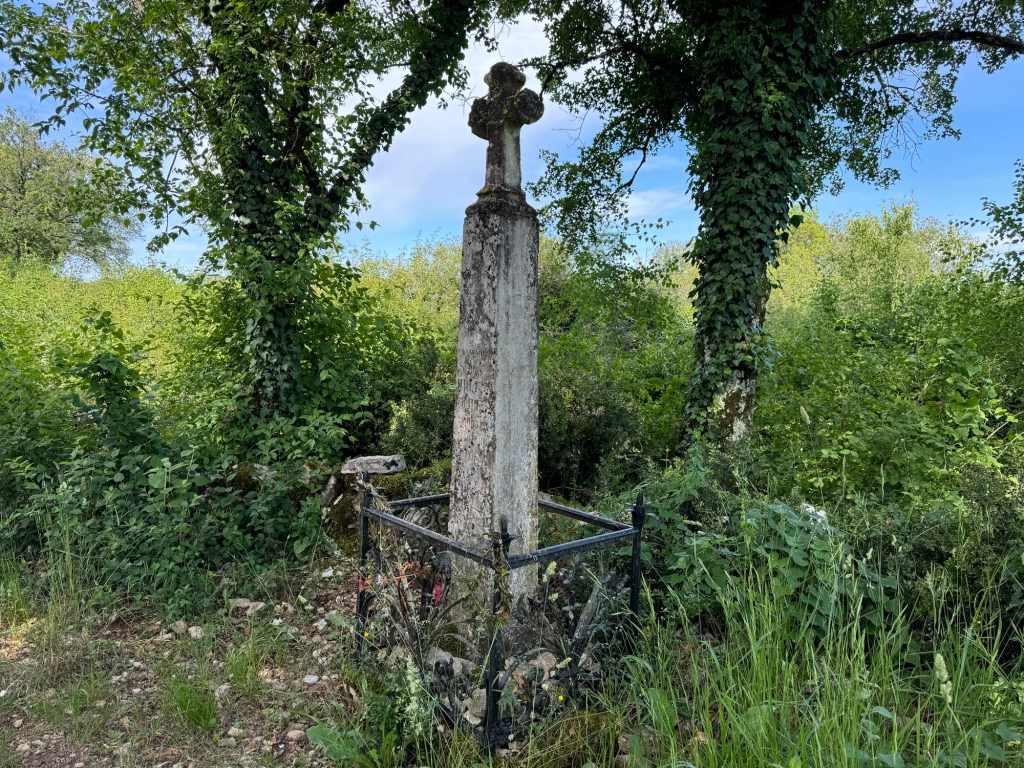
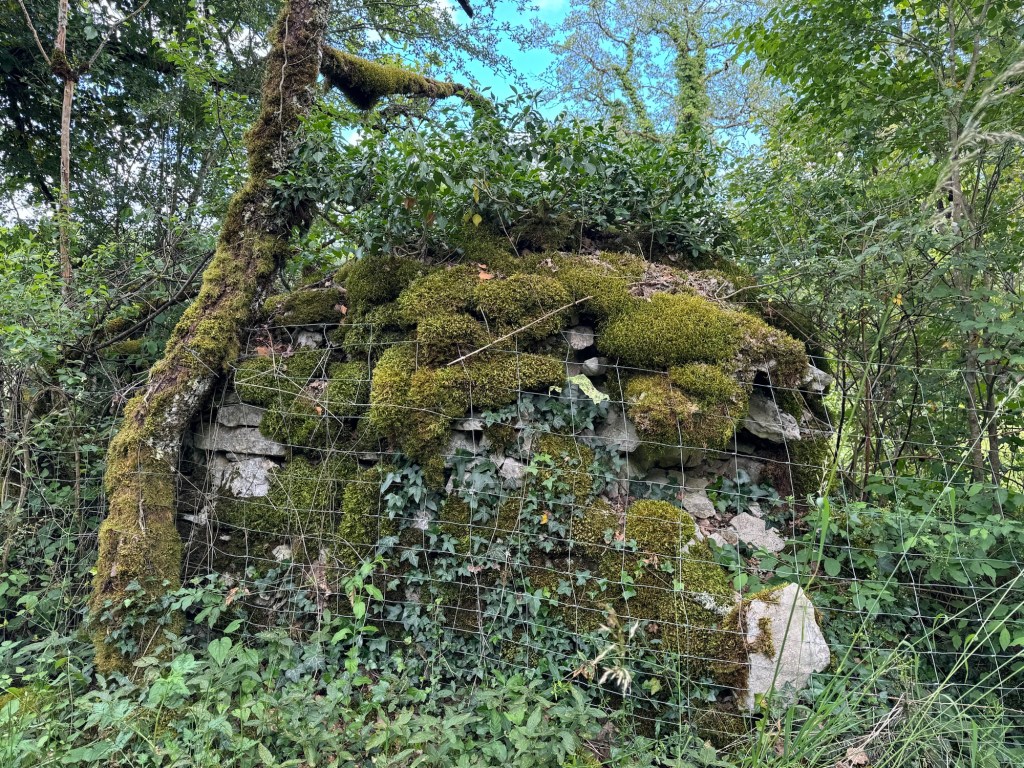
Time was getting on when we resurfaced so we cut our walk short, retracing our route back to Loubressac, catching a glimpse of wild Boar in the oak woodland. We made too much noise for them to hang around for a photo opportunity, wildlife photographers we are not. We did, however, stop to admire the Croix Helene Bombezy. She was killed on the site by a village boy in 1844, we can’t find out why she’s referred to as a martyr. We did discover what a cazelle is. Not a deer like creature, badly spelled, but a stone hut for sheltering sheep or shepherds

It’s been a leisurely day with easy walking. Our afternoon finished with a wander around Loubressac’s fortified town. A bientot.

Where’s the bridge?

Yesterday, we needed a tunnel to flatten our route. Today, a couple of bridges would have been useful.

A taxi picked us up from the Auberge du Vieux Port and dropped us off in a small village square after only a couple of miles. We couldn’t understand why a taxi was needed, until it started to climb a steep hill at which point we were very grateful not to have walked up.

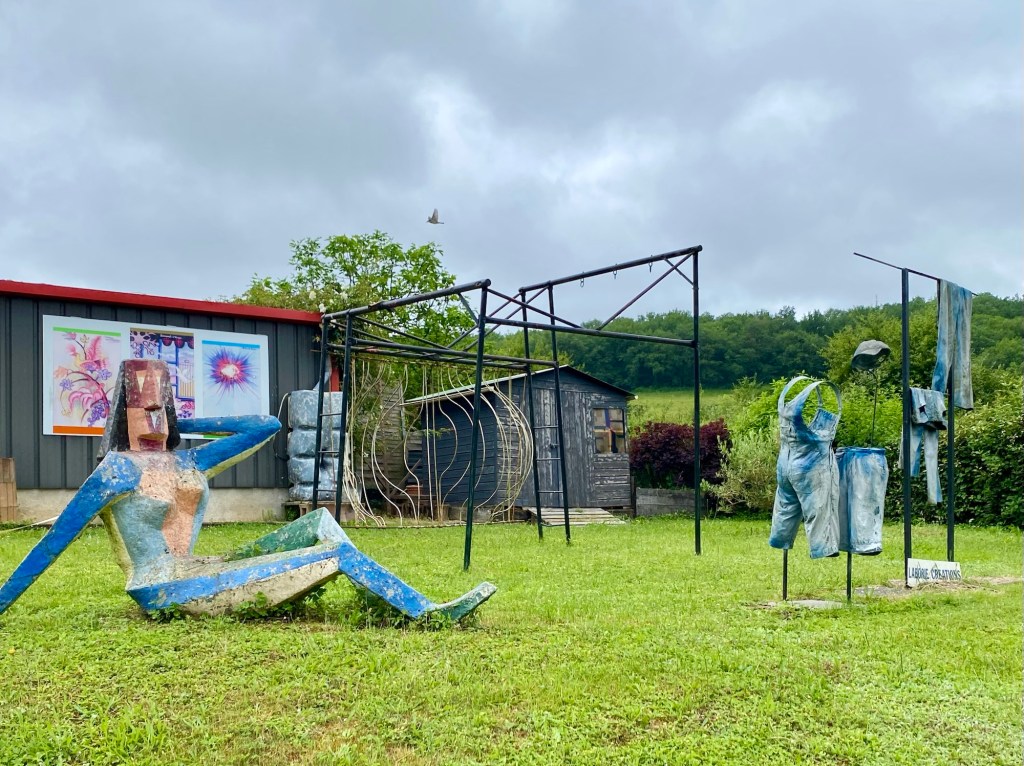
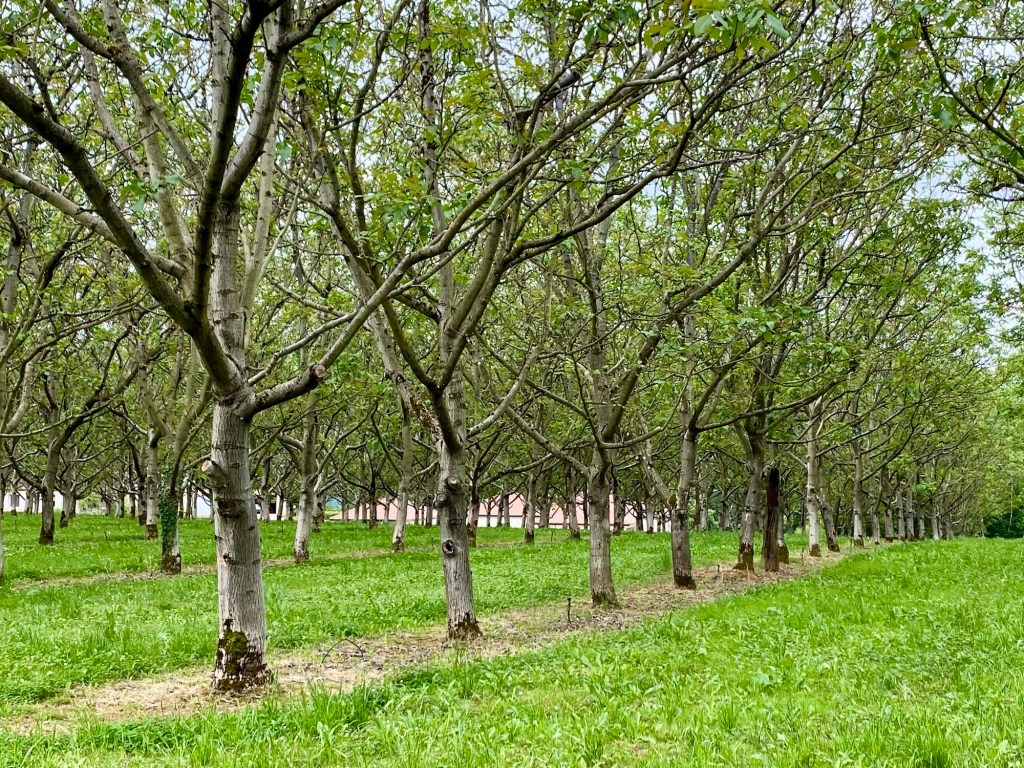
Our route started in the little town of Glanes with a long descent through walnut trees and vineyards. It was surprisingly cool this morning and there was plenty of grumbling about cold knees, except for Ken who was suitably smug in his walking trousers. As the route flattened out, we found a small art gallery with an eclectic mix of ceramics, wood carvings, glass work and repurposed denim made by an artisan who sells his work across Europe.

A long and arduous ascent followed, up a wooded, cobbled track towards the Chateau de Castelnau, grateful for the cool, cloudy weather although it spoiled the views somewhat. We were transfixed by the French farmer, coaxing his tractor into life, who kept his head cool with a towel under his sun hat.

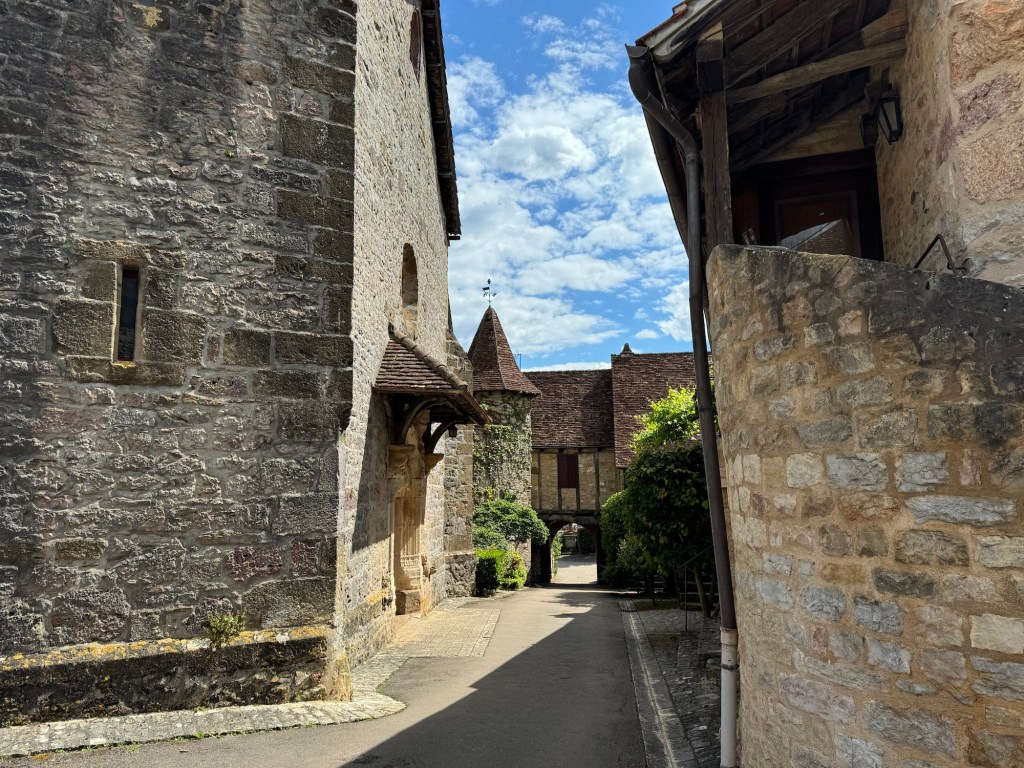
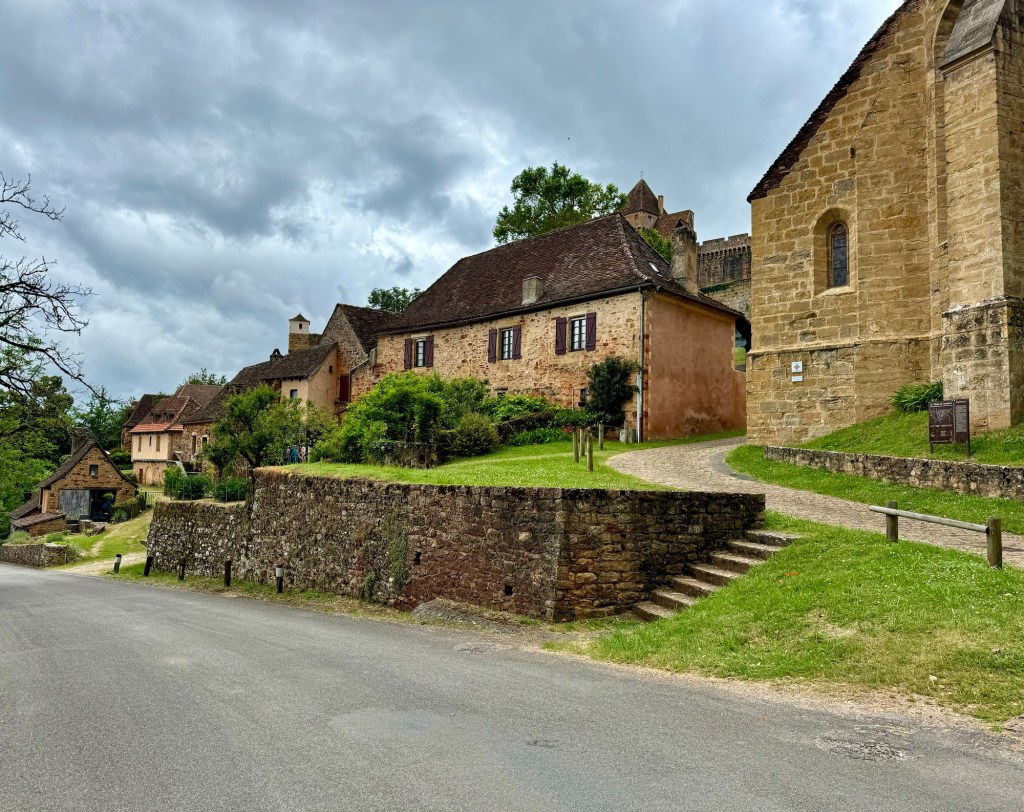
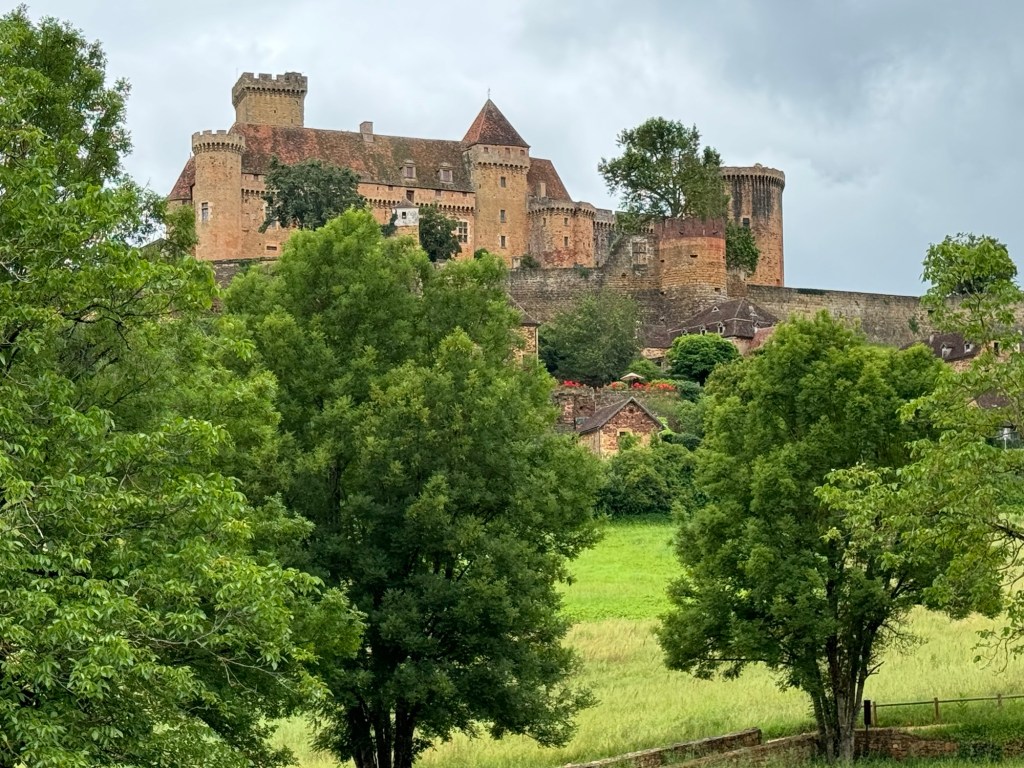
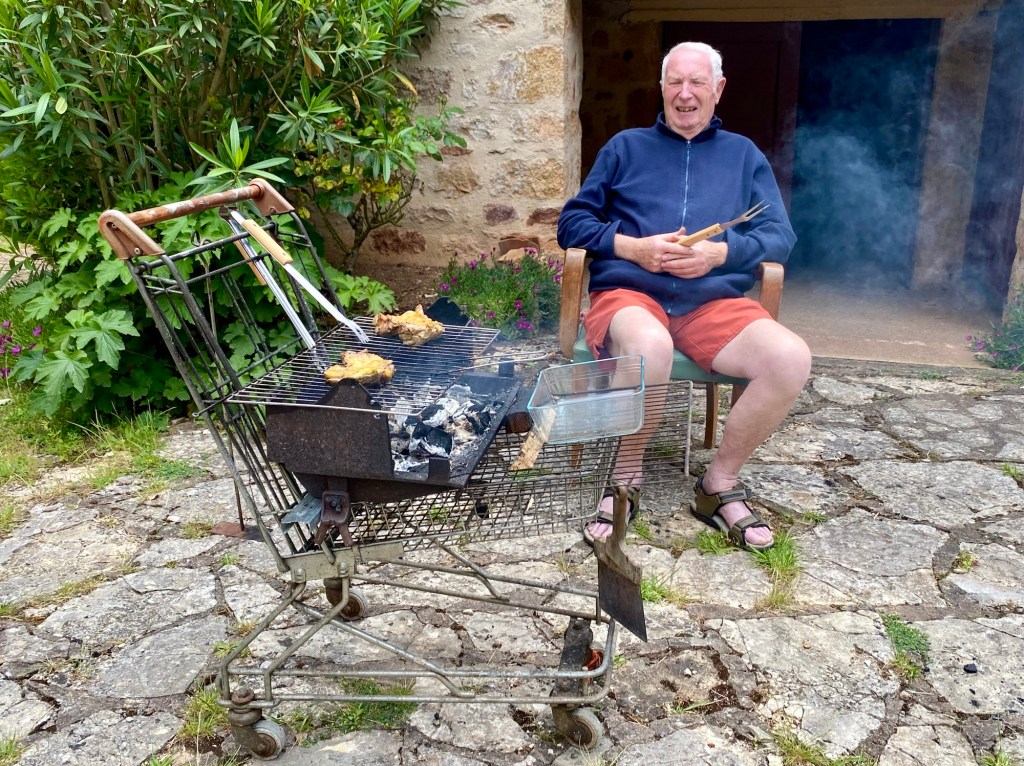
The chateau is impressive, perched on a hill and visible for miles around. It’s a gigantic fortress built to protect the borderland between Limousin and Quercy and remained undefeated by the English during the 100 years war. Sadly we arrived just as it shut for lunch but agreed the village, built from the same rust coloured stone was very pretty. We sat outside the chateau’s walls and munched on our packed lunch as the rain started. Rain has been promised most days and we’ve been lucky to avoid it so far. Waterproofs came out, as did Jacky’s poncho. Stylish it isn’t but it didn’t prevent flickers of envy. Most envy was directed at the local who had repurposed a shopping trolley as a barbecue, the smell from his marinated chicken was mouthwatering.

Another descent to the hamlet of Malbec. We had high hopes of vineyards and wine tasting, even a cafe but it only consisted of five houses and we were out the other side before we knew it.

There was some lovely flat walking through the hamlet of Vailles, past a fromagerie. There was no cafe but we did sit on an attractive concrete, car park wall to finish snacks and fortify ourselves for the long climb ahead up to Loubressac,

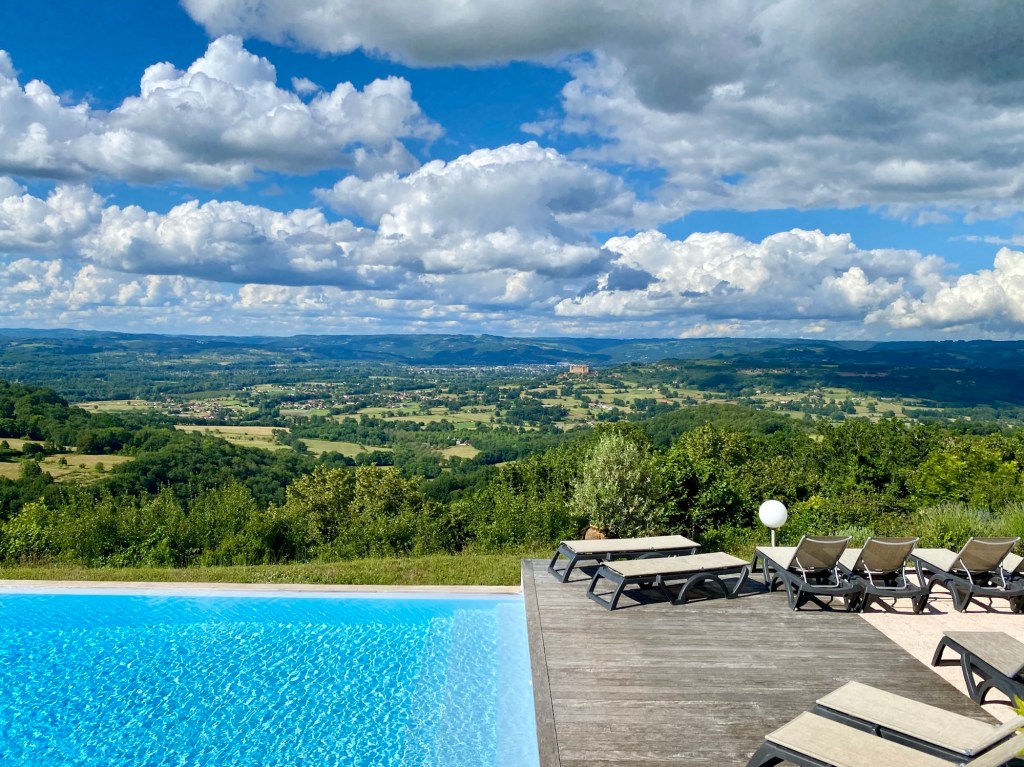
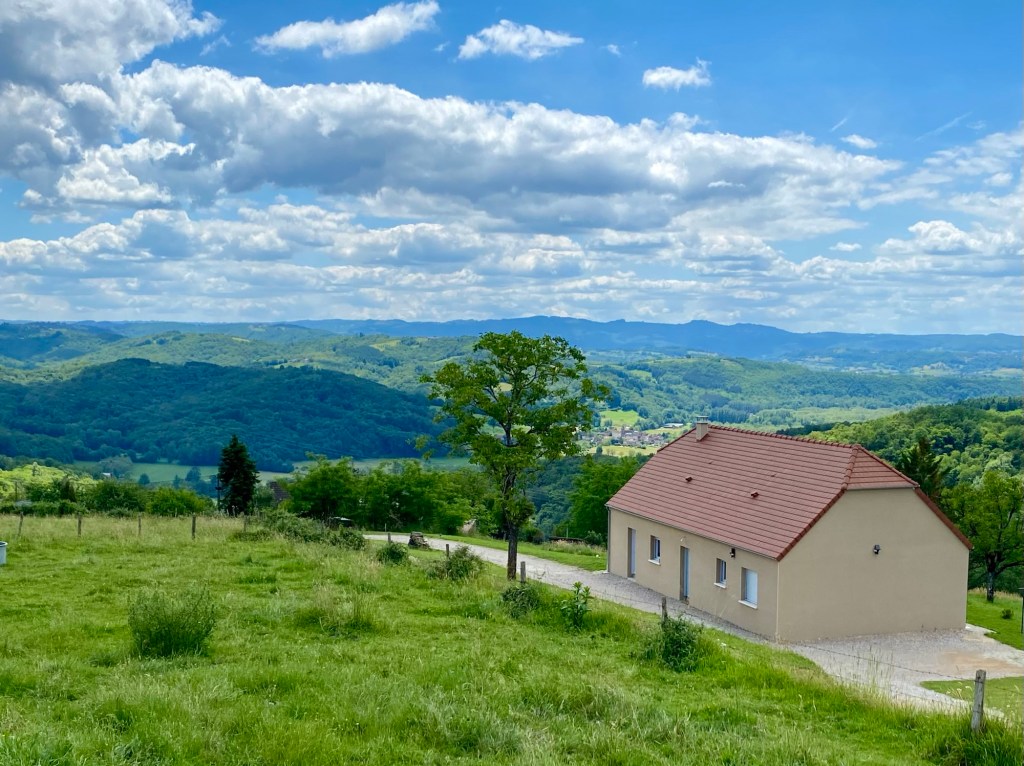
Loubressac is a tiny fortified village in an amazing position, overlooking the valley towards Chateau de Castelnau and our home for the next two nights

It’s An Upside Down World

We appear to be sharing our holiday with other walkers. The first are seasoned Inntravellers with 30 years experience, the second are the retired couple from Illinois mentioned yesterday. Although we aren’t walking together as a group, our paths cross occasionally and it feels odd to be sharing ‘our’ routes and hotels with others, despite how friendly they are.

Today we walked from Beaulieu sur Dordogne to Le Port de Gagnac on the river Cere. 12 kms with an ascent of 370m and descent of 360m. Not sure why we’re sharing this with you but, if the French really cared about tourism, they would have built a nice flat tunnel for us to walk through.

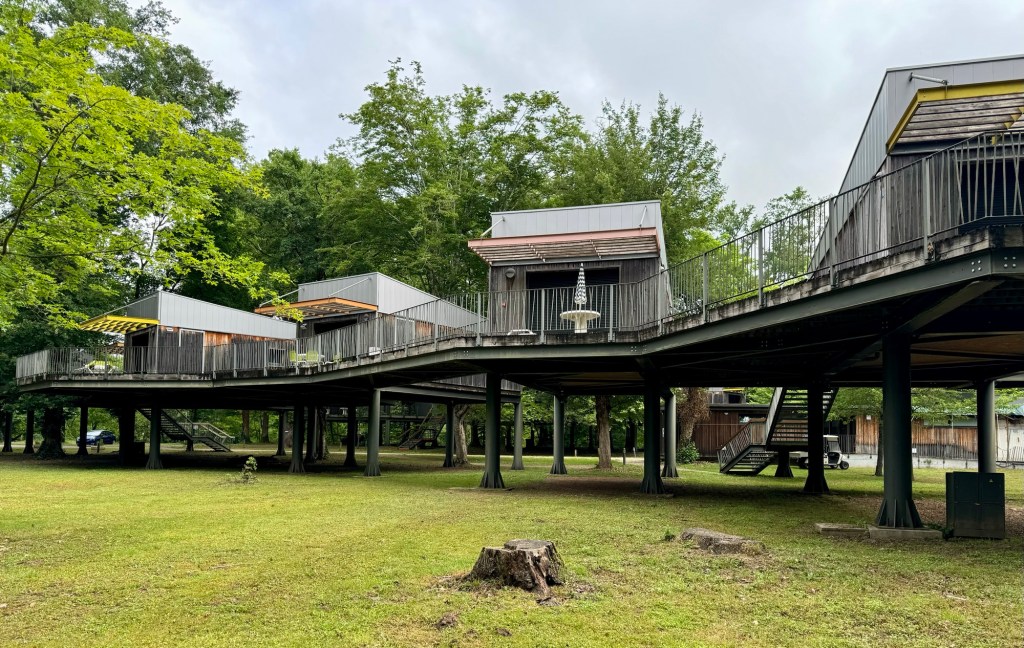
Our route started by crossing the Dordogne, through a park with some interesting holiday cabins on stilts. Quite a reminder of the flooding risk. Sadly, there was no photo of the lovely looking motorhome site on the opposite bank.

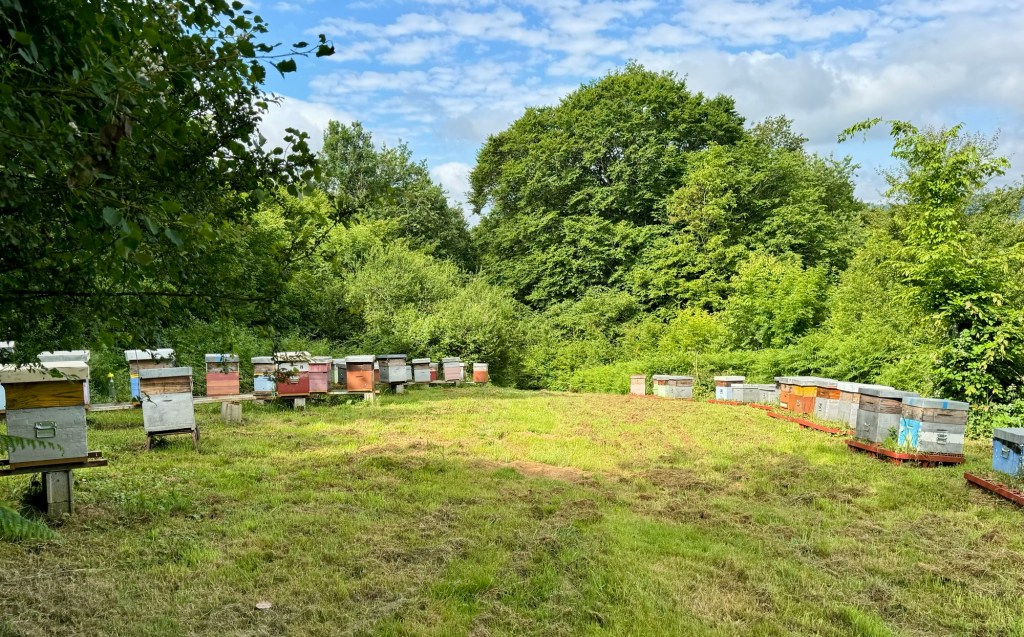
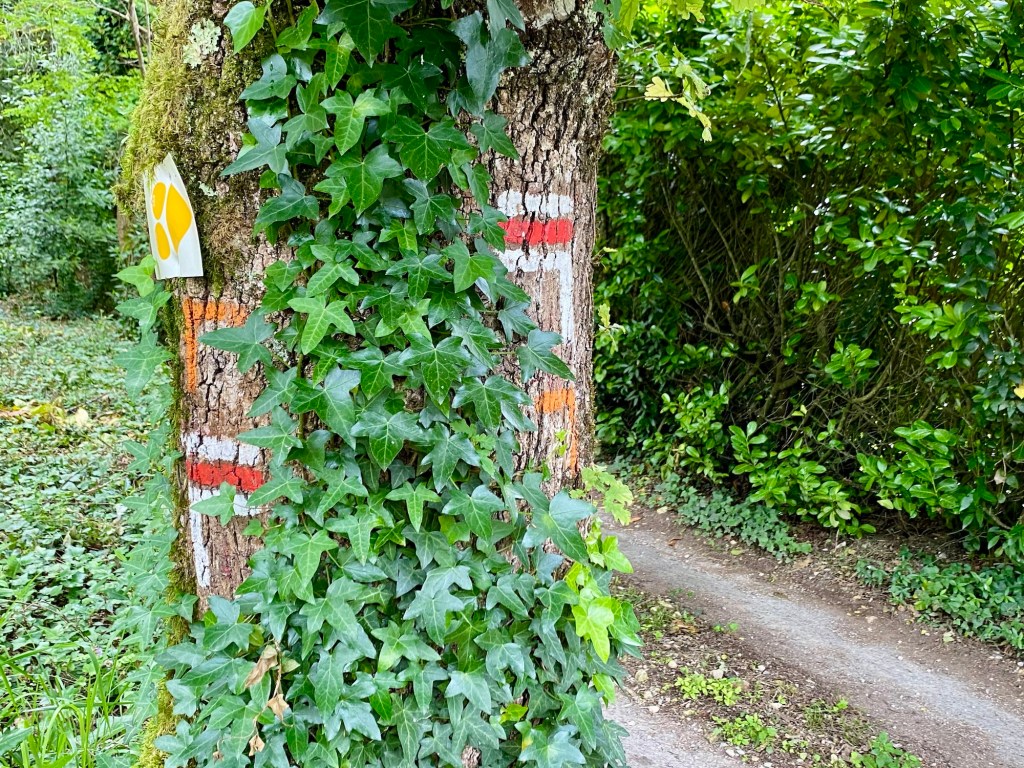
The toughest climbing was during the first half of the route, past walnut groves, beehives and through woodland. To guide us, we have waymarks, written instructions, GPX files and a map. Despite all this, there were regular debates about the correct route. At the top of the ridge we were treated to some stunning views back across the valley before winding our way back to Le Port de Gagnac through the pretty hamlets of Fontmerle and La Poujade.

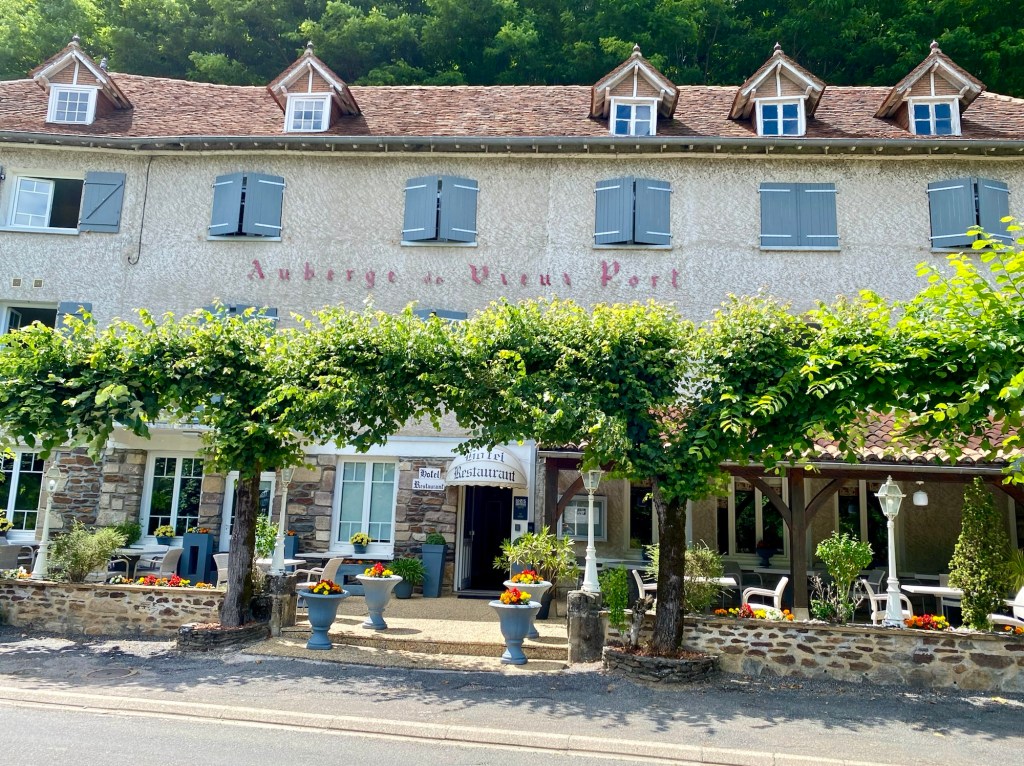
Tonight we stay in Auberge Vieux Ports, overlooking the River Cere. It’s a lovely location and we move on tomorrow with a longer, hillier walk.

Finally, the upside down town signs? It turns out they are a protest by French farmers to raise the visibility of their challenges in trying to compete with foreign imports while at the same time trying to meet the plethora of conflicting agricultural regulations – ‘nous marchons sur la tete’ which make us walk on our heads.

Trousers or shorts?

We had a choice of hilly walks, longer and flatter or shorter and hillier. The decision was made, we would go long and then we met fellow Inntravellers at breakfast.

The couple from Illinois had completed both walks and thought the shorter was more interesting with less mosquitoes. Not having thought about mozzies, we made a mad dash to the local pharmacy to protect ourselves from the evil little critters. It gave us time to change our minds – the shorter walk for us!

It was well after 10 when we left and all the faffing had made us thirsty. We walked all of 500m before justifying stopping for a cuppa. Today’s walk was very rural and there would no more opportunities until we returned.

Finally, some time after 11, we set off and immediately started the ascent. It was hard work. We were expecting rain, instead it was warm and humid. Not ideal but better than walking in the wet, particularly as Kim had left her waterproof in the hotel.

Finally at the top of our climb, we walked along a ridge with views across both sides. A local lady who was tending her garden came to our assistance while we debated the route. Originally from England, she had lived in the area for 20 years and now managed her hillside home alone, separating from her husband shortly after arriving in the area. She has chosen to stay and loved the purity of the air and peaceful location.

We have seen many upside down town signs and she was able to enlighten us to the reason. Can you guess?

Our descent started through the hamlet of Sioniac before reaching the bank of the Dordogne river

One more photo opportunity presented when we sat opposite a small cemetery for lunch on the only two benches we had seen en route.

Four hours after leaving, we were back in Beaulieu. It’s been a leisurely start to our walking holiday. Tomorrow’s route looks tougher in both terrain and duration.

Souviens toi

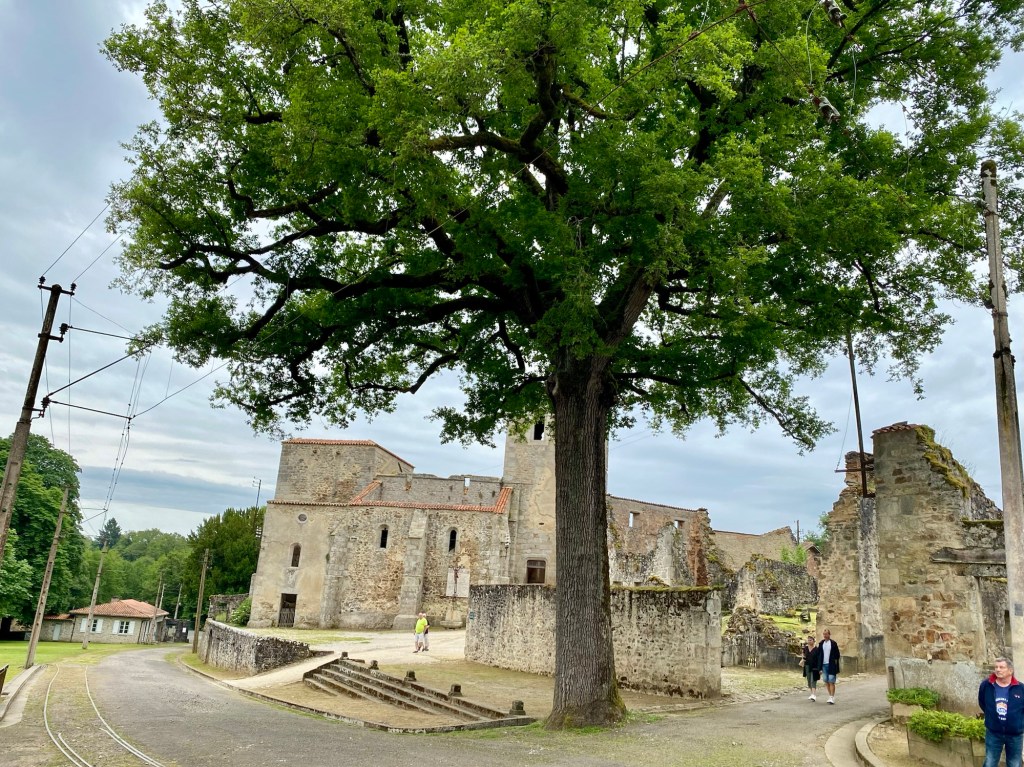
Our day started at the Memory Centre and Martyr Village of Oradour sur Glane. The history is horrifying. After an officer went missing, the SS wanted to make an example of a local village and, on 10 June 1944, just 4 days after D-day, Oradour sur Glane was surrounded. Its inhabitants herded into the town square, men were separated from women and children before they were all incarcerated and murdered and the village set on fire. The village was destroyed, together with any evidence of the atrocity. Surviving families were never able to identify their loved ones because of the scale of burning and burial in mass graves.

The village was designated a memorial and preserved, and a new village built overlooking the historic site. Each year, the massacre of 640 people is remembered with a parade from the new town to old, held in silence as a time to reflect. Here are a few photos which don’t do justice to what happened here.

Our walking holiday started this afternoon in Martel. The plan was to meet up with Jacky and Ken and park the cars in time for our hotel transfer at 5pm.

We arrived early, imagining drinking a cold beer while we waited – it’s been a long hot day. Despite instructions telling us about free on-street parking, none was to be found. Martel has taken against long term parking and limits you to 2 hours each day. To be fair, those 2 hours are free but not much use when abandoning a car for 5 days.

Tourist Information and InnTravel came to our rescue, each with a different solution so we chose the easiest and abandoned our cars in a car park 10 minutes outside town. Fingers crossed they will be there when we get back!

With 30 minutes to spare, we arrived at our pickup point and the taxi driver was already waiting, no cold beer for us.

40 minutes later we arrived at Beaulieu sur Dordogne where we spend the next two nights. Our hotel is right beside the river but room has a view of the back alley – you can’t have everything in life

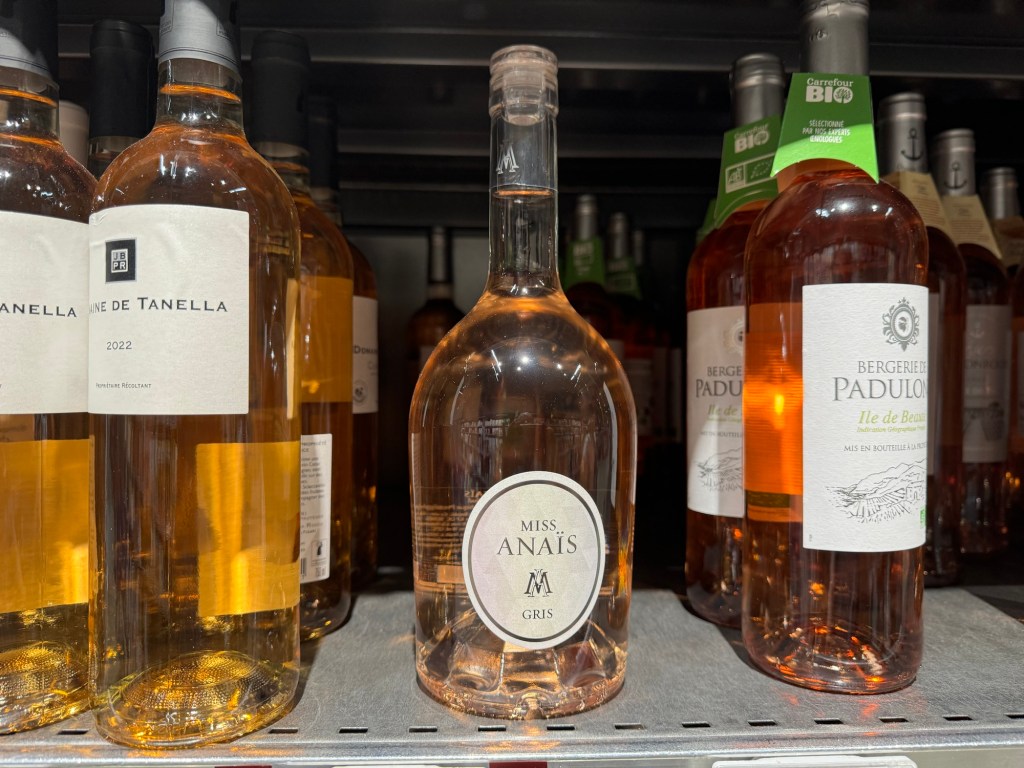
Our find of the day, apart from the car park, was wine bottles sealed with glass stoppers. Never seen before and could now be the new criteria for choosing wine.

I think, therefore I am

Before we tell you about today, we need to share details of our ferry crossing. Brittany Ferries hadn’t paid the heating bill and the whole ferry was freezing. Not only that, it was full of people having a good time. The noise in the bar drove us to bed after only one beer.

The crossing is too short for a decent rest, but is good for an early start ahead of the long drive to Oradour sur Glane. Despite knowing this route really well, we misread instructions for leaving Ouistreham and made a wrong turn driving towards Caen. We went past Pegasus Bridge, Benouville and Cafe Gondree the first French house to be liberated on D-Day.

Our first stop was between Alencon and Le Mans, a lovely patisserie located in a disused filing station. Fortified with caffeine and sugar, we whiled away some time in the morning sunshine before heading on.

Negotiating Le Mans was our next big challenge. The annual 24 hour race is next weekend but preparations are well underway with signage and barriers already in place. In fact, if it wasn’t for the barriers we would not have noticed that we were pottering along the famous Mulsanne Straight – proud to be testing the road surface ahead of slightly faster cars due next week.

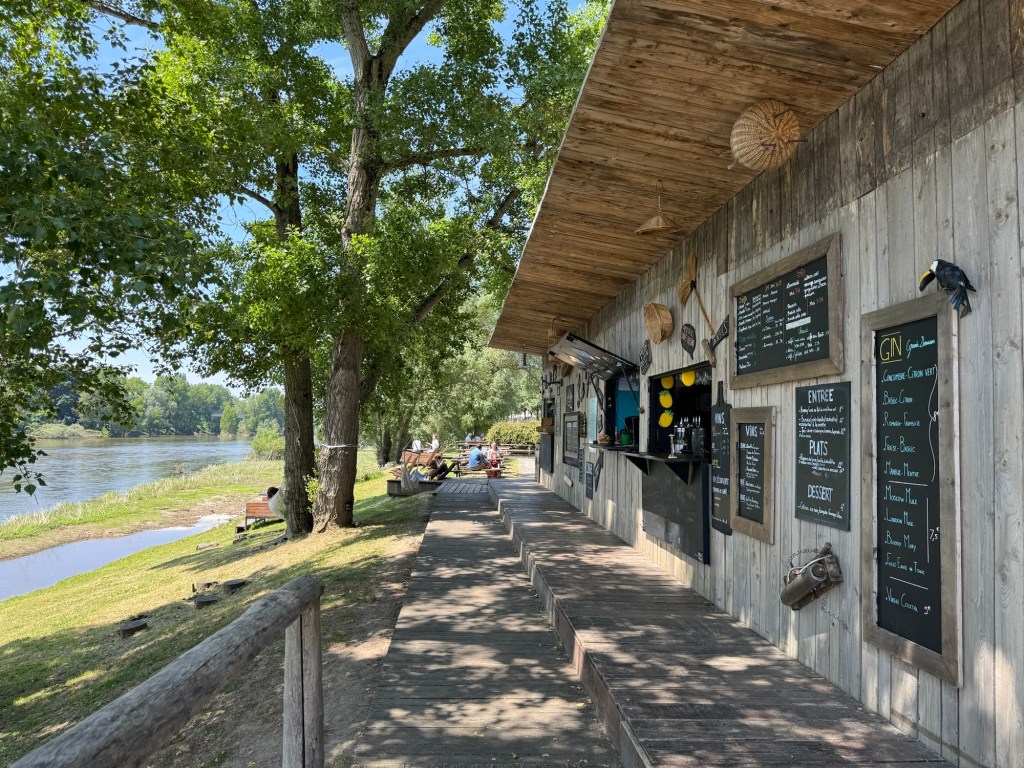
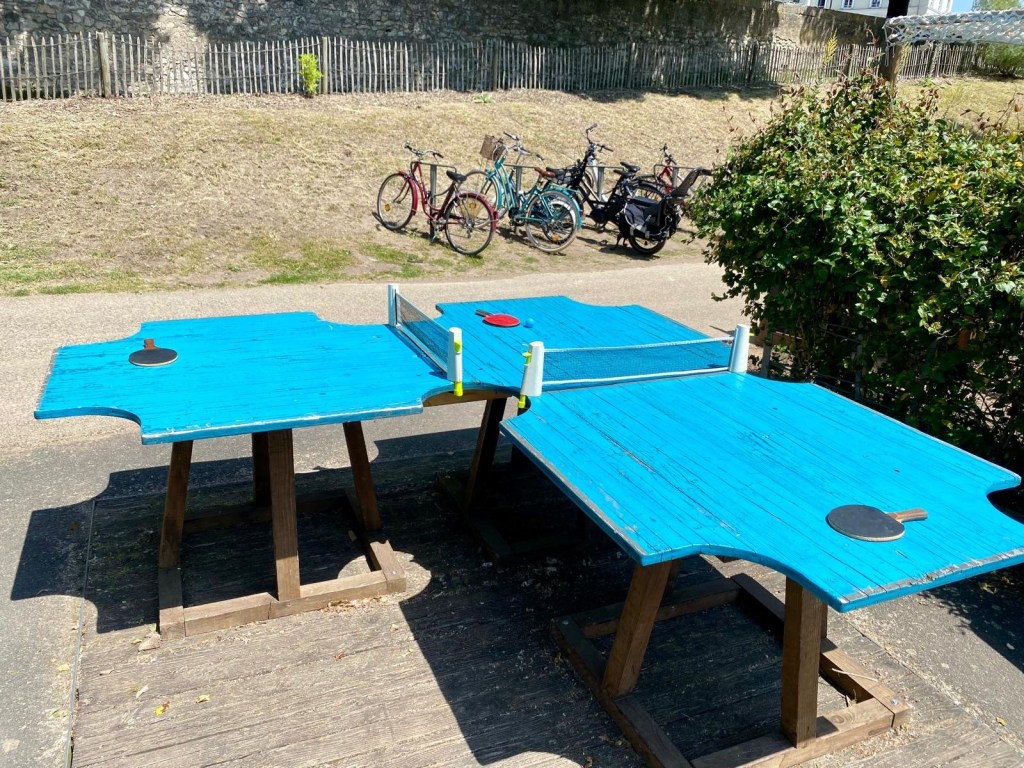
Lunch beckoned and you can’t drive through the Loire Valley without stopping by the river. A slight detour and we were sitting on the beach at St Cyr sur Loire, looking over the river towards Tours. The beach cafe supplied more caffeine to keep us going and then we noticed the table tennis…..

Our chosen route took us along many miles of empty roads which led to a lot of chuntering about awful roads at home.

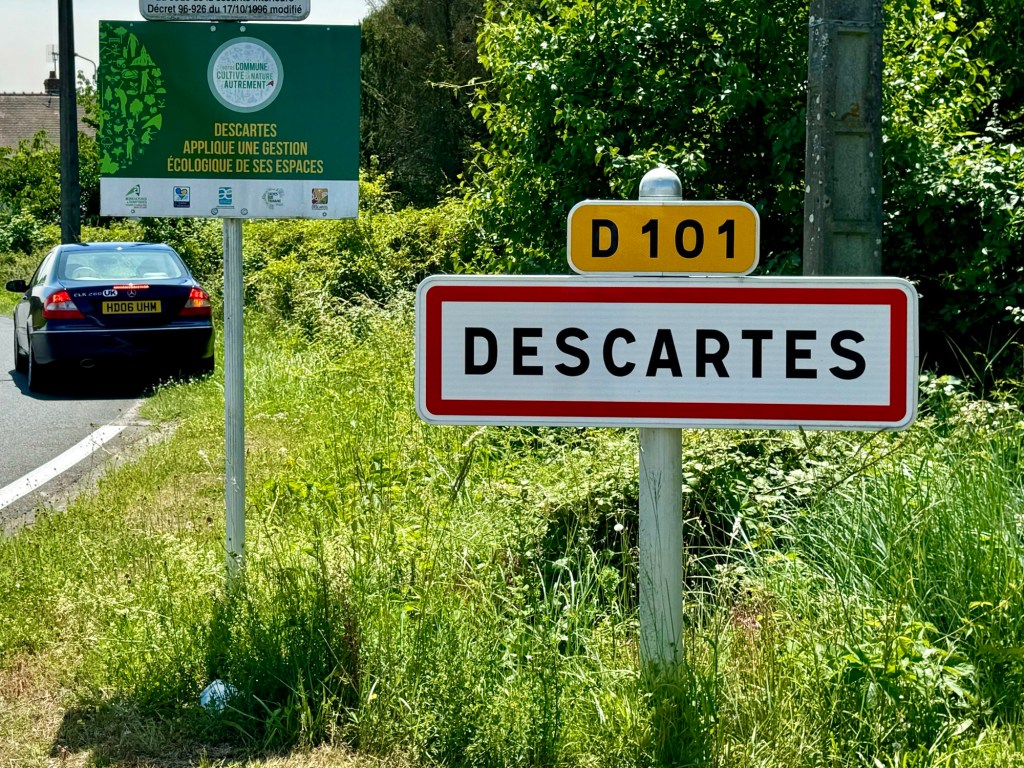
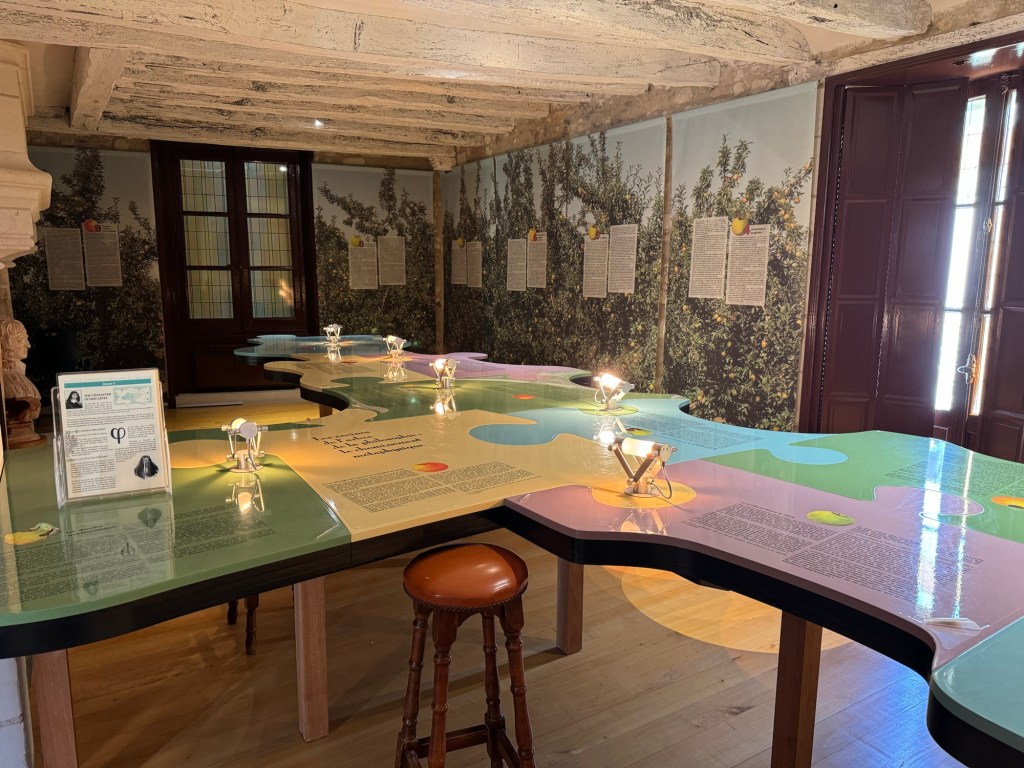
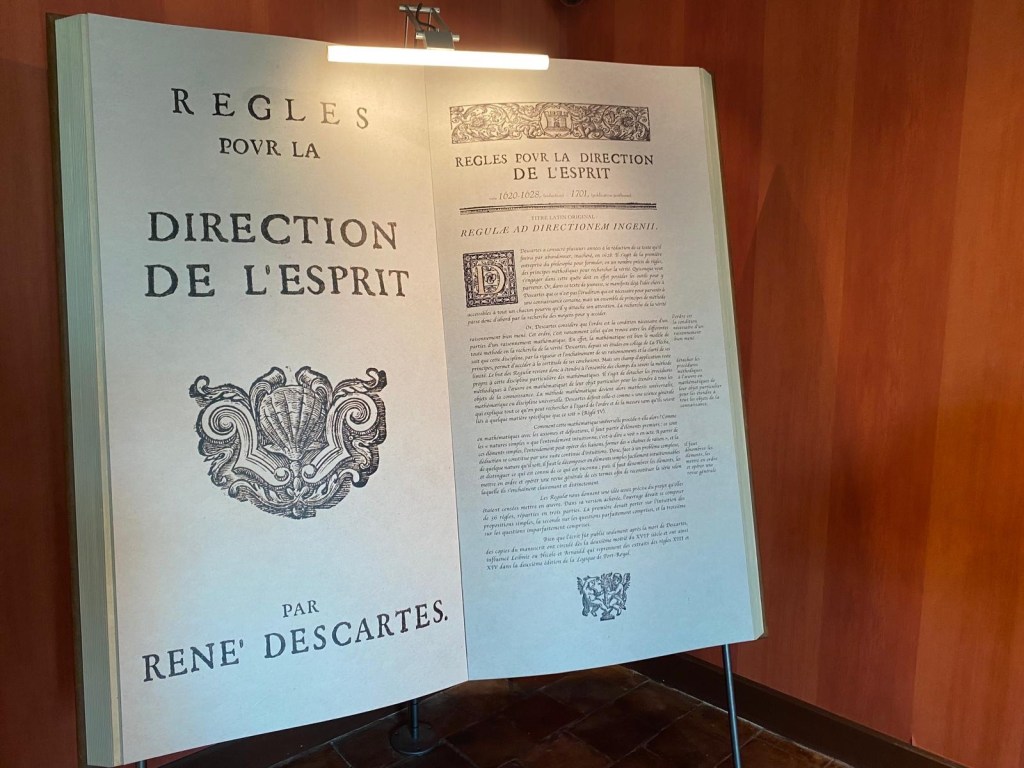
Unexpectedly, we discovered a museum dedicated to Rene Descartes the philosopher who was born in the town of La Haye en Touraine. Confusingly, the town is now named Descartes in his honour.

The museum occupies the home Descartes was born in and provides an interesting insight into his life, education and popular beliefs of the time. His thinking, and methodology, seem to have been at great odds with his faith. His first method of reasoning is ‘to believe nothing except that which is clear and certain’. We’re not sure how he managed to align that with his Catholic beliefs.

Not only were we treated to the Descartes museum but also one dedicated to the French author, journalist and critic Rene Boylesve. We had never heard of him but he led a very interesting life until his death in 1920

Finally, there was a small exhibition dedicated to Gustave Trouvé, an electrical engineer who invented, amongst other things, a battery powered tricycle in 1881.

We vowed never to do this again…

‘This’ being two holidays so close together. But, sometimes, you just don’t learn from experience.

It seems fitting to sail from Portsmouth to France on D-Day although, from the comfort of Brittany Ferries, we can’t imagine what it was like 80 years ago.

We are travelling to France for, what has become, our annual Inntravel walking holiday with Jacky and Ken. Our plan includes stops at Oradour sur Glane, a village destroyed by Nazis 4 days after D-Day, and Carentan where The Longest Yarn is on display. More about that when we get there. In between we have 6 days walking in the Dordogne and a visit to John’s friend Bunny who moved to France 8 years ago.

Rumour has it that the weather in the Dordogne is the worst in 40 years!

It’s very Orange today…

Yet another very wet day greeted us this morning, we were fortunate to see the sun yesterday. The hotel owner commented that the weather was really bad for April, usually it would be warmer certainly much drier and they would be using the outside seating for passing visitors.

To put you out of your misery, here are hats with their owners.

Each day, our blog cheerily greets us with statistics. Apparently views are up 1,500%, impressive until you realise it’s taken our total up to 28.

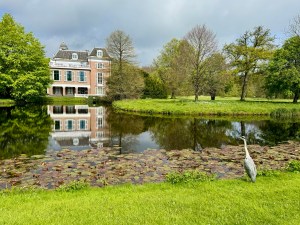
Kim was keen to visit the Japanese Garden in Clingendael Park, just north of The Hague. Not far out of our way and it’s the only 20th century Japanese Garden in the Netherlands. Created by Baroness Van Brienen in 1900, following her travels in Japan, visitor access is limited to just 6 weeks a year. It first day of opening happened to be today, visitor information told us it could be closed during heavy rain and the only available parking was on street, what could possibly go wrong?

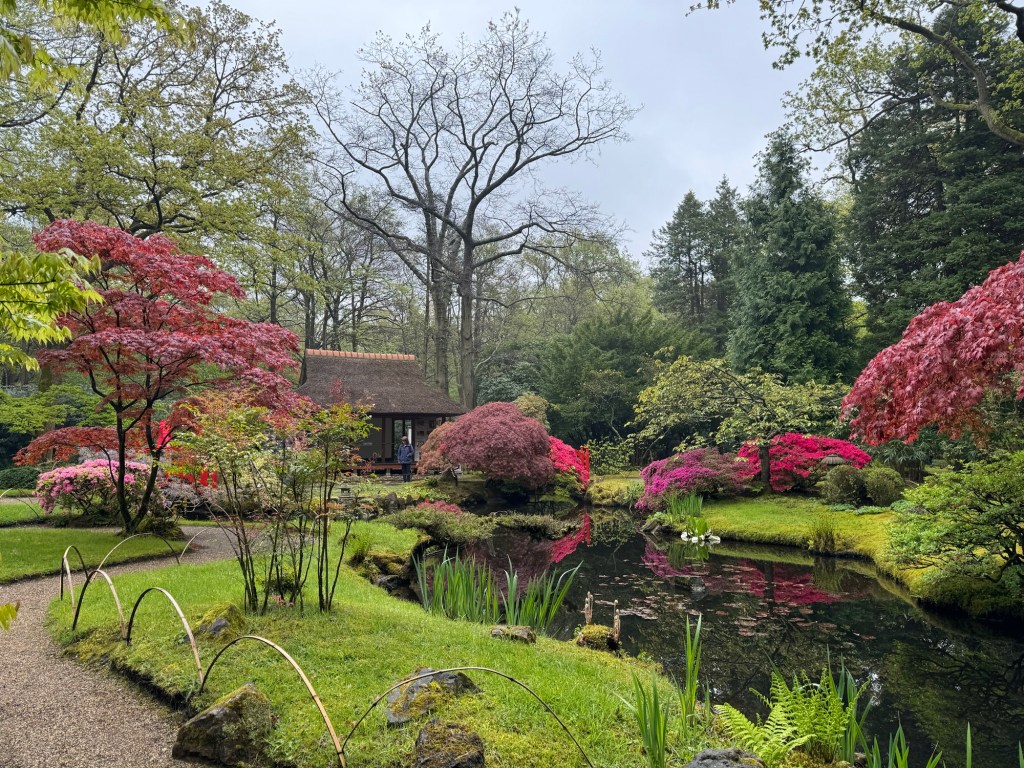
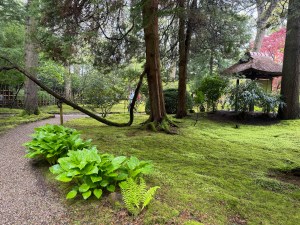
Well, nothing! On street parking was plentiful, and free, the rain stopped, the garden was open and, in Kim’s opinion, the best horticultural visit of the trip. The entrance and exit were guarded and visitor numbers carefully controlled.

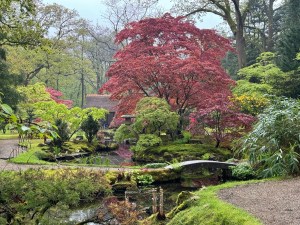
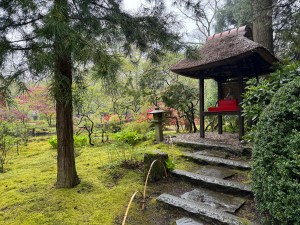
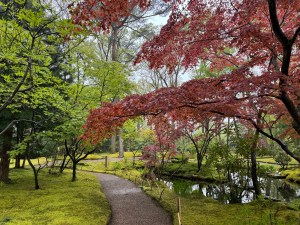
The ground is covered in moss, creating a cool, calming effect. Paths are narrow and most edges are protected with bamboo hoops. You don’t need to know this, Kim simply wanted to share more pictures..

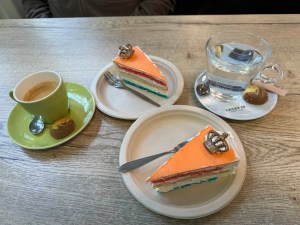
Today is Koningsdag and consists of an orange filled celebration of the King’s Birthday. People are dressed in orange, music, flea markets and fun fairs abound. We took part with a slice of King’s Day cake to accompany our coffee in the park’s cafe, before heading back to the car and our ferry.

Finally, 5 facts you may not know about The Netherlands:

1. The Dutch turned carrots orange as a tribute to William of Orange

2. The Dutch eat more licorice than any other nation

3. King Willem-Alexander flies planes for KLM

4. Gin was invented by the Dutch in the 16th century

5. The Netherlands is the world’s second biggest beer exporter

Milliners in Dordrecht rejoice

Well done to everyone who cracked yesterday’s code. First prize, if there was one, goes to Julie.

2024 is the year of the great hat crisis. It’s been cold and hats have been lost or even left in the UK, so hat sales in Dirdrecht, have increased exponentially. Only one person still has an original hat. From the photo below, can you guess who is the owner of which hat and, more importantly, which one hasn’t been purchased in the last two days?

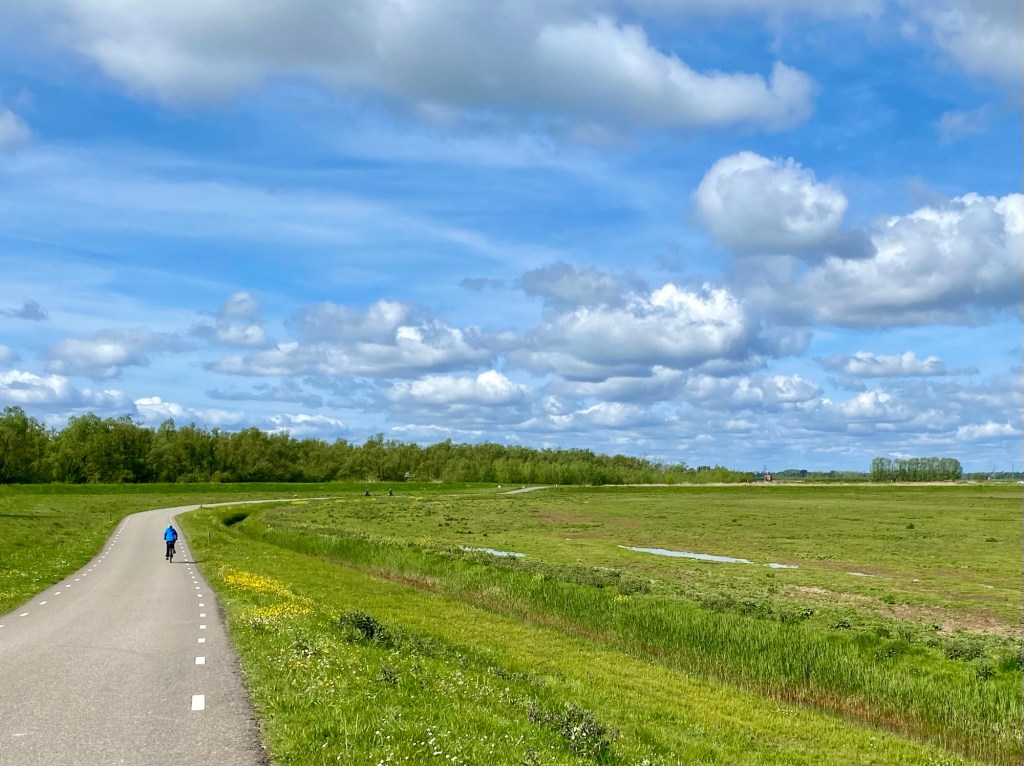
Today the sun shone and we cycled around the Beisbosch National Park. Less than a mile from our hotel is a ferry that takes you from Dordrecht, across the Nieuwe Merwede river, to the park. Sadly it crashed a couple of weeks ago and, annoyingly, doesn’t resume service until tomorrow! Bikes were therefore loaded onto the car for the 40 minute diversion. We had worried about space for parking, cars are probably the most challenging form of transport over here, but all was well.

The history of the area is fascinating and it has been a harsh environment to boblive and work in. In 1421 the whole area flooded, washing away the villages, because distracted landlords had not kept the dikes in good repair. Rich agricultural land became an inland sea and an abundant fishing ground. Slowly the land was planted with rushes and willows providing tough, low paid work for inhabitants. Rush, reed and willow cutting was hard physical work. Cutters often lost fingers, this one more unlucky than most to lose four fingers! The wooden prosthetic was shaped to enable its owner to remain employed.

In 1970, there were incentives to fill in polders and create larger fields to improve crop yields. This lasted 30 years until the land needed to be returned to water to deal with flood waters from the Rhine and Meuse. Today it forms part of the flood defences, protecting the surrounding land from flood water and high tides and respite for migrating birds.

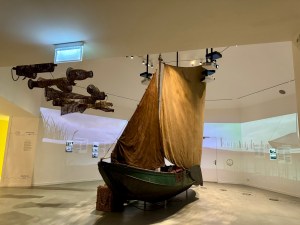
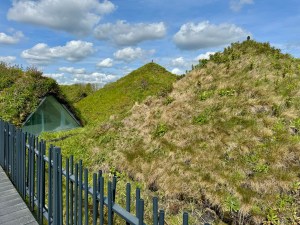
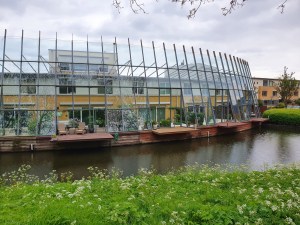
The Biesbosch museum was amazing, not only for its’ design – it’s covered in grasses and disappears into the very flat landscape – but also it’s informative and engaging displays.

…. . .-.. .-.. -_-

Our days have started with a very tasty sharing breakfast. There has been no fighting, although Kim had more than her fair share of muesli this morning.

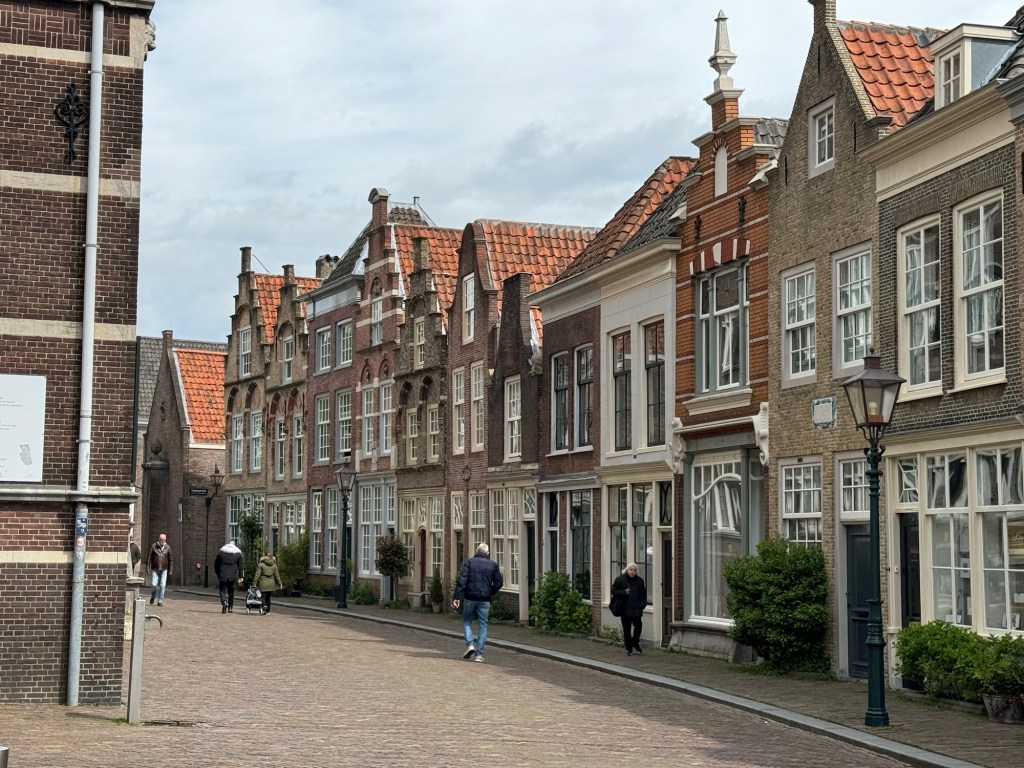
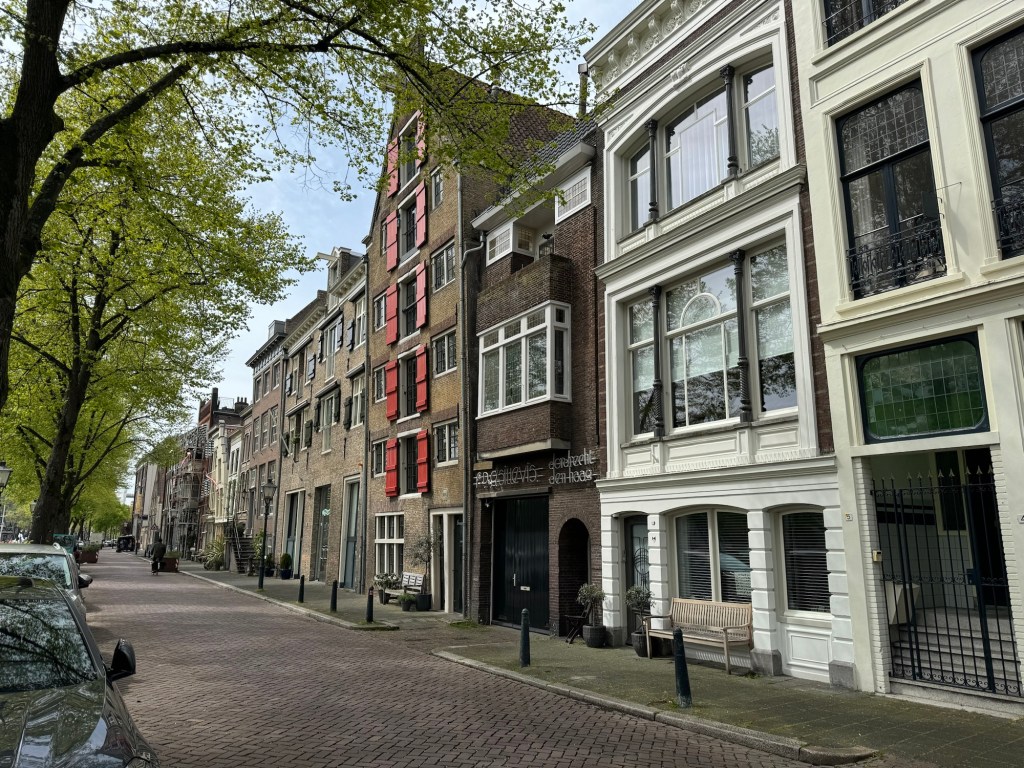
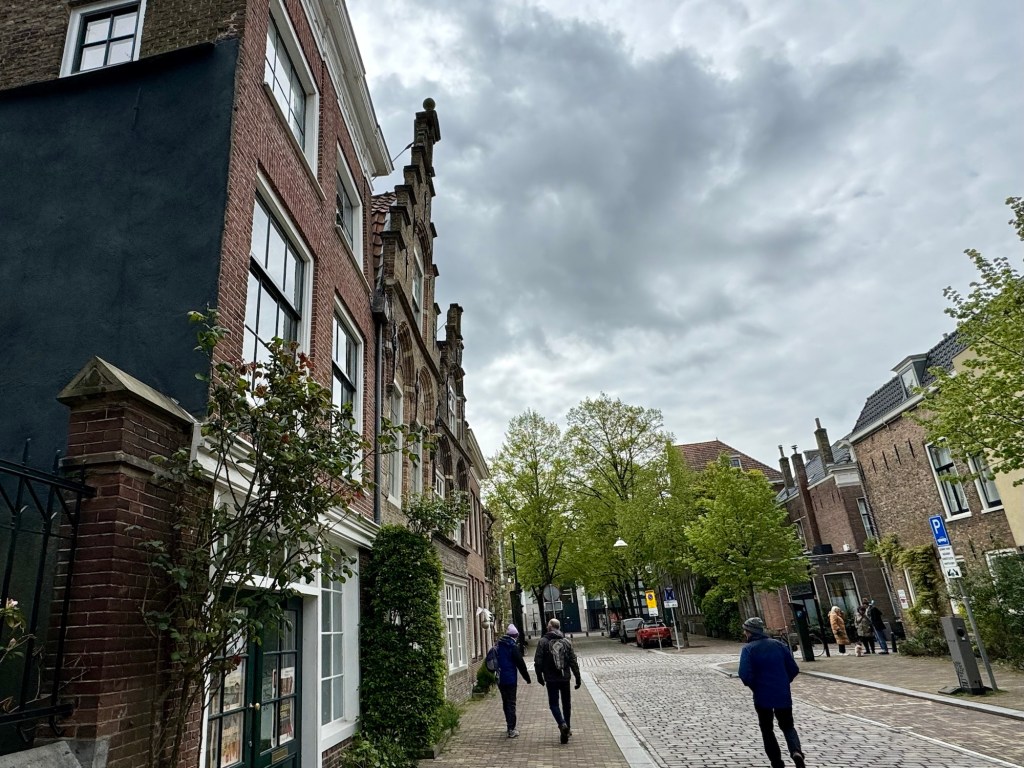
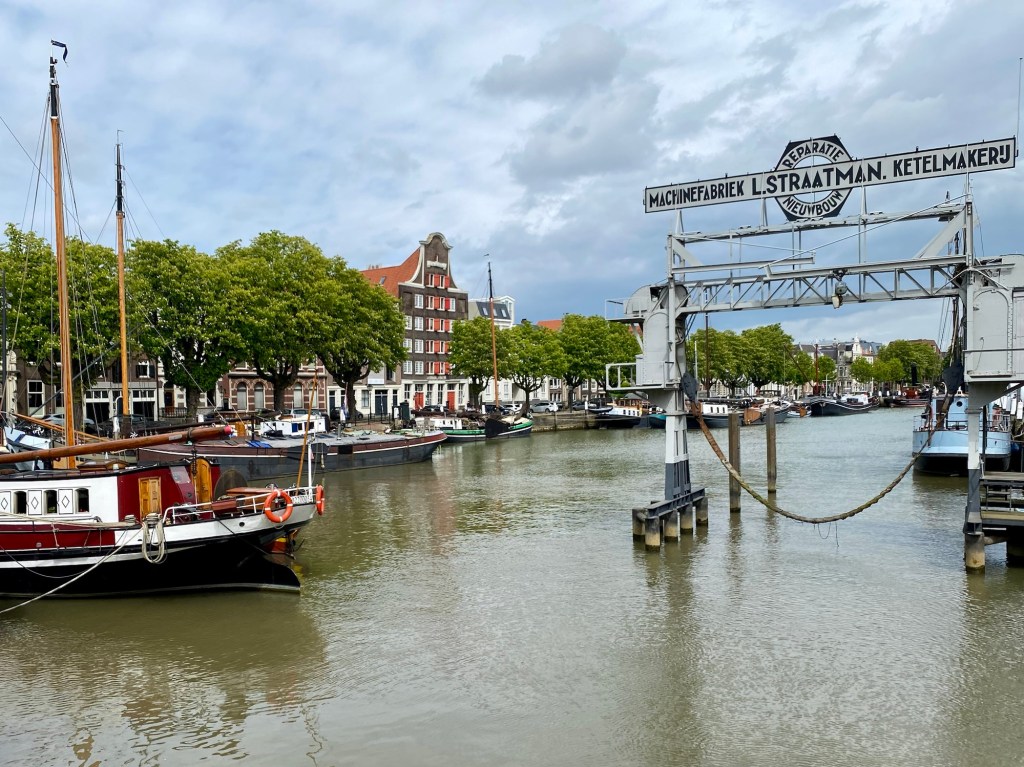
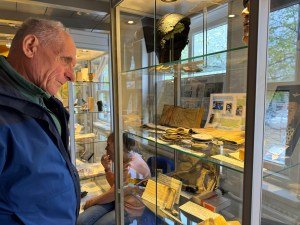
Today, we cycled into Dordrecht. It was granted city status in 1220 making it one of the oldest in The Netherlands. It was an important merchant city, trading in wood, grain and wine and, today, is home to many monuments and museums. The Dordrechts Museum, established in 1842, is one of the oldest in the country housing 600 years worth of art. We didn’t visit it, there was no appetite for paintings by old Dutch Masters but we did wander through a beautiful city.

Our museum of choice was the 1940-1945 Museum, a history of Dordrecht’s Occupation and liberation. A small room was dedicated to the Dutch Resistance which can be characterised as largely non-violent according to “Was God on Vacation” by Jack van der Geest . Apparently a 1938 Dutch law required all guns to be registered, when the Nazis invaded they found the register, went house to house demanding the guns and hence there wasn’t actually a great deal of resistance. Exhibits have been donated by local families and provide a rich collection together with some wonderful stories of very brave people assisted by the British SOE. As we arrived, one school party were leaving and we were advised to ‘move quick’ to get ahead of the next group of children.

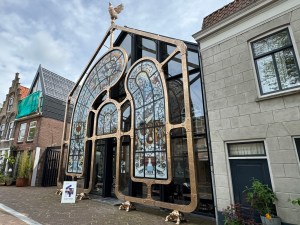
The Simon van Gijn museum, the former Mayor’s house boasting beautiful interiors, is next door and merited a stop. We only made it as far as the cafe where we were lulled into serenity with very good cuppas and tasteful jazz music. Two hours later, we thought we ought not to spend all day there and wandered off to find culture that was suitable for all – there’s been a lot of grumbling about old Dutch Masters. Modern art was discovered in the Kunstkerk, a converted church now housing exhibitions by new Dutch Masters. The entrance is amazing. The mural depicts the legend that the world is carried on the back of tortoises – very Discworld! The chicken on the top is a nod to the building’s history as a church and its old weather vane. The current exhibitor is Hella de Jonge, we will let you make you own mind up on her art.

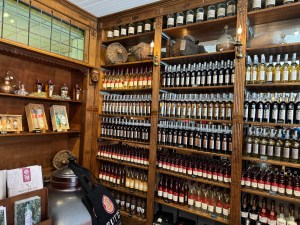
Next stop was the Rutte Distillery, gin distillers since 1749. The Rutte family owned the business until 1992 when it was sold to a group who loved the product. Gin is still distilled on site and the smell of botanicals was prominent as we walked in the shop. Today, they were distilling Sloe Gin and a long conversation followed about sloes in the UK. Sadly we needed 8 more friends to be able to take part in a tour and tasting.

The rain had held out for us but the first spots started as we cycled back through a small estate that caught our eye this morning. Dutch architecture is fascinating

Finally, can anyone decipher today’s title?